




















 X
 Facebook
 LinkedIn
 Google News
 Telegram
 Instagram
 RSS Feed

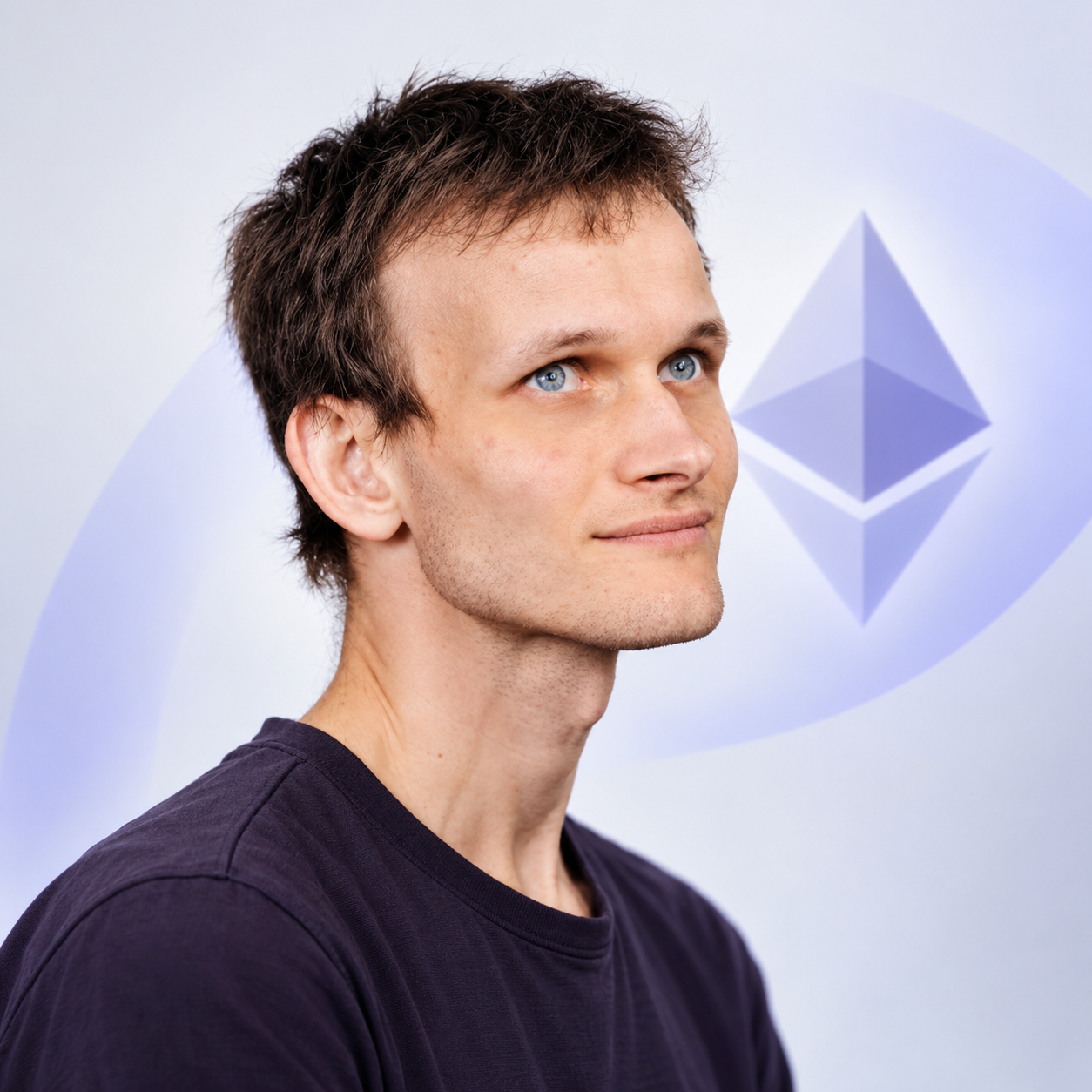
Vitalik Buterin
Ethereum Co-Founder
Ethereum Co-Founder and Visionary Behind Programmable Blockchain Technology.
Vitalik Buterin is the Russian-Canadian programmer who helped turn blockchain technology into a platform for applications far beyond digital payments. Best known as Ethereum’s co-founder, he proposed a programmable blockchain in 2013 and helped bring it to life in 2015. Ethereum subsequently became a foundation for decentralized finance, stablecoins, NFTs and smart contracts. Buterin remains closely involved in research on scaling, security, privacy and the network’s sustainable long-term development, while also supporting open-source initiatives and scientific causes. His influence comes from technical ideas and consistent public advocacy, not ownership or unilateral control of the globally decentralized network he helped create.

Early Life, Education and Cryptocurrency Beginnings
Vitalik Buterin is a Russian-Canadian programmer, cryptocurrency researcher and entrepreneur best known for co-founding Ethereum, one of the world’s most influential blockchain ecosystems. Born on January 31, 1994, in Kolomna, Russia, he moved to Canada with his family at the age of six. Buterin demonstrated an early aptitude for mathematics and computer programming, later attending The Abelard School in Toronto before enrolling at the University of Waterloo. During his university studies, he worked as a research assistant for cryptographer Ian Goldberg while developing a growing interest in decentralized systems and digital currencies.
Buterin discovered Bitcoin in 2011 and became fascinated by its ability to transfer value without centralized intermediaries. That year, he co-founded Bitcoin Magazine with Mihai Alisie, becoming one of its principal writers and establishing connections with developers across the emerging cryptocurrency industry. Through his research and writing, Buterin began exploring how blockchain technology could support applications beyond payments. In 2014, he received a $100,000 Thiel Fellowship, allowing him to leave university and pursue his blockchain ambitions full-time.
Founding Ethereum and Blockchain Development
In November 2013, at just 19 years old, Buterin published the original Ethereum whitepaper, outlining a general-purpose blockchain capable of executing programmable smart contracts. Unlike Bitcoin, which primarily focused on peer-to-peer payments, Ethereum would enable developers to create decentralized applications without relying on centralized operators. The proposal attracted several prominent contributors, including Gavin Wood, Joseph Lubin, Charles Hoskinson and Anthony Di Iorio. Following a successful crowdfunding campaign in 2014, Ethereum officially launchedon July 30, 2015, laying the foundation for decentralized finance, stablecoins, NFTs and blockchain-based organizations.
Buterin has remained closely involved in Ethereum’s technical development, particularly its scalability, consensus mechanisms and cryptographic security. He contributed to research supporting Ethereum’s transition from proof-of-work mining to proof-of-stake consensus, completed through The Merge in September 2022. His subsequent work has emphasized improving transaction efficiency while preserving decentralization. In 2026, Buterin outlined a multi-year Lean Ethereum roadmap focused on faster finality, zero-knowledge proofs and post-quantum security. He has also advocated stronger Ethereum privacy protections, including confidential transactions, censorship resistance and more secure wallet infrastructure. Despite his influence, Buterin does not independently control Ethereum, whose development requires coordination across its decentralized community.
Other Projects, Philanthropy and Net Worth
Beyond Ethereum, Buterin has supported initiatives involving decentralized governance, scientific research and open-source public goods. In 2023, he initiated Zuzalu, an experimental temporary community in Montenegro that brought together researchers exploring biotechnology, longevity, artificial intelligence and decentralized coordination. He has also promoted quadratic funding, privacy-preserving voting and cryptographic tools designed to improve collective decision-making. His philanthropic activities include substantial cryptocurrency donations supporting humanitarian relief, medical research and open-source development, funded through personal holdings and unsolicited tokens transferred to his publicly known addresses.
Buterin’s wealth is primarily associated with ETH acquired during Ethereum’s early development, and he became one of the youngest publicly recognized cryptocurrency billionaires during the 2021 market rally. However, his exact net worth remains unverified because cryptocurrency prices fluctuate and his complete financial holdings are not publicly documented. Alongside his continuing Ethereum research, Buterin remains interested in decentralized artificial intelligence, digital identity and privacy-preserving technologies. His work continues to influence the development of blockchain infrastructure and its potential applications beyond cryptocurrency trading.
FAQ
Who Is Vitalik Buterin, and Why Is He Famous?
Vitalik Buterin is a Russian-Canadian programmer best known for creating the original concept behind Ethereum in 2013. He helped launch the blockchain in 2015, introducing a platform that enables developers to build decentralized applications and execute smart contracts. His contributions helped establish Ethereum as one of the most influential blockchain ecosystems.
How Much Is Vitalik Buterin Worth?
Vitalik Buterin's net worth is estimated at $500 millions, but is not independently verified and changes significantly with cryptocurrency prices. His publicly attributed wallets contain substantial ETH holdings, but these do not necessarily represent his entire wealth. He has also donated significant amounts of cryptocurrency, making fixed net-worth estimates unreliable.
Does Vitalik Buterin Own or Control Ethereum?
No. Although Buterin co-founded Ethereum and remains influential in its technical development, he does not own the blockchain or have unilateral authority over its rules. Ethereum operates through decentralized validators, independent software teams and a broader development community. Buterin can propose improvements, but their implementation requires wider agreement.
What Is Vitalik Buterin Working on Now?
Buterin is focused on Ethereum scalability, privacy, security and long-term protocol simplification. His research includes zero-knowledge cryptography, post-quantum security, improved transaction finality and decentralized infrastructure. He also continues exploring the intersection of blockchain technology, artificial intelligence and open-source public goods.
