






 X
 Facebook
 LinkedIn
 Google News
 Telegram
 Instagram
 RSS Feed



Introduction
Binance stands out for its deep trading liquidity, competitive fees, and extensive range of cryptocurrencies. Its spot markets are particularly attractive to active traders, with tight spreads on major pairs, advanced order types, and professional charting tools that allow users to manage entries and exits with greater precision. Standard spot trading fees start at 0.10% for makers and takers, with additional discounts available through BNB payments and higher trading volumes.
Liquidity is one of Binance’s strongest advantages, particularly when trading Bitcoin, Ethereum, and other heavily traded cryptocurrencies. Active order books generally allow larger positions to be executed with less price impact than on exchanges with thinner markets. However, execution quality still depends on the individual trading pair, available order-book depth, and market conditions. Less liquid altcoins can experience wider spreads and substantial slippage, especially during periods of heightened volatility.
Binance Overview
| Category | Binance Exchange |
|---|---|
| Founded | 2017 |
| Co-founders | Changpeng Zhao and Yi He |
| Leadership | Richard Teng and Yi He, co-CEOs |
| Exchange model | Centralized, custodial cryptocurrency exchange |
| Regular spot fees | 0.10% maker / 0.10% taker on standard pairs; 0.075% each with the eligible BNB fee discount |
| Standard USDT-M futures fees | Generally 0.02% maker / 0.05% taker before tier or promotional adjustments |
| Asset selection | 600+ cryptocurrencies advertised globally; actual markets vary by region |
| Main products | Spot, Convert, margin, futures, options, trading bots, Earn, staking, P2P and Web3 wallet tools |
| Identity verification | Required for standard access to trading, deposits and withdrawals |
| Account protection | Passkeys, 2FA, withdrawal-address controls, anti-phishing code, device management |
| Reserve transparency | Published proof-of-reserves system and user balance verification |
| Best suited for | Cost-conscious spot traders and experienced users combining multiple crypto products |
| Overall editorial score | 8.7/10 |
What Binance Does Particularly Well
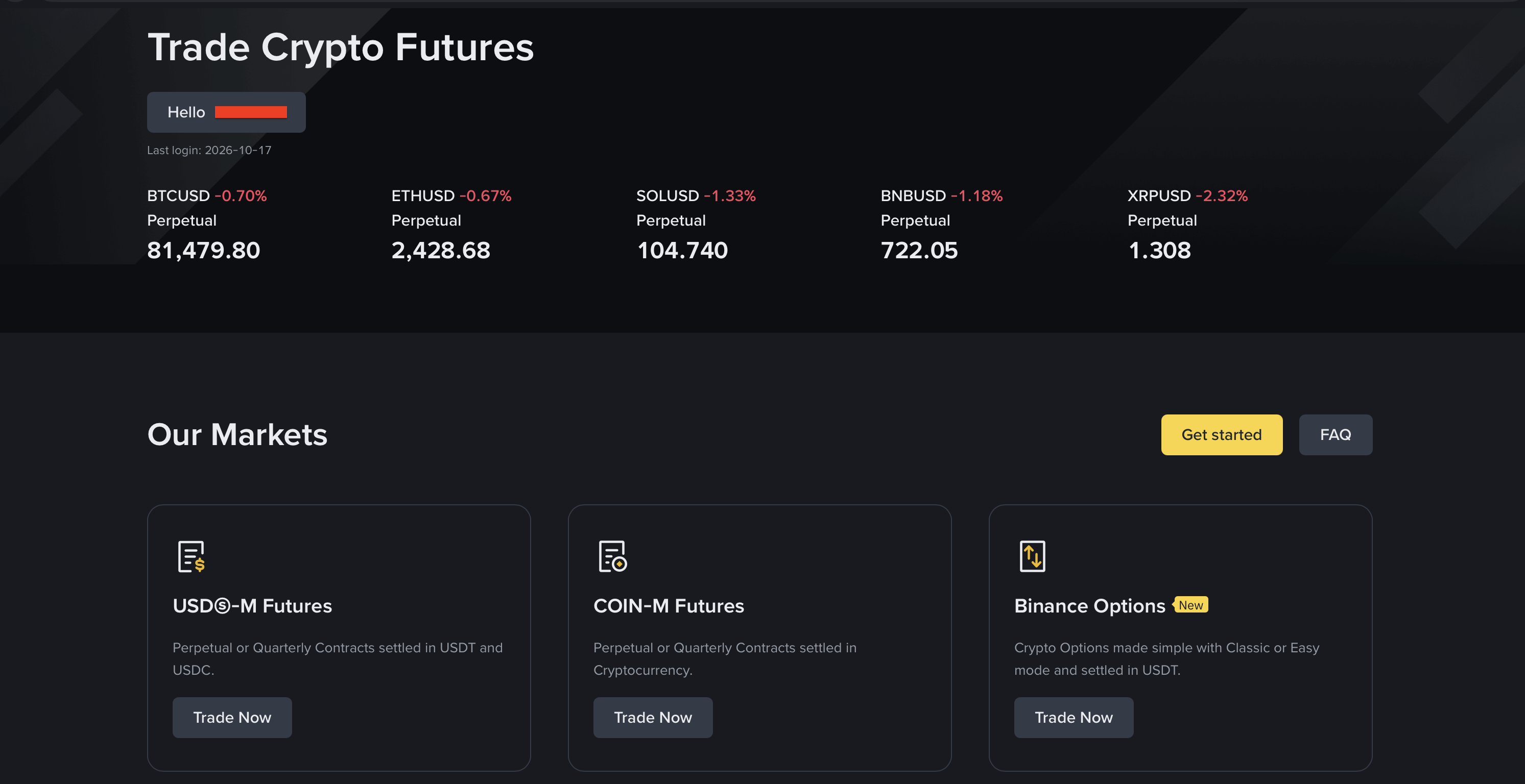
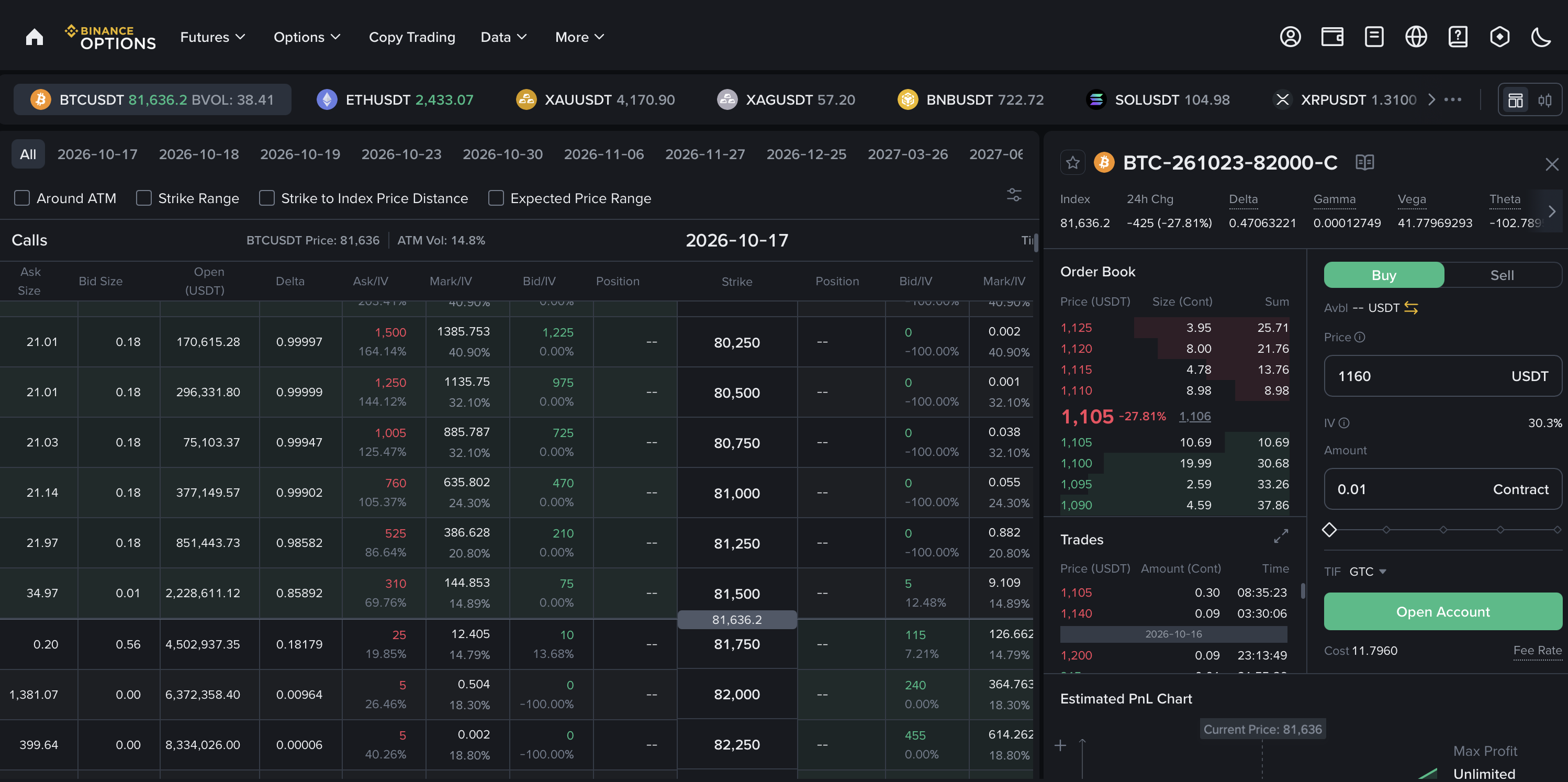
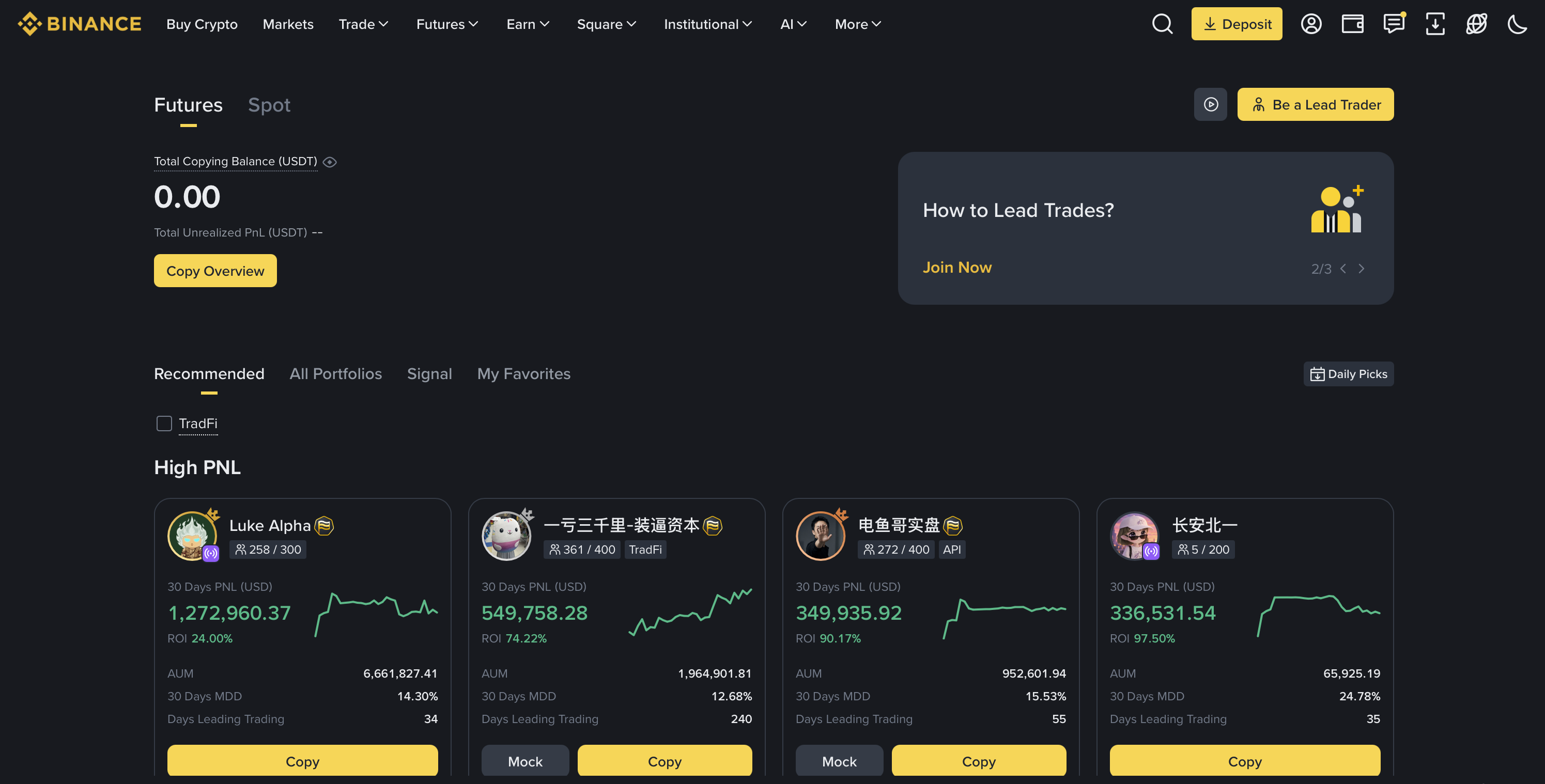
Beyond spot trading, Binance offers margin accounts, perpetual futures, options, and a selection of automated trading tools. Its integrated grid bots, recurring purchases, conditional orders, and API connectivity allow experienced traders to implement different strategies without relying entirely on external platforms. Binance Convert provides a simpler alternative for exchanging supported assets at a quoted rate, although its convenience should be weighed against the execution costs available through the spot order book.
The platform also extends into staking, Simple Earn products, peer-to-peer trading, and cryptocurrency payment services, giving users several ways to manage assets beyond conventional buying and selling. These services are integrated into the wider Binance ecosystem, although their availability, eligibility requirements, and associated risks differ by product and jurisdiction.
Binance is particularly well suited to traders who actively manage diversified portfolios and benefit from having liquid markets, competitive commissions, and advanced execution tools within one platform. Its extensive functionality may be unnecessary for occasional cryptocurrency purchases, but for experienced traders seeking flexibility across spot, derivatives, and automated strategies, Binance offers one of the most comprehensive trading environments available.
Fees
Binance Trading Fees: The Cost Beyond the Headline Rate
Binance uses different fee structures for spot trading, futures, margin borrowing, options, and cryptocurrency transfers. Standard spot trading starts at 0.10% for both makers and takers, while eligible users can reduce those fees by 25% when paying with BNB. Higher trading volumes and VIP status can unlock additional discounts.
| Service | Fees | Details |
|---|---|---|
| Spot Trading (Maker) | 0.10% | Standard fee for adding liquidity |
| Spot Trading (Taker) | 0.10% | Standard fee for removing liquidity |
| Spot Trading With BNB | 0.075% | 25% discount on eligible spot trades |
| Selected Fiat Spot Pairs | 0.10% maker / 0.15% taker | Separate fiat-pair schedule where applicable |
| USDⓈ-M Futures | 0.02% maker / 0.05% taker | Standard USDT-margined futures rates |
| USDⓈ-M Futures With BNB | 0.018% maker / 0.045% taker | 10% discount on eligible futures fees |
| COIN-M Futures | 0.02% maker / 0.05% taker | Standard published reference rates; check contract schedule |
| Futures Funding | Variable | Periodic payments between long and short positions |
| Margin Trading | Spot fees + interest | Borrowing interest depends on asset, rate, and duration |
| Crypto Options | Contract-dependent | Trading and exercise fees may apply |
| Binance Convert | 0% separate trading fee | Conversion costs can be reflected in the quoted rate |
| Crypto Deposits | Free | No standard Binance deposit fee |
| Crypto Withdrawals | Variable | Depends on cryptocurrency and blockchain network |
| Fiat Bank Deposits | Variable | Depends on currency, region, and payment method |
| Fiat Bank Withdrawals | Variable | Banking and provider charges may apply |
| Credit/Debit Card Purchases | Variable | Processing fees and conversion costs depend on the provider |
| P2P Trading | Market-dependent | Maker and taker fees depend on the fiat market |
| Spot Copy Trading | Trading fees + 10% profit share | Profit sharing applies to eligible realized profits |
| Trading Bots | Applicable spot/futures fees | Automated orders follow the relevant trading fee schedule |
| Recurring Convert | 0% separate trading fee | Conversion uses its applicable quoted pricing |
| Staking / Simple Earn | Product-dependent | Rewards, commissions, and redemption terms vary |
| Binance Pay | Usually free | Most eligible personal transfers are free; thresholds and exceptions apply |
| NFT Marketplace | Variable | Depends on transaction type, network, and applicable marketplace charges |
| OTC Trading | Quoted pricing | Execution costs are reflected in the negotiated quote |
Maker orders add liquidity to an order book, while taker orders execute against existing liquidity. Fees may change according to VIP level, trading pair, payment method, regional availability, and promotional discounts. Binance’s published fee schedule should be checked before placing a trade.
How to Reduce Binance Trading Fees
Binance offers several ways to lower trading costs, including paying eligible fees with BNB, increasing trading volume to qualify for VIP tiers, and participating in selected zero-fee promotions. For regular spot traders, the standard 0.10% rate falls to 0.075% when the 25% BNB discount applies.
Traders should also account for spreads, slippage, futures funding, and borrowing interest when comparing costs. Lower advertised commissions do not necessarily produce cheaper execution, particularly on illiquid markets or leveraged positions.
Crypto deposits are commonly free of an exchange deposit charge, while onchain withdrawals carry a minimum amount and a fee that varies by asset and network. Bank transfers, card purchases and other fiat methods have their own provider terms.
Binance Deposits, Withdrawals, and Supported Networks
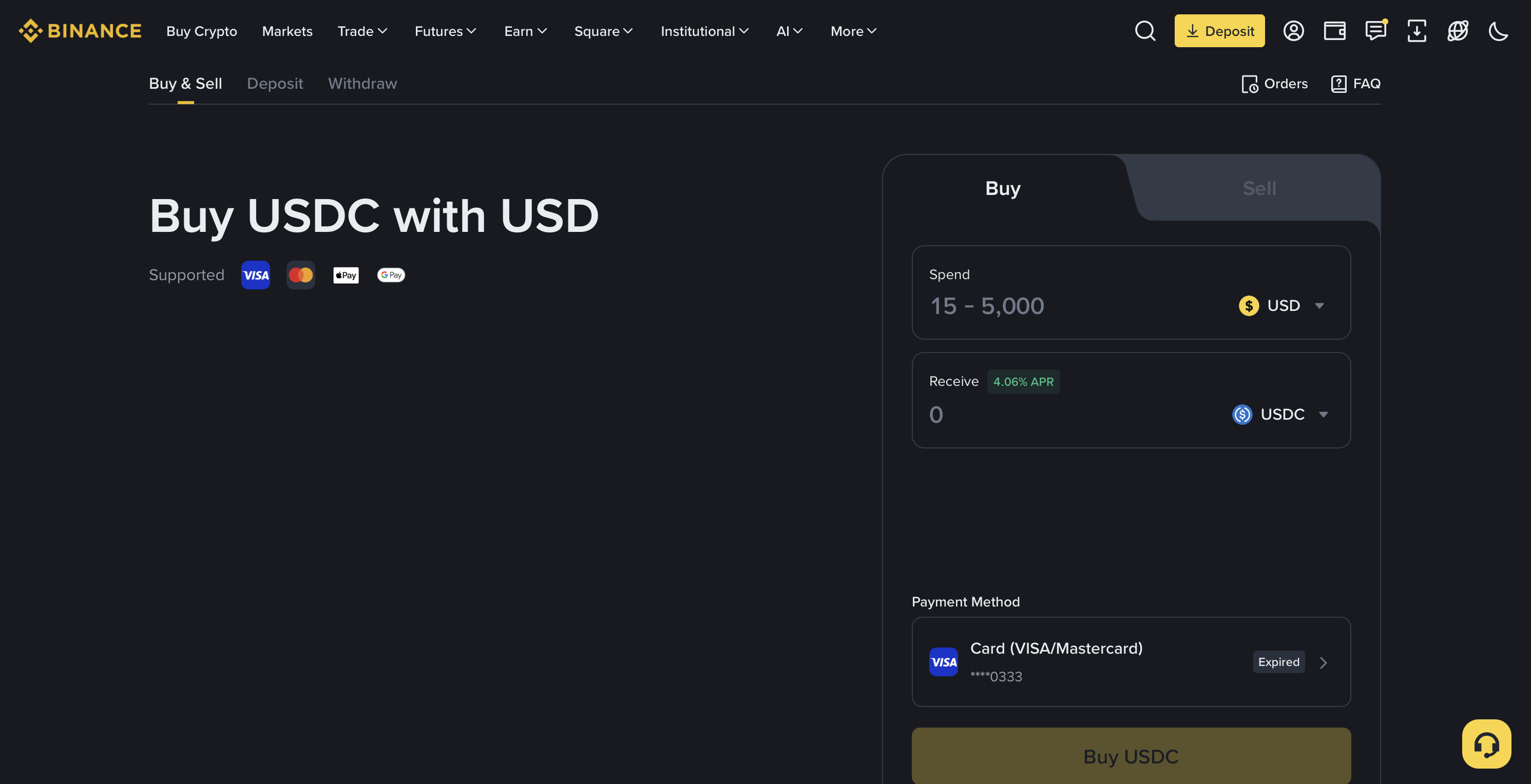
Binance supports cryptocurrency deposits alongside fiat funding methods, including bank transfers, credit and debit cards, and peer-to-peer payments where available. Supported currencies, payment options, and processing fees vary by country and banking provider. Bank transfers can offer lower costs for larger deposits, while card purchases provide faster access but may involve higher processing fees or conversion spreads. Traders should consider these costs alongside trading commissions when evaluating the overall expense of funding an account.
Cryptocurrency withdrawals support multiple blockchain networks, allowing users to select an available transfer route based on compatibility, fees, and processing speed. Stablecoins such as USDT and USDC are available on several networks, making it essential to match the withdrawal network with the receiving wallet or exchange. Certain cryptocurrencies, including XRP, may also require a destination tag or memo. Binance’s withdrawal interface displays the available networks, applicable fees, and minimum withdrawal amounts for the selected asset.
Withdrawal costs depend on the cryptocurrency and blockchain used, while network congestion, scheduled maintenance, security checks, and account restrictions can affect processing times. Binance also maintains custody of assets held in exchange accounts, which exposes balances to platform-level risks independently of blockchain security. Investors who do not need immediate trading access can transfer long-term holdings to a personal hardware wallet while keeping sufficient funds on Binance for active positions.
Security
Binance Security, Proof of Reserves, and Custody Protection
Binance provides extensive account security features, including passkeys, authenticator-based two-factor authentication, anti-phishing codes, device management, and withdrawal address whitelisting. Users can restrict withdrawals to approved wallet addresses and apply waiting periods to newly added destinations, reducing the risk of unauthorized transfers if login credentials are compromised. Securing the email account associated with Binance is equally important, particularly because attackers may target account recovery and authentication settings.
Binance also publishes monthly proof-of-reserves reports using Merkle trees and zero-knowledge proofs, allowing users to verify that their balances were included in the reported customer liabilities. The reports provide greater transparency into the backing of supported assets, although they represent point-in-time snapshots rather than comprehensive financial audits. They do not independently establish every offchain liability, corporate obligation, or potential liquidity constraint.
Additional protection comes from the Secure Asset Fund for Users (SAFU), an emergency reserve established to compensate eligible customers following certain security incidents. By October 2026, the fund held approximately $1 billion in Bitcoin following its conversion from stablecoin reserves earlier in the year. SAFU provides an additional financial buffer against certain platform-related losses, but it is not equivalent to deposit insurance and does not guarantee reimbursement for individual account compromises, trading losses, or mistaken transfers.
Binance’s regulatory history also warrants consideration. In November 2023, the exchange pleaded guilty to U.S. anti-money-laundering and sanctions-related offenses and agreed to approximately $4.3 billion in penalties. The settlement led to significant compliance obligations and remains relevant when evaluating the exchange’s governance and regulatory record.
Despite these safeguards, cryptocurrency held on Binance remains under custodial control, with the exchange responsible for securing and releasing customer assets. Investors who prefer crypto self-custody can transfer long-term holdings to a personal hardware wallet while retaining funds needed for active trading. This removes dependence on exchange custody for those assets, although protecting private keys, maintaining recovery backups, and authorizing transactions securely then become the owner’s responsibility.
Markets
Binance Supported Cryptocurrencies and Trading Markets
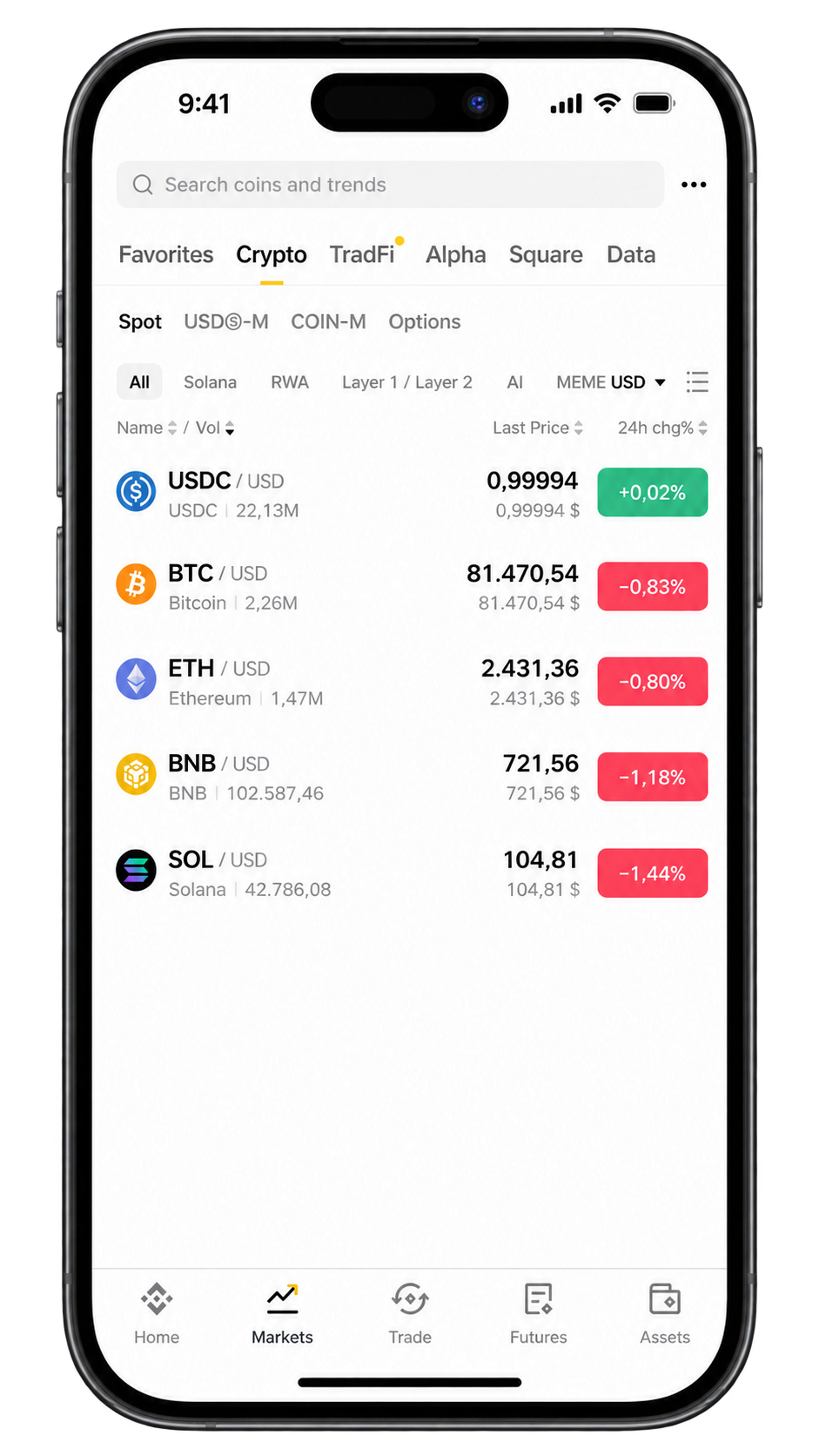
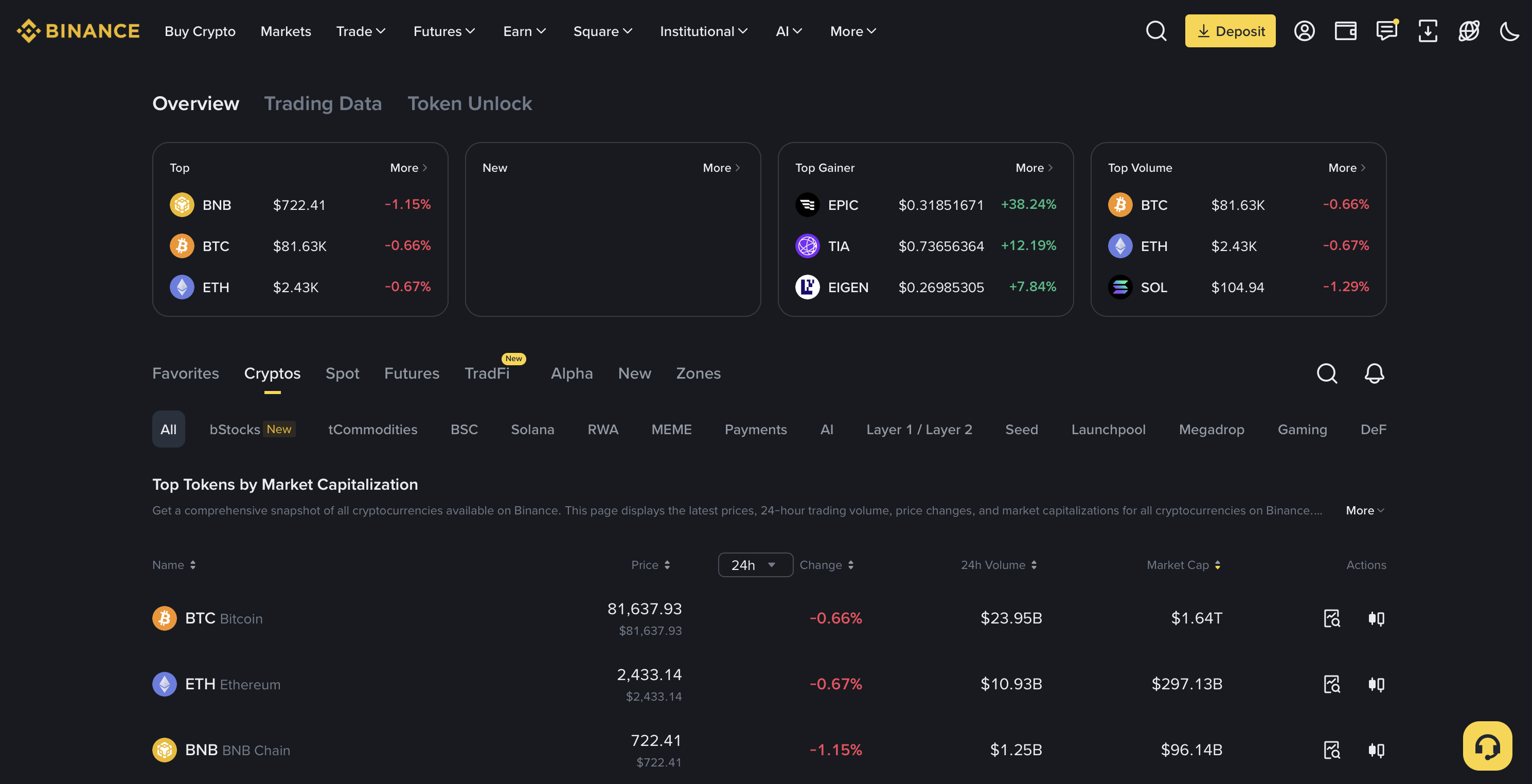
Binance offers one of the largest cryptocurrency selections among major centralized exchanges, with more than 500 listed assets and over 1,300 spot trading pairs. Its markets cover Bitcoin, Ethereum, Solana, XRP, major stablecoins, established altcoins, and emerging projects across DeFi, artificial intelligence, gaming, and other blockchain sectors. Popular quote currencies include USDT, USDC, BTC, and BNB, giving traders multiple ways to enter positions, exchange assets, and rebalance portfolios without transferring funds between platforms.
The extensive selection is particularly valuable for investors trading beyond the largest cryptocurrencies, although market quality varies considerably between assets. Established pairs generally benefit from deeper liquidity and tighter spreads, while recently listed or less actively traded tokens can experience greater price volatility and higher execution costs. Binance also periodically removes individual trading pairs or delists cryptocurrencies that no longer meet its listing requirements, potentially affecting liquidity and available withdrawal options.
Regional restrictions can further limit access to particular cryptocurrencies, stablecoins, and trading products. For active traders, Binance’s appeal comes from combining a broad asset selection with established spot markets and multiple trading pairs, rather than simply offering the highest possible number of listed tokens.
Binance Staking and Earn Products
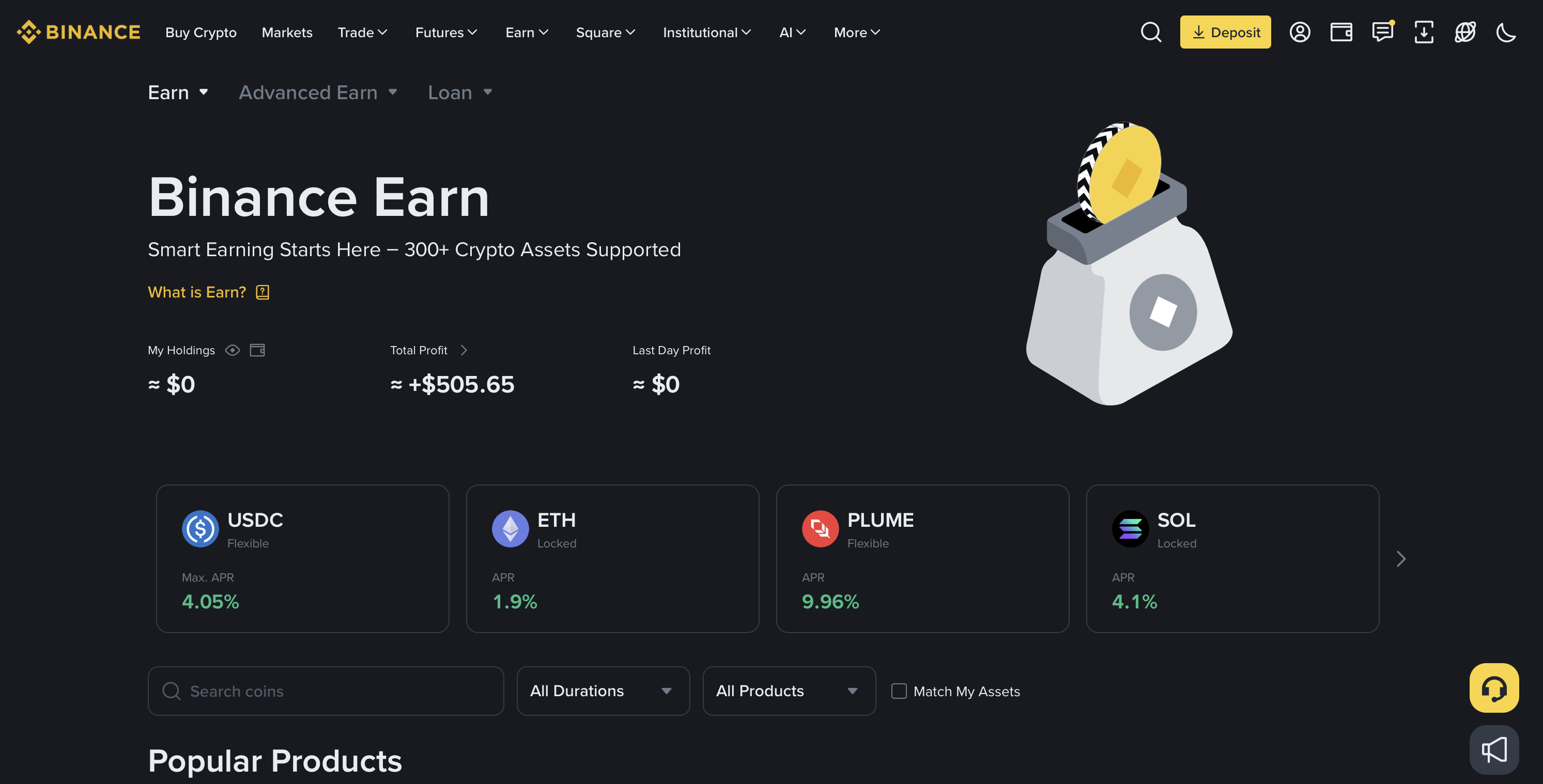
Binance Earn provides access to cryptocurrency staking, flexible savings products, fixed-term subscriptions, and more advanced yield strategies. The platform supports over 300 cryptocurrencies across its Earn offerings, allowing eligible users to generate rewards on assets they already hold without transferring them to separate staking applications or decentralized protocols.
Simple Earn offers flexible products with variable rewards and redemption options, alongside locked products that commit assets for a specified period. Locked subscriptions may provide higher advertised rates, but early redemption can result in forfeited rewards. Annual percentage rates also fluctuate according to market conditions, product availability, and promotional incentives, so displayed yields should not be interpreted as guaranteed returns.
Binance also offers Ethereum and Solana staking, while Advanced Earn includes products such as Dual Investment and selected onchain yield opportunities. These arrangements carry different risk profiles. Native staking generates rewards through blockchain validation, while structured products such as Dual Investment can settle in a different cryptocurrency depending on market prices at settlement. Onchain yield strategies may introduce additional smart contract, liquidity, and protocol risks.
The distinction between staking and restaking becomes especially relevant when evaluating products offering higher returns through additional protocol commitments. Higher yields can involve greater exposure to validator performance, slashing, withdrawal restrictions, or external financial arrangements.
Binance simplifies subscription management, reward tracking, and redemptions through a single account, making Earn particularly convenient for investors already holding assets on the exchange. However, these products retain exchange custody exposure, and their returns depend on the underlying mechanism rather than the security of the Binance account alone. Investors seeking direct validator control or independent onchain custody may prefer self-managed staking arrangements.
User Experience
Binance User Experience on Desktop and Mobile
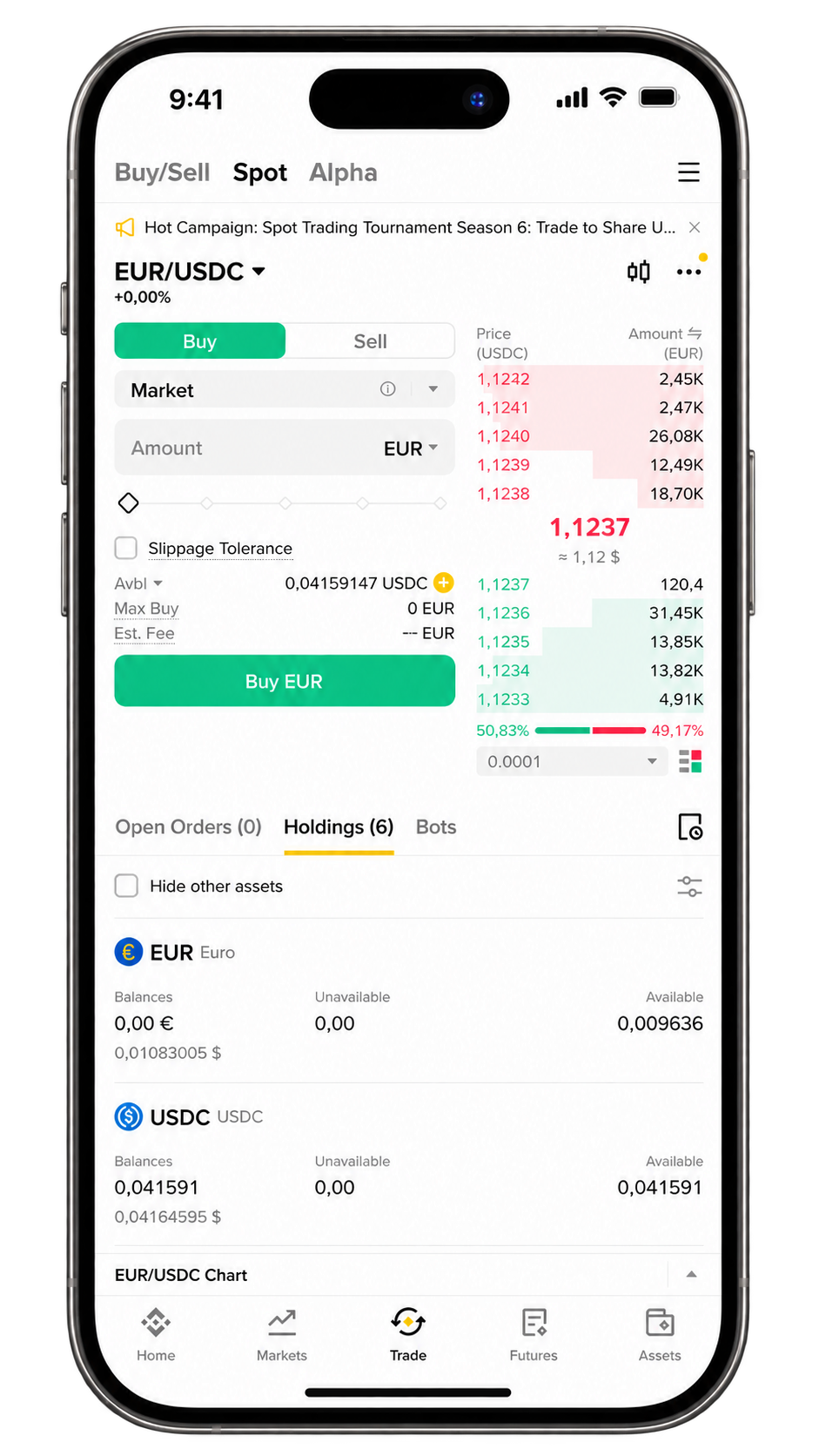
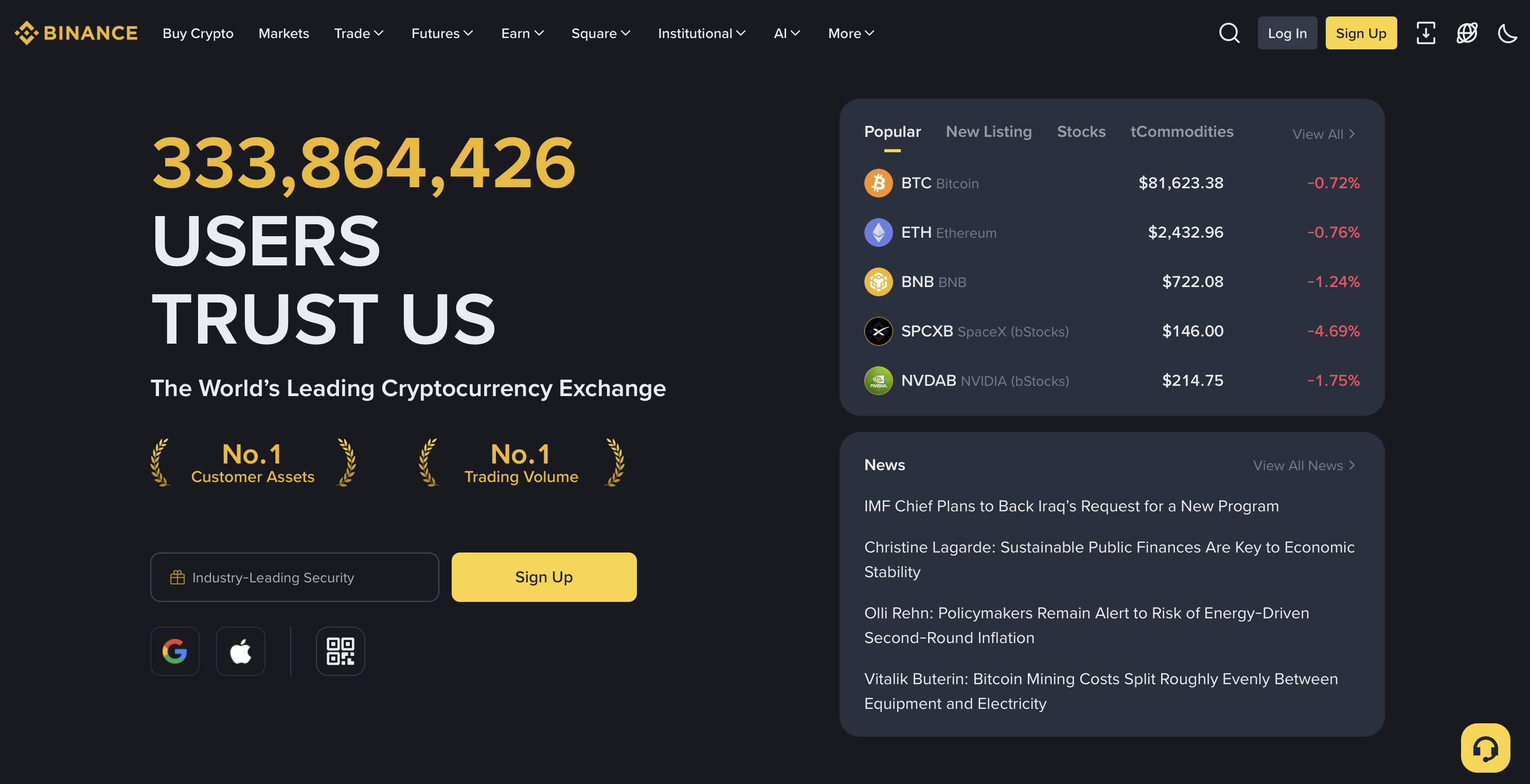
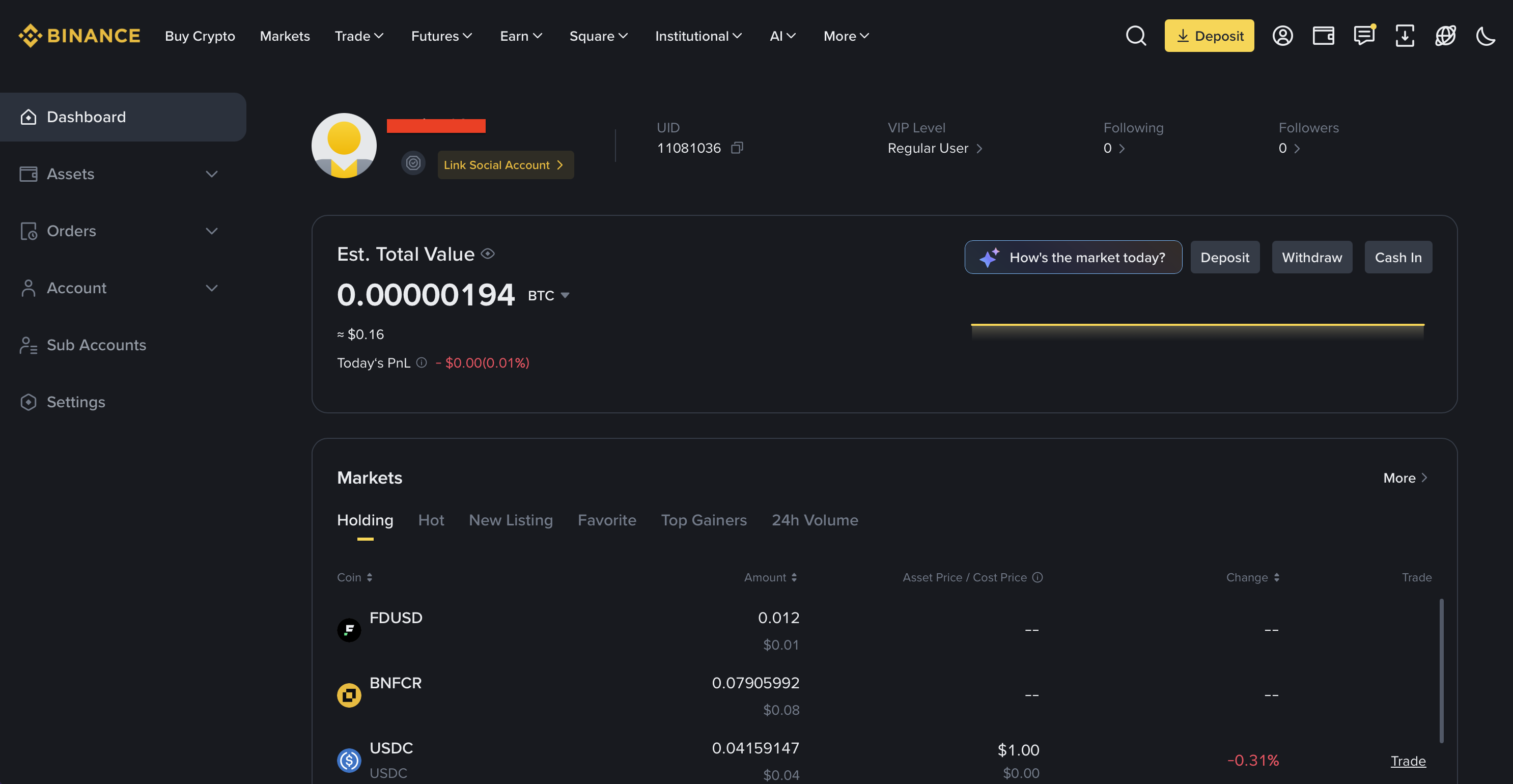
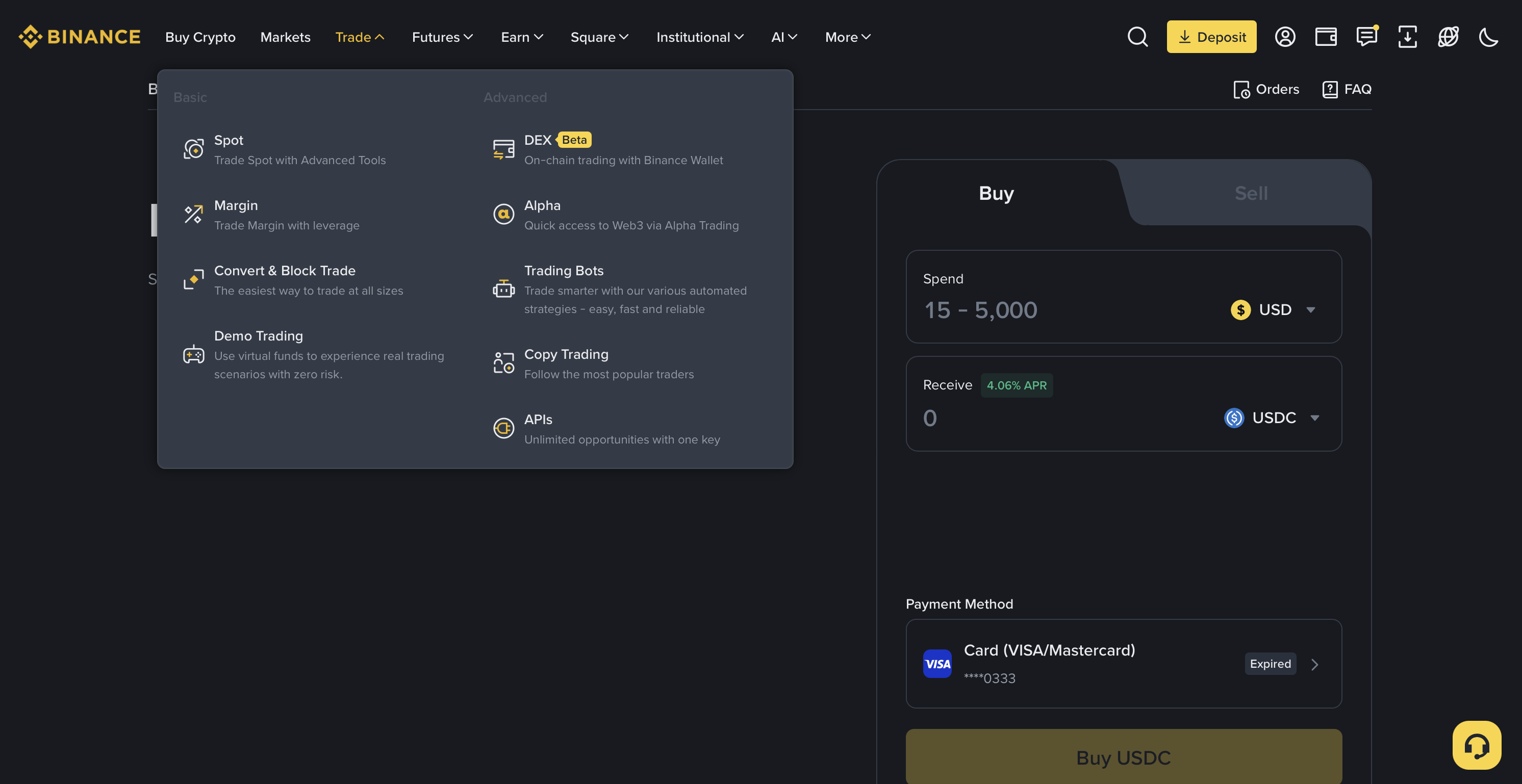
Binance provides a comprehensive trading interface across desktop and mobile, combining professional trading tools with simplified options for buying and managing cryptocurrencies. Its desktop platform offers interactive charts, customizable trading layouts, live order books, market depth, price alerts, and detailed order management. Traders can monitor open positions, review transaction histories, and execute different order types without relying on external trading software.
The desktop interface is particularly well suited to active traders who need access to several markets and execution tools simultaneously. Price charts, order books, and trading controls can be viewed together, making it easier to assess liquidity and manage positions during volatile conditions. However, the amount of information displayed can be overwhelming for users unfamiliar with advanced trading platforms, particularly when navigating between spot markets, derivatives, and investment products.
Binance Mobile App: Lite and Pro Modes
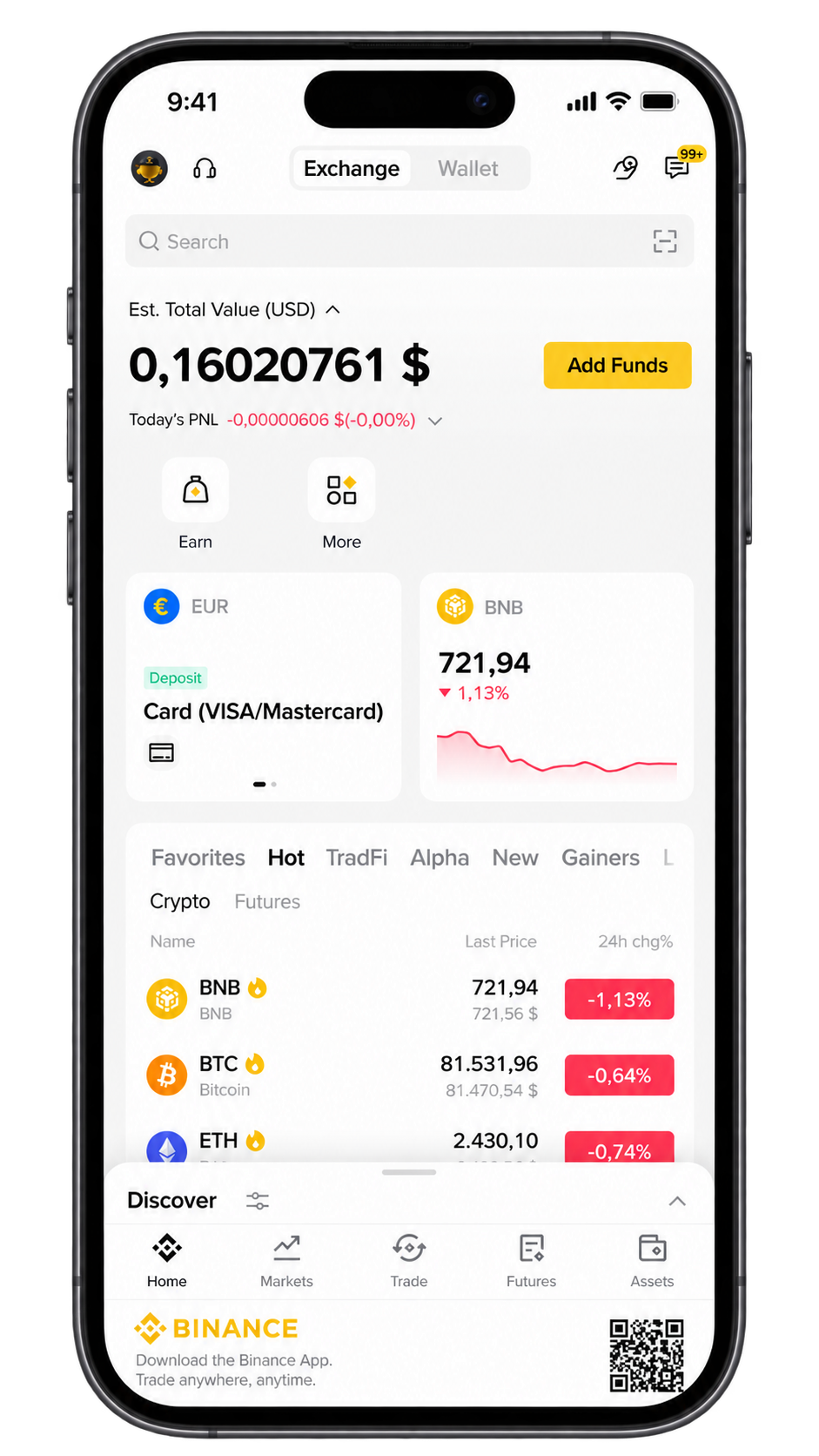
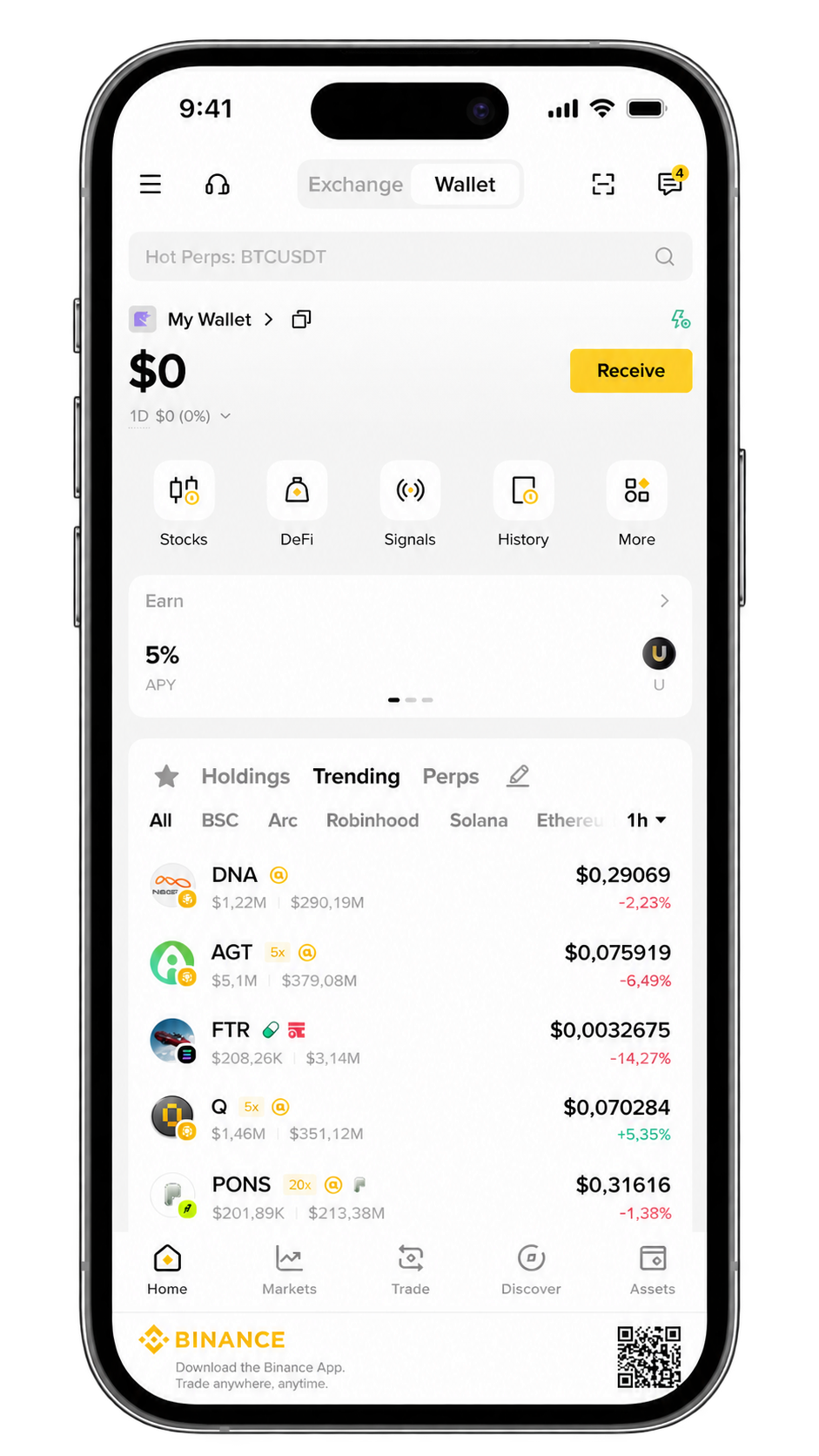
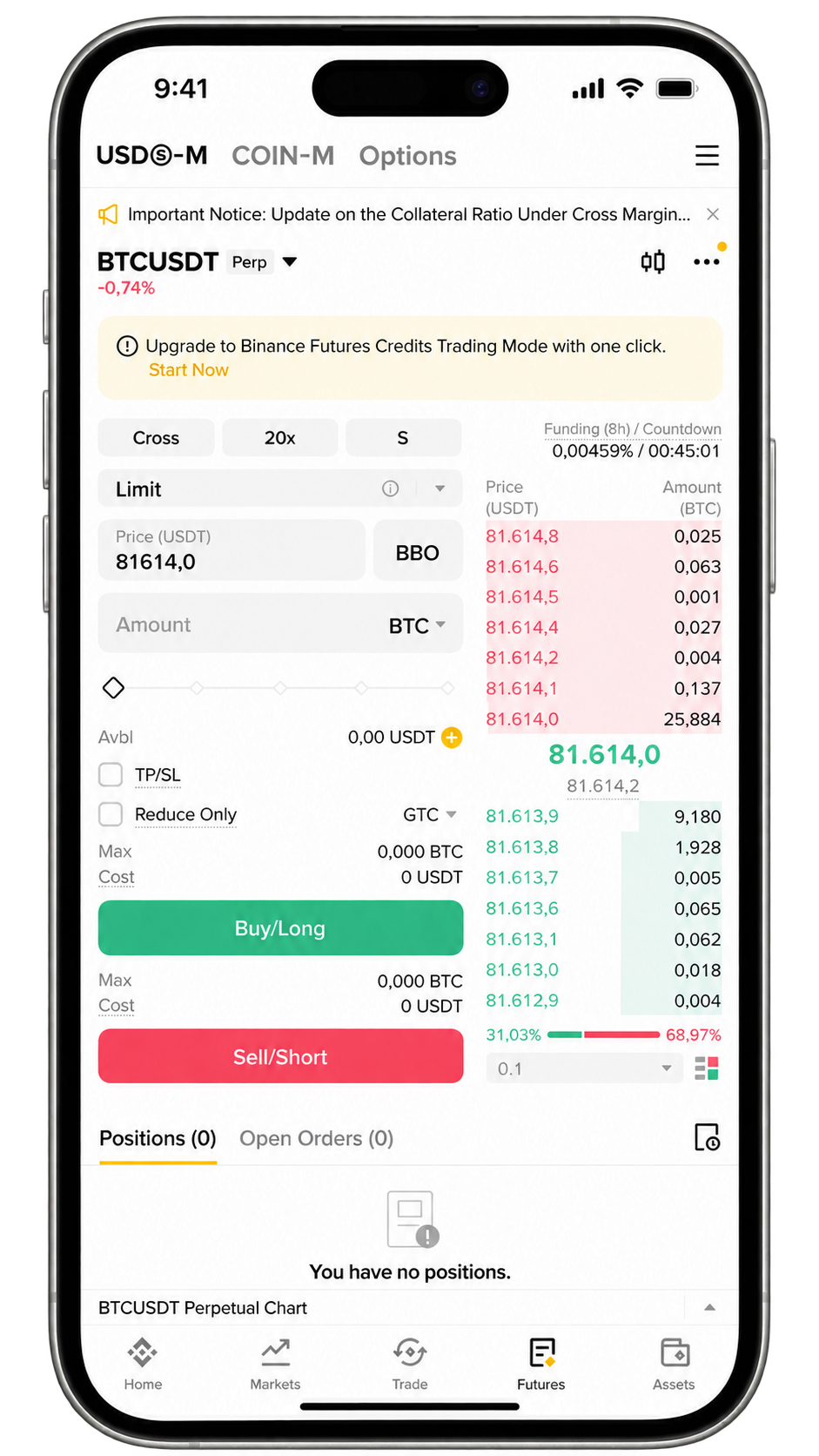
The Binance mobile app offers two distinct interfaces designed for different experience levels. Binance Lite simplifies cryptocurrency purchases, sales, conversions, and portfolio monitoring, making it easier for beginners to complete basic transactions without navigating complex trading screens. Binance Pro provides advanced charting, order management, derivatives, trading bots, and customizable market widgets for users who need greater control over their trading activity.
The Pro interface brings much of the desktop trading functionality to smartphones, including real-time market data, technical indicators, order placement, and position monitoring. Users can manage investments, receive price notifications, and respond to market movements without remaining at a computer. Nevertheless, detailed chart analysis and simultaneous monitoring of multiple trading pairs remain more comfortable on desktop, particularly for high-frequency or technically demanding strategies.
Account Navigation and Portfolio Management
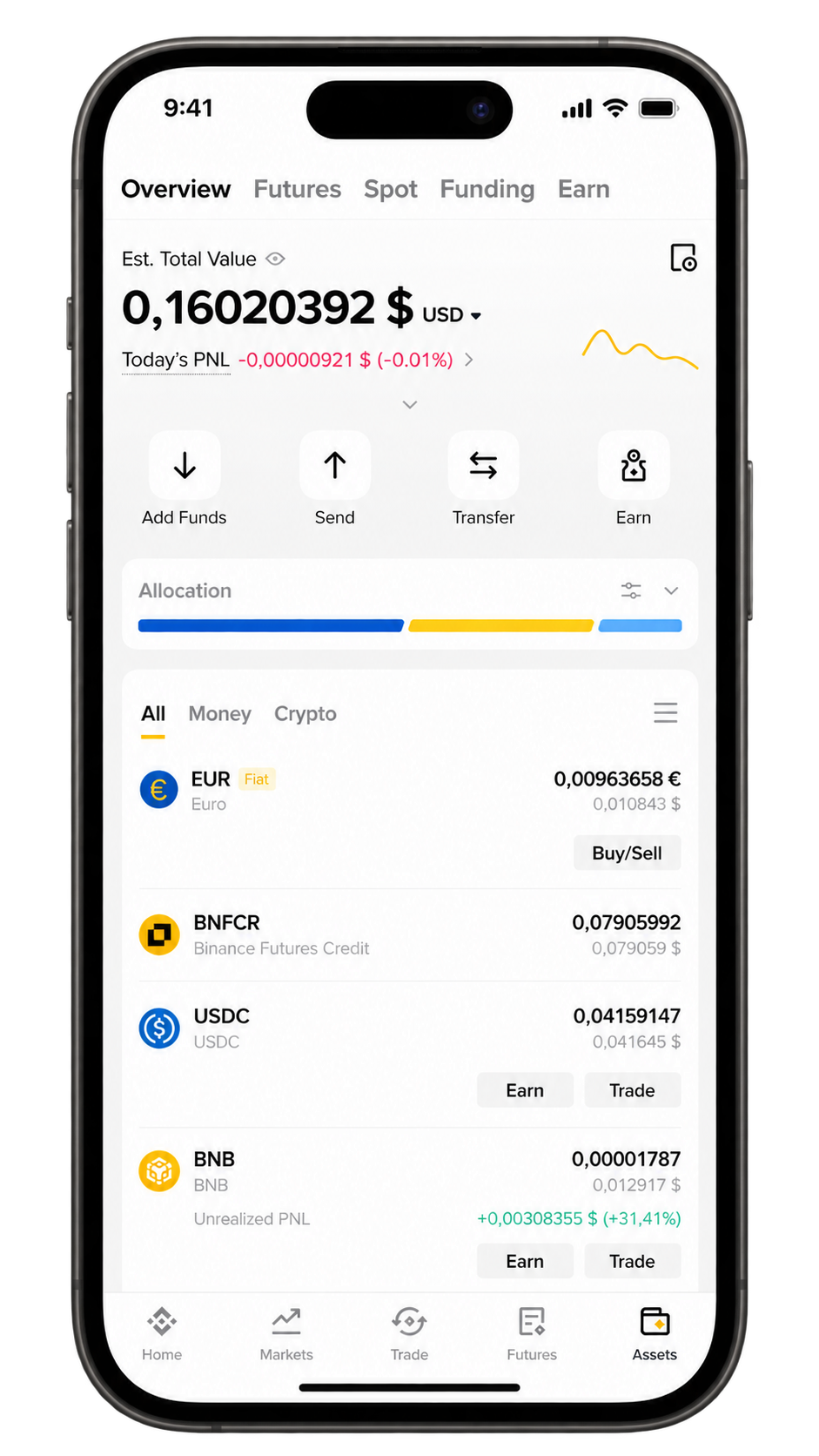
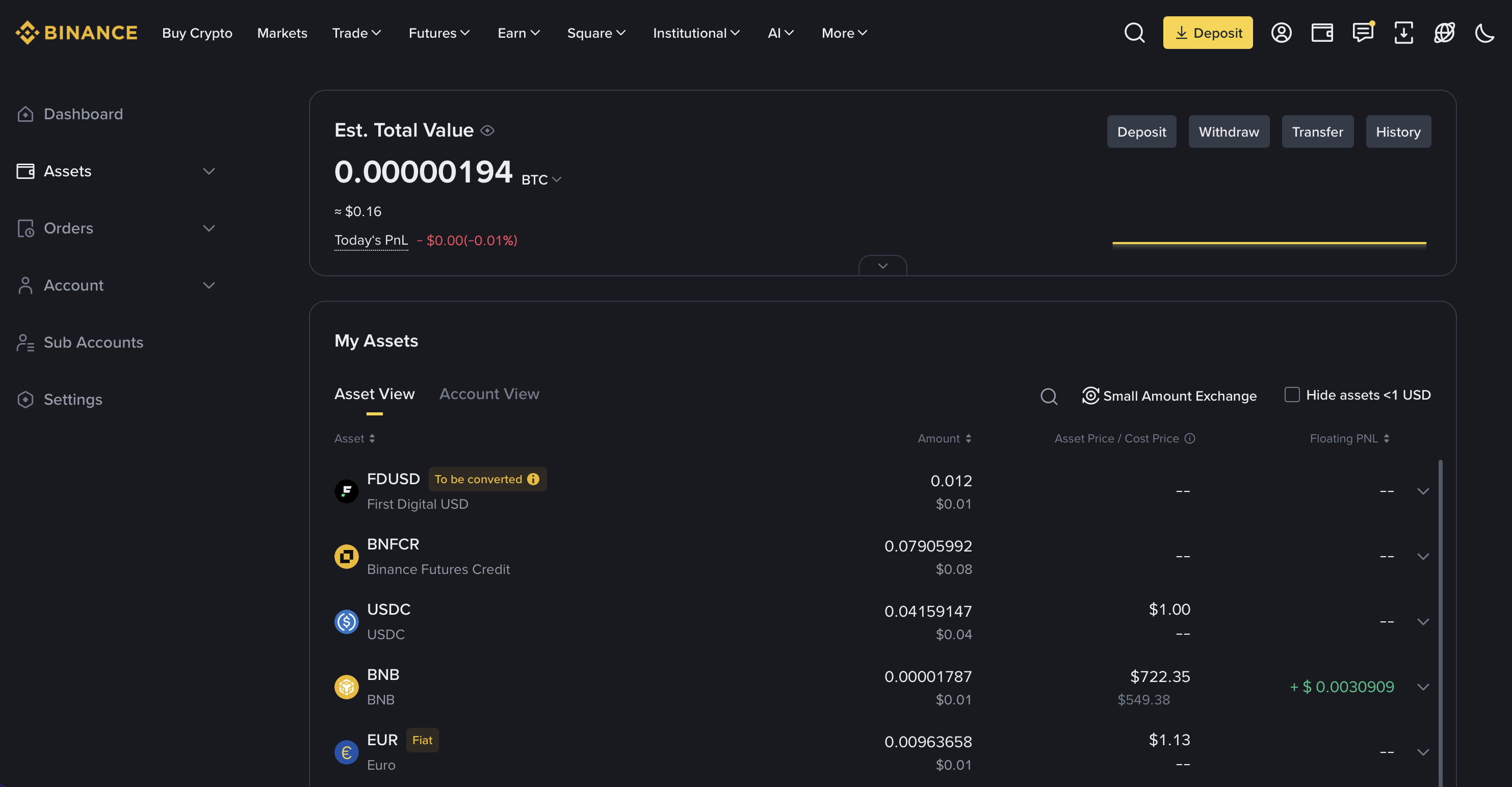
Binance separates funds across different account categories, including Spot, Funding, Margin, Futures, and Earn. This structure helps organize assets according to their intended use, although users may need to transfer balances internally before accessing certain trading products. The distinction is particularly important for leveraged trading, where collateral requirements and liquidation exposure differ substantially from ordinary spot holdings.
Portfolio management tools provide visibility into account balances, transaction histories, active orders, and investment positions. Users can also access staking subscriptions, recurring purchases, and other eligible financial products through the same ecosystem. The extensive functionality offers considerable flexibility, but beginners may need time to understand how balances, product restrictions, and redemption conditions differ across account sections.
Binance Customer Support and Account Assistance
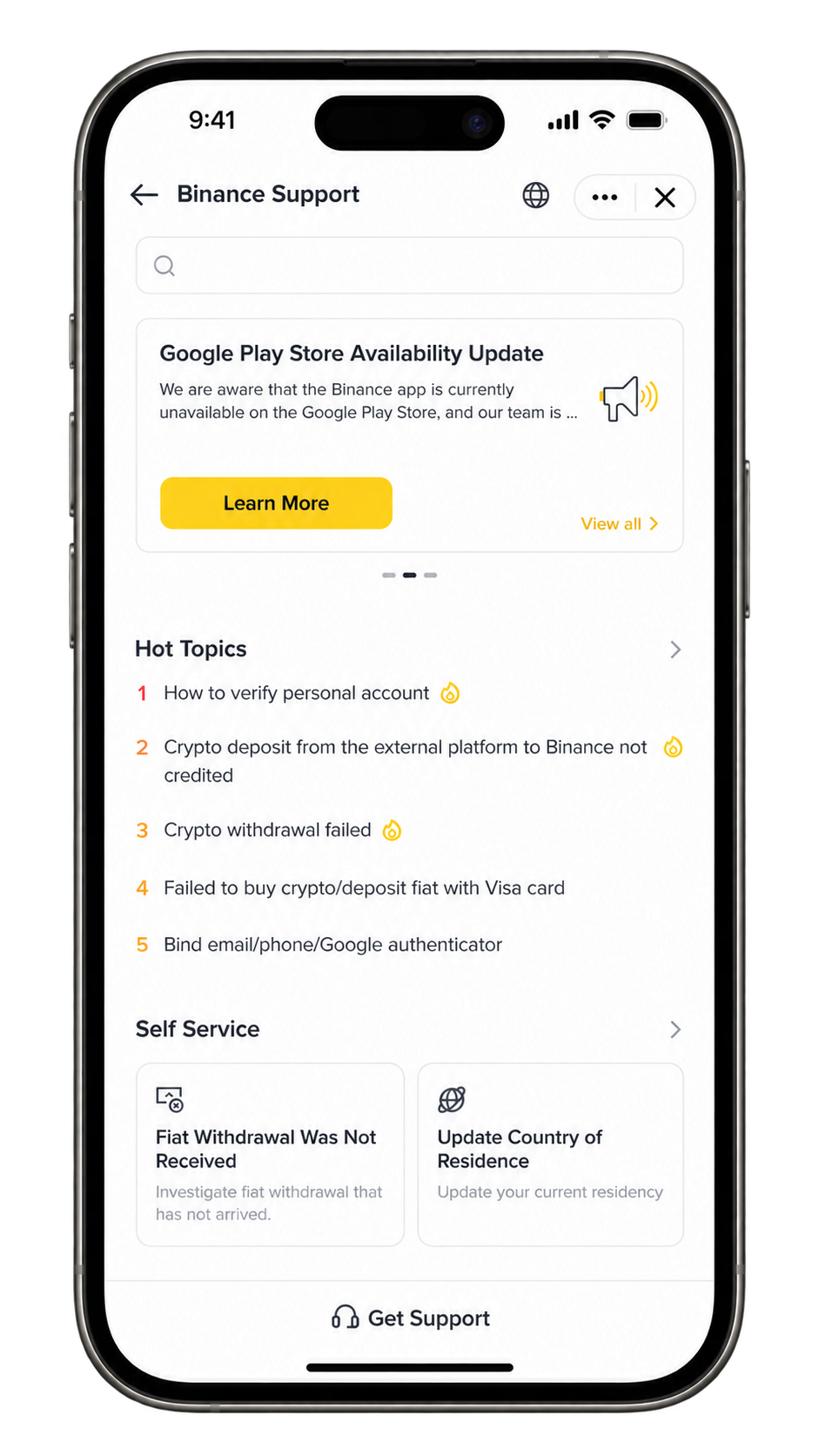
Binance provides 24/7 customer support through live chat, alongside an extensive help center covering account verification, deposits, withdrawals, trading, and security settings. Support is available in multiple languages, with automated assistance for routine questions and escalation to customer service representatives when additional intervention is necessary.
Straightforward issues involving account navigation or transaction procedures can often be addressed through existing support resources. More complicated cases, including identity verification disputes, withdrawal restrictions, payment investigations, and account security reviews, may require additional documentation and longer resolution times. Binance also maintains a formal complaint process for unresolved issues, providing an additional route for customers seeking a documented response.
Overall, Binance delivers a capable trading experience for investors who regularly use its advanced tools, while Lite mode makes basic cryptocurrency purchases more accessible. Its main usability limitation comes from the complexity of managing numerous trading and financial products within one ecosystem, rather than a lack of functionality or mobile accessibility.
Preview
KYC
Binance KYC, Regulation, and Restricted Countries
Binance requires identity verification before users can access standard cryptocurrency trading, deposits, and withdrawals. The Know Your Customer (KYC) process involves submitting government-issued identification, personal information, and facial verification, with additional proof of address required for certain account levels. Higher transaction limits, specific payment methods, or compliance reviews may also trigger requests for further documentation, including information about the source of funds. Verification requirements depend on the customer’s country of residence, account activity, and the services being used.
Binance operates under several regulatory frameworks, with a significant development taking place in January 2026 when its global platform transitioned to three entities licensed by the Abu Dhabi Global Market’s Financial Services Regulatory Authority (FSRA). Nest Exchange Limited handles spot and derivatives trading, Nest Clearing and Custody Limited oversees clearing and asset custody, and Nest Trading Limited provides brokerage and other off-exchange financial services. This structure establishes separate regulatory responsibilities for trading, settlement, and custody, although authorization in Abu Dhabi does not automatically permit Binance to offer every product in other jurisdictions.
European availability changed substantially in 2026 following Binance’s withdrawal of its Markets in Crypto-Assets (MiCA) authorization application in Greece. After the EU’s transitional deadline expired, Binance restricted new registrations, deposits, and Earn services in six European markets, including France, Italy, Spain, Poland, Belgium, and Sweden. Affected customers retained withdrawal access, while restrictions elsewhere depended on national requirements, account status, and the services involved. Binance continued pursuing an alternative EU authorization route, but its Abu Dhabi licensing could not substitute for the necessary European permissions.
Binance.com also remains unavailable to U.S. residents, who must use the separately operated Binance.US platform where eligible. Canada and several other jurisdictions face restrictions, while countries subject to international sanctions, including Iran, North Korea, Cuba, and Syria, are excluded from relevant services. Availability can differ between spot trading, derivatives, staking, fiat payments, and individual cryptocurrencies, making geographic eligibility more complex than a single list of supported countries.
For investors, Binance’s regulatory position provides a combination of established international licensing and significant regional limitations. Customers should verify their eligibility, available products, and the legal entity responsible for their accounts before depositing funds, particularly when accessing leveraged trading or yield-generating services. The exchange’s extensive global infrastructure does not guarantee identical regulatory protections, payment options, or trading permissions across countries.
Comparison
Binance vs Kraken, Coinbase, and OKX
Binance competes with several established cryptocurrency exchanges, each offering different advantages in trading costs, available markets, regulatory coverage, and platform functionality. Kraken places greater emphasis on regulated market access, Coinbase provides an accessible experience for fiat-based investors, and OKX competes closely with Binance in advanced trading and automation.
Binance vs Kraken
| Feature | Binance | Kraken |
|---|---|---|
| Established | 2017 | 2011 |
| Supported Cryptocurrencies | 500+ | 600+ |
| Spot Maker Fee | 0.10% | 0.40% |
| Spot Taker Fee | 0.10% | 0.80% |
| Fee Discounts | 25% BNB discount; VIP tiers | Volume and asset-based tiers |
| Spot Liquidity | Deep markets across major pairs | Strong liquidity on major USD and EUR pairs |
| Futures and Margin | Extensive, where permitted | Available to eligible users |
| Trading Bots | Built-in automation | API and third-party tools |
| Staking | Binance Earn and staking | Staking and rewards products |
| Fiat Support | Region-dependent banking and cards | Broad bank transfer and EUR funding options |
| Proof of Reserves | Published reserve reports | Independently verified periodic reports |
| EU Regulation | MiCA authorization not yet announced; regional restrictions | MiCA-authorized in Ireland |
| Best Suited For | Active, cost-conscious traders | Investors prioritizing regulatory coverage and professional trading tools |
Binance has a considerable advantage in standard spot trading fees, charging 0.10% for both makers and takers compared with Kraken’s 0.40% and 0.80% entry-level rates. Kraken becomes more competitive at higher trading volumes, but Binance remains particularly attractive for frequent spot trading and automated strategies.
Kraken distinguishes itself through its longer operating history, established fiat banking infrastructure, and European regulatory authorizations. Its Kraken Pro platform provides sophisticated execution tools, while Binance offers a broader integrated environment for traders combining spot markets, derivatives, automation, and Earn products.
Binance vs Coinbase
| Feature | Binance | Coinbase |
|---|---|---|
| Established | 2017 | 2012 |
| Supported Cryptocurrencies | 500+ | Hundreds |
| Spot Maker Fee | 0.10% | Depends on Advanced fee tier |
| Spot Taker Fee | 0.10% | Depends on Advanced fee tier |
| Fee Discounts | BNB payments and VIP levels | Volume and eligible USDC balance tiers |
| Trading Interface | Basic and professional modes | Simple trading and Coinbase Advanced |
| Spot Liquidity | Deep liquidity across major markets | Strong liquidity on major USD pairs |
| Futures and Derivatives | Extensive, region-dependent | Available to eligible users |
| Trading Bots | Integrated trading bots | API and third-party automation |
| Staking | Extensive Earn ecosystem | Staking and rewards on eligible assets |
| Fiat Support | Depends on country and provider | Extensive bank and card integrations |
| Proof of Reserves | Published reserve reports | No equivalent comprehensive public report |
| EU Regulation | MiCA authorization not yet announced; regional restrictions | MiCA-authorized in Luxembourg |
| Best Suited For | Experienced and active traders | Beginners and investors prioritizing fiat access |
Binance is particularly competitive for investors who regularly trade cryptocurrencies and want predictable spot commissions, advanced order types, and access to a wide selection of trading products. Coinbase offers a more accessible route into cryptocurrency markets, with streamlined purchasing, familiar bank payment methods, and professional execution tools through Coinbase Advanced.
Coinbase’s Advanced trading fees depend on the customer’s qualifying tier, while simple purchases can include additional spreads and payment charges. Binance generally offers a more extensive built-in trading toolkit, whereas Coinbase emphasizes accessibility, fiat integration, and a regulated operating structure in major markets.
Binance vs OKX
| Feature | Binance | OKX |
|---|---|---|
| Established | 2017 | 2017 |
| Supported Cryptocurrencies | 500+ | Hundreds |
| Spot Maker Fee | 0.10% | 0.08% global reference |
| Spot Taker Fee | 0.10% | 0.10% global reference |
| EU Spot-Only Fees | Availability and fees depend on permitted services | 0.10% maker / 0.20% taker |
| Fee Discounts | BNB payments and VIP tiers | Volume and asset-based VIP tiers |
| Spot Liquidity | Deep markets across major pairs | Competitive liquidity on major trading pairs |
| Futures and Margin | Extensive, region-dependent | Extensive, region-dependent |
| Trading Bots | Grid and other automated strategies | Grid, DCA, and other automated strategies |
| Copy Trading | Available | Available |
| Staking and Earn | Broad Binance Earn selection | OKX Earn products |
| Web3 Wallet | Binance Wallet ecosystem | OKX Wallet ecosystem |
| Proof of Reserves | Published reserve reports | Published reserve reports |
| EU Regulation | MiCA authorization not yet announced; regional restrictions | MiCA-authorized in Malta |
| Best Suited For | Traders seeking broad market access and integrated services | Experienced traders prioritizing automation and advanced tools |
Binance and OKX are closely matched in advanced trading functionality, with both offering sophisticated order types, derivatives, automated strategies, and competitive commissions. OKX’s global regular-user spot fees start at 0.08% maker and 0.10% taker, giving it a small maker-fee advantage before Binance’s applicable BNB discount.
European pricing changes the comparison because OKX applies different fee schedules depending on the account’s product permissions. Regular EEA spot-only accounts pay 0.10% maker and 0.20% taker, while eligible accounts with derivatives permissions can qualify for different rates.
Binance offers a particularly extensive cryptocurrency trading ecosystem, while OKX remains a strong alternative for experienced traders seeking automated execution tools, derivatives functionality, and a dedicated Web3 environment. For European customers, regulatory availability and the account’s actual fee schedule may be more important than differences in the global headline rates.
Fees represent published standard order-book trading rates, not instant-buy pricing. Actual costs, products, and supported markets depend on the user’s account tier, jurisdiction, trading pair, and current promotions. Coinbase Advanced fees are account-specific, and OKX maintains separate regional schedules.
Pros & Cons
- Low regular spot trading fees with additional eligible BNB and volume-based reductions.
- Deep markets, extensive order tools and derivatives for eligible active traders.
- Large cryptocurrency selection and multiple routes for exchanging or transferring assets.
- Broad Earn and staking menu supported by useful account-security controls.
- Centralized custody creates counterparty and withdrawal-access exposure.
- Country-specific restrictions make services and funding methods inconsistent.
- Dense navigation can lead inexperienced users toward unsuitable leveraged or structured products.
- Historical compliance failures and incomplete visibility beyond proof-of-reserves snapshots warrant scrutiny.
Bottom Line
Is Binance Worth Using in 2027?
Binance earns 8.7/10 and remains one of the strongest cryptocurrency exchanges in 2027, particularly for traders who value deep liquidity, competitive fees, extensive market coverage, and sophisticated trading tools. Its combination of low-cost spot execution, advanced derivatives, automated strategies, and access to hundreds of cryptocurrencies makes it difficult for most competitors to match its overall trading capabilities. The platform also delivers considerable value beyond trading through Binance Earn, staking, recurring investments, and a comprehensive mobile experience that serves both casual investors and experienced traders.
Binance’s greatest strength is how effectively these services work together. Traders can manage diversified portfolios, execute complex strategies, access liquid markets, and use additional financial products without constantly switching between platforms. Its established infrastructure, extensive asset selection, and competitive pricing make it particularly attractive for active traders and investors seeking a comprehensive cryptocurrency ecosystem.
Regulatory restrictions, centralized custody, and the complexity of certain leveraged and yield-generating products remain considerations, particularly for users in jurisdictions with limited service availability. Nevertheless, Binance continues to set a high standard for cryptocurrency trading, offering an exceptional combination of functionality, market access, and value. For eligible users who want a powerful, versatile exchange capable of supporting everything from straightforward spot purchases to professional trading strategies, Binance remains an excellent choice.
FAQs
Is Binance safe enough for keeping long-term crypto holdings?
Binance has substantial account-security controls, proof-of-reserves tools and the SAFU emergency fund, but assets held in its exchange accounts remain under third-party custody. Users who do not need immediate liquidity can reduce counterparty exposure by moving long-term holdings to a properly secured self-custody wallet, while recognizing the backup and signing responsibilities that introduces.
What are the normal Binance trading fees?
Regular standard spot fees are 0.10% maker and 0.10% taker, falling to 0.075% on eligible trades when the BNB fee discount applies. Standard USDT-margined futures typically start at 0.02% maker and 0.05% taker. VIP tiers, selected pairs, promotions and regional pricing can change the amount actually charged.
Can Binance be used without identity verification?
Standard access requires KYC verification, including for new users who want to deposit or trade. Additional checks can apply to particular activities or locations, and verification status affects account limits. Binance should not be considered a no-KYC exchange.
Is Binance Earn the same as staking?
Binance Earn is not limited to staking because it combines native staking with flexible and locked yield subscriptions and more complex investment structures. Their returns can come from different mechanisms, and redemption, counterparty and market risks are not identical. The specific product terms matter more than the displayed APR.
Is Binance cheaper than Kraken, OKX and Coinbase?
Binance has a clear advantage over Kraken's entry-level spot commissions, while OKX can be similarly priced and sometimes cheaper for standard maker orders. Coinbase Advanced pricing depends on product and account tier. Spreads, fiat fees and withdrawals can reverse a headline-fee comparison, so users should price the complete trade.
Can customers in every country use Binance futures and all listed coins?
Trading pairs, derivatives, staking products and fiat services depend on residence, verification status and the relevant operating entity, so global access is not universal. Binance.com and Binance.US are separate, and European permissions must be checked by country and product. Opening an account or seeing a product in an app does not establish local eligibility.