






 X
 Facebook
 LinkedIn
 Google News
 Telegram
 Instagram
 RSS Feed



Introduction
Kraken Review 2027: Fees, Security, Staking, and Trading Features
Kraken is one of the longest-established cryptocurrency exchanges, combining extensive market coverage, professional trading tools, and advanced account security. Founded in 2011, the platform supports more than 700 cryptocurrencies, with spot trading, margin, futures, staking, and automated earning products available to eligible customers. Kraken Pro provides sophisticated order execution and market analysis, while the standard platform simplifies cryptocurrency purchases, recurring investments, and fiat transfers. Its expanding range of financial products also includes tokenized stocks and ETFs through xStocks in supported jurisdictions.
Security and transparency are central to Kraken’s offering. Passkeys, hardware security keys, a dedicated Master Key, and Global Settings Lock provide multiple defenses against account compromise, while independently reviewed Proof of Reserves reports allow customers to verify selected balances against the exchange’s reported holdings. Kraken also operates through regulated entities in several markets, including MiCA-authorized businesses in Ireland serving the European Economic Area. These safeguards strengthen its security credentials, although customer assets held on the exchange remain under centralized custody, and reserve verification does not constitute a complete financial audit.
Trading costs are a more significant drawback, particularly for investors who do not qualify for higher fee tiers. Kraken Pro’s standard spot fees start at 0.40% maker and 0.80% taker, while Instant Buy carries a 1% trading fee plus an applicable spread. Higher-volume traders and customers meeting qualifying asset-balance thresholds can access reduced fees, but several competing exchanges offer lower entry-level rates. Kraken’s value therefore depends on whether its security controls, fiat accessibility, market selection, and trading infrastructure justify the additional cost.
Kraken Overview
| Category | Kraken in 2027 |
|---|---|
| Founded | 2011 |
| Exchange model | Centralized and custodial |
| Core interfaces | Kraken and Kraken Pro, web and mobile |
| Crypto selection | More than 600 assets advertised; country restrictions apply |
| Entry-level Kraken Pro spot fees | 0.40% maker / 0.80% taker on the standard schedule |
| Instant Buy | 1% trading fee plus any applicable spread; payment costs may apply |
| Futures and margin | Available subject to jurisdiction and account eligibility |
| Staking | Bonded, flexible, and Auto Earn options for eligible users |
| Reserve transparency | Independently reviewed, client-verifiable snapshots for selected assets |
| European authorization | MiCA authorization via the Central Bank of Ireland |
| Overall CryptoAdventure rating | 8.4/10 |
What Is Kraken?
Kraken is a centralized cryptocurrency exchange that allows customers to buy, sell, trade, and earn rewards on supported digital assets through its website and mobile applications. Its services cover ordinary spot transactions, fiat deposits and withdrawals, advanced order-book trading, and leveraged products where permitted. Unlike a self-custodial wallet, Kraken manages the private keys securing cryptocurrency deposited into exchange accounts, allowing customers to trade through internal balances without independently signing every transaction on the blockchain.
The platform separates everyday investing from professional trading through two distinct interfaces. The standard Kraken application prioritizes accessible cryptocurrency purchases, portfolio management, recurring investments, and eligible earning services. Kraken Pro provides real-time order books, market-depth information, advanced charting, conditional orders, and API connectivity, giving experienced traders greater control over execution prices and order management. Its maker-taker pricing also differs from the quoted fees and spreads associated with instant purchases, making the choice of trading interface particularly relevant to transaction costs.
Kraken has expanded its product offering through staking, Auto Earn, derivatives, and tokenized equity markets. Auto Earn can allocate eligible balances to supported staking or rewards programs, while futures and margin trading provide leveraged market exposure in permitted jurisdictions. The xStocks offering adds access to tokenized representations of selected stocks and ETFs, although these instruments do not confer ordinary shareholder rights and are subject to regional restrictions. Each service operates under its own eligibility requirements, costs, and risks, so access to Kraken’s spot exchange does not automatically qualify an account for every available product.
For European customers, Kraken operates through entities authorized under the Markets in Crypto-Assets Regulation, including Payward Europe Solutions Limited, which is supervised by the Central Bank of Ireland. Separate regulatory permissions apply to electronic-money services, trading-platform operations, and certain investment products. This framework provides clearer legal oversight for eligible customers, but it does not eliminate market volatility, account restrictions, or the risks associated with exchange custody.
Who Is Kraken Best Suited For?
Kraken is particularly well suited to security-conscious cryptocurrency investors who value established exchange operations, fiat banking support, and strong account protection. Its straightforward purchasing interface accommodates beginners, while Kraken Pro offers the charting, order controls, and execution flexibility required by active traders. Investors who prioritize reserve transparency, European regulatory oversight, and access to staking or other supported investment services may also find it attractive.
Its main limitations are relatively high entry-level trading fees and geographic restrictions on certain products. Frequent traders focused on minimizing execution costs should compare Kraken Pro’s applicable fee tier with competing exchanges, while users seeking extensive built-in trading automation may prefer more specialized platforms. For long-term investors, Kraken offers a convenient environment for purchasing and managing cryptocurrency, although substantial holdings may be better protected through independently secured self-custody rather than remaining entirely on an exchange.
Fees
Kraken Fees Explained
Kraken uses different fee structures for instant cryptocurrency purchases, professional spot trading, derivatives, margin positions, and staking. Its standard buying interface prioritizes convenience but charges a 1% trading fee plus an applicable spread, while Kraken Pro starts at 0.40% maker and 0.80% taker, with lower rates available through volume-based and asset-based fee tiers. Following its 2026 pricing changes, qualifying customers can also obtain reduced trading fees based on their trading activity or assets held on the platform.
Trading costs extend beyond spot orders. Futures use a separate maker-taker schedule, margin positions incur opening and recurring rollover charges, and staking commissions reduce the rewards customers receive. Fiat deposits and withdrawals also depend on the payment method and jurisdiction, while cryptocurrency withdrawal fees vary by asset and blockchain. The table below covers Kraken’s main fees as of October 2026.
Kraken Exchange Fee Structure
| Fee Type | Standard Fee | Details |
|---|---|---|
| Kraken Pro Spot Trading | 0.40% maker / 0.80% taker | Entry-level trading fees; decrease with qualifying volume or asset balances |
| Kraken Pro High-Volume Spot Trading | As low as 0% maker / 0.05% taker | Highest published standard spot tier |
| Spot Maker Rebates | As low as -0.02% maker | Available on selected lower-liquidity trading pairs at qualifying tiers |
| Instant Buy & Sell | 1% + spread | Standard instant cryptocurrency purchases and sales |
| Recurring Purchases | 1% + spread | Automated cryptocurrency purchases through the standard interface |
| Custom Orders (Standard App) | 1.5% + spread | Applies to supported custom orders outside Kraken Pro |
| Cryptocurrency Conversions | Generally 1% + spread | Standard Convert transactions; eligible exceptions may apply |
| Small Balance Conversions | 3% | Applies to supported conversions below the ordinary minimum order size |
| Stablecoin & FX Trading | 0.20% maker / 0.20% taker | Standard rates for qualifying stablecoin, pegged-token, and foreign-exchange pairs |
| USDG Trading Pairs | 0% maker / 0.01% taker | Applies to qualifying pairs with USDG as the base currency |
| Futures Trading (Kraken Pro) | 0.02% maker / 0.05% taker | Entry-level derivatives fees; lower rates available at higher tiers |
| Consumer Perpetual Trading | 0.25% opening / 0.25% closing | Charged on position notional value through the supported consumer perps product |
| Perpetual Futures Funding | Variable | Periodic funding transfers determined by the contract and market conditions |
| Margin Opening Fee | Approximately 0.01%–0.05% | Depends on the borrowed asset and applicable margin rate |
| Margin Rollover Fee | Approximately 0.01%–0.05% every 4 hours | Charged while maintaining a margin position; spot trading fees also apply |
| Bonded Staking | From 25% of rewards | Standard commission for balances below $1 million; lower tiers apply at higher eligible balances |
| Flexible Staking & Auto Earn | Generally 30% of rewards | Published staking-program commission; selected assets use bonded-staking tiers |
| Staking & Unstaking Transactions | No standard Kraken transaction fee | Staking commissions and blockchain unbonding conditions may still apply |
| Cryptocurrency Deposits | Usually free | Certain assets or deposit methods have additional fees or minimums |
| Cryptocurrency Withdrawals | Variable | Depends on cryptocurrency, selected blockchain, and network conditions |
| EUR SEPA Deposits | Free | Supported SEPA and SEPA Instant bank funding methods |
| EUR SEPA Withdrawals | Typically €0.90–€1 | Depends on the supported banking provider and withdrawal method |
| USD ACH Deposits | Free | Available to eligible U.S. customers; withdrawal holds may apply |
| USD ACH Withdrawals | Free | Available to eligible U.S. customers |
| USD FedWire Deposits | Free through selected providers | Incoming bank charges may apply |
| USD FedWire Withdrawals | $4 through selected providers | Fees and availability depend on banking provider |
| Debit Card Cash Deposits | 3.75% + €0.25 or $0.25 | Published direct cash-deposit rates for supported EUR/USD methods |
| Card Crypto Purchases | Variable additional payment fee | Depends on payment method, jurisdiction, and quoted transaction |
| Kraken+ Subscription | $4.99/month | Includes eligible zero-fee trading benefits and selected rewards |
| Kraken+ Trading Allowance | $0 trading fee up to $10,000/month | Eligible simple trades only; spreads and payment processing fees still apply |
| Stocks & ETFs | $0 commission | Eligible U.S. stock and ETF trading; regulatory charges may apply |
| xStocks Trading (Kraken Pro) | 0% maker / 0.08% taker | Entry-level tokenized-stock order-book fees |
| Account Opening & Maintenance | Free | No standard charge for opening or maintaining an account |
Kraken Pro Spot Trading Fee Tiers
Kraken Pro applies a tiered maker-taker structure, with discounts determined by qualifying trading volume and assets held on the platform. Under its cross-platform pricing model, eligible spot volume, futures activity, or asset balances can determine the most favorable applicable tier. Instant purchases do not count toward qualifying spot trading volume.
| 30-Day Spot Volume | Maker Fee | Taker Fee |
|---|---|---|
| $0+ | 0.40% | 0.80% |
| $2,500+ | 0.30% | 0.60% |
| $10,000+ | 0.22% | 0.38% |
| $25,000+ | 0.20% | 0.35% |
| $50,000+ | 0.15% | 0.30% |
| $100,000+ | 0.12% | 0.25% |
| $250,000+ | 0.10% | 0.22% |
| $500,000+ | 0.08% | 0.20% |
| $1 million+ | 0.06% | 0.18% |
| $2.5 million+ | 0.04% | 0.15% |
| $5 million+ | 0.02% | 0.12% |
| $10 million+ | 0% | 0.10% |
| $50 million+ | 0% | 0.09% |
| $100 million+ | 0% | 0.08% |
| $250 million+ | 0% | 0.07% |
| $400 million+ | 0% | 0.06% |
| $500 million+ | 0% | 0.05% |
These are the standard spot-market tiers. Selected markets have separate pricing or maker rebates, and qualifying futures volume or asset balances may unlock a tier without meeting its spot-volume threshold.
Are Kraken Trading Fees Competitive?
Kraken Pro provides considerably better value than the exchange’s instant-buy interface for users comfortable placing orders directly. A $1,000 spot purchase at the entry-level Kraken Pro rates would cost $4 as a maker order or $8 as a taker order, excluding any slippage. The same amount purchased through Instant Buy would incur a $10 trading fee before the applicable spread and payment-processing charges.
Fees become more competitive as trading activity increases, although Kraken’s standard rates remain higher than those of several major international exchanges at lower volume tiers. Investors making frequent purchases can reduce costs by using Kraken Pro, while Kraken+ may appeal to customers who prefer simplified trading and can make sufficient use of its monthly fee allowance. The most economical option depends on transaction frequency, account tier, payment method, and the total quoted execution price.
Security
Kraken Security: Account Protection and Asset Custody
Kraken provides one of the more comprehensive account-security systems among major cryptocurrency exchanges, combining phishing-resistant authentication, withdrawal controls, and restrictions on sensitive account changes. Users can secure their accounts with passkeys, hardware security keys, and authenticator-based two-factor authentication, while additional protections such as the Master Key and Global Settings Lock (GSL) help prevent unauthorized recovery attempts and changes to withdrawal settings. These controls are particularly valuable for investors maintaining substantial exchange balances, where compromising an account can provide access to assets without requiring an attacker to breach the exchange’s underlying custody infrastructure.
Kraken’s account-security controls are designed to work together, with each mechanism addressing a different vulnerability. The Master Key provides additional protection against unauthorized password resets, even when an attacker gains access to the account’s registered email address. Global Settings Lock restricts modifications to sensitive account settings, including the addition of new cryptocurrency withdrawal addresses, and can impose a waiting period of one to 30 days before being disabled. However, a correctly configured Master Key can remove the lock immediately, making it important to protect that credential separately from ordinary login authentication.
Funding two-factor authentication adds another security requirement for cryptocurrency and fiat withdrawals, helping prevent unauthorized transfers following an account compromise. However, Funding 2FA alone does not prevent someone from adding a new withdrawal destination, while insufficiently protected account settings may allow an attacker to disable additional authentication. Combining Funding 2FA with Global Settings Lock provides stronger protection by restricting changes to the settings that enforce withdrawal verification. Kraken also supports separate authentication for trading and API access, allowing users to limit the consequences of compromised application credentials or unauthorized account activity.
Kraken maintains a combination of cold-storage and hot-wallet infrastructure, with access to sensitive systems governed by physical security, encryption, and internal monitoring controls. Its information-security program holds ISO/IEC 27001:2022 certification and has undergone SOC 2 examinations. Kraken’s qualified institutional custody offering also completed a SOC 2 Type 2 examination in 2025, providing additional independent assessment of that service’s operational controls. These evaluations support the company’s security credentials, although their scope differs and should not be interpreted as a guarantee that every Kraken product or account is protected against all possible threats.
Despite these safeguards, cryptocurrency deposited on Kraken remains under centralized custody. Customers depend on the exchange to safeguard private keys, maintain operational availability, and process withdrawals in accordance with its security procedures and legal obligations. Account protection and institutional security controls reduce several important risks, but they do not eliminate the possibility of service interruptions, fraudulent transactions, or restrictions on access to funds. For long-term investors, Kraken’s security infrastructure provides a strong custodial environment, while self-custody remains an alternative for those who prefer direct control over their private keys.
Kraken Proof of Reserves: Transparency and Limitations
Kraken operates an independently reviewed Proof of Reserves program that allows customers to verify whether their eligible cryptocurrency balances were included in a reserve assessment. The process combines cryptographic verification of customer liabilities with evidence of assets controlled by the exchange, providing greater transparency than an unaudited statement of cryptocurrency holdings. Kraken uses Merkle-tree accounting to represent customer balances without publicly disclosing individual account information, while independent reviewers examine whether the reported reserves cover the corresponding liabilities for the assets included in the assessment.
Kraken’s June 30, 2026 snapshot reported reserve ratios above 100% across all eight covered assets. Bitcoin reserves stood at 102.9%, Ethereum at 100.5%, Solana at 100.6%, XRP at 102.3%, and Cardano at 100.3%, while USDC, USDT, and USDG each reported coverage exceeding 105%. These figures indicate that the verified assets exceeded the customer liabilities included in the assessment at that reporting date. Customers can also access their Proof of Reserves information through Kraken Pro and use the available cryptographic verification tools to confirm that eligible account balances were incorporated into the reported liability data.
The verification process provides a meaningful advantage over exchanges that publish wallet balances without corresponding customer-liability information. A customer can examine whether the reported figures include their own holdings, while the independent review helps establish that Kraken controlled sufficient assets for the covered balances at the snapshot date. However, coverage is limited to the assets and account categories defined in the assessment, with specific accounting treatments applied to eligible spot, staking, margin, and futures balances. Cryptocurrency holdings outside the review’s scope are not automatically covered by its reserve ratios.
The limitations of proof-of-reserves verification also extend beyond the selection of assets. A reserve snapshot cannot establish that the exchange has no undisclosed corporate liabilities, that assets are free from every potential encumbrance, or that funds have not been borrowed temporarily to satisfy reporting requirements. It also cannot guarantee that sufficient liquidity will remain available during future market disruptions or that withdrawals will continue without restrictions. These factors require broader financial, operational, and regulatory assessments that are not fully addressed by cryptographic reserve verification.
Kraken’s combination of independent reserve reviews and customer-verifiable proofs provides useful evidence of asset backing and reinforces its transparency credentials. Nevertheless, reserve reporting should be evaluated alongside account security, custody arrangements, financial controls, and withdrawal reliability. A reserve ratio above 100% is an important positive indicator for the liabilities examined, but it does not eliminate the risks associated with keeping cryptocurrency on a centralized exchange.
Services
Spot Trading, Kraken Pro, and Order Execution
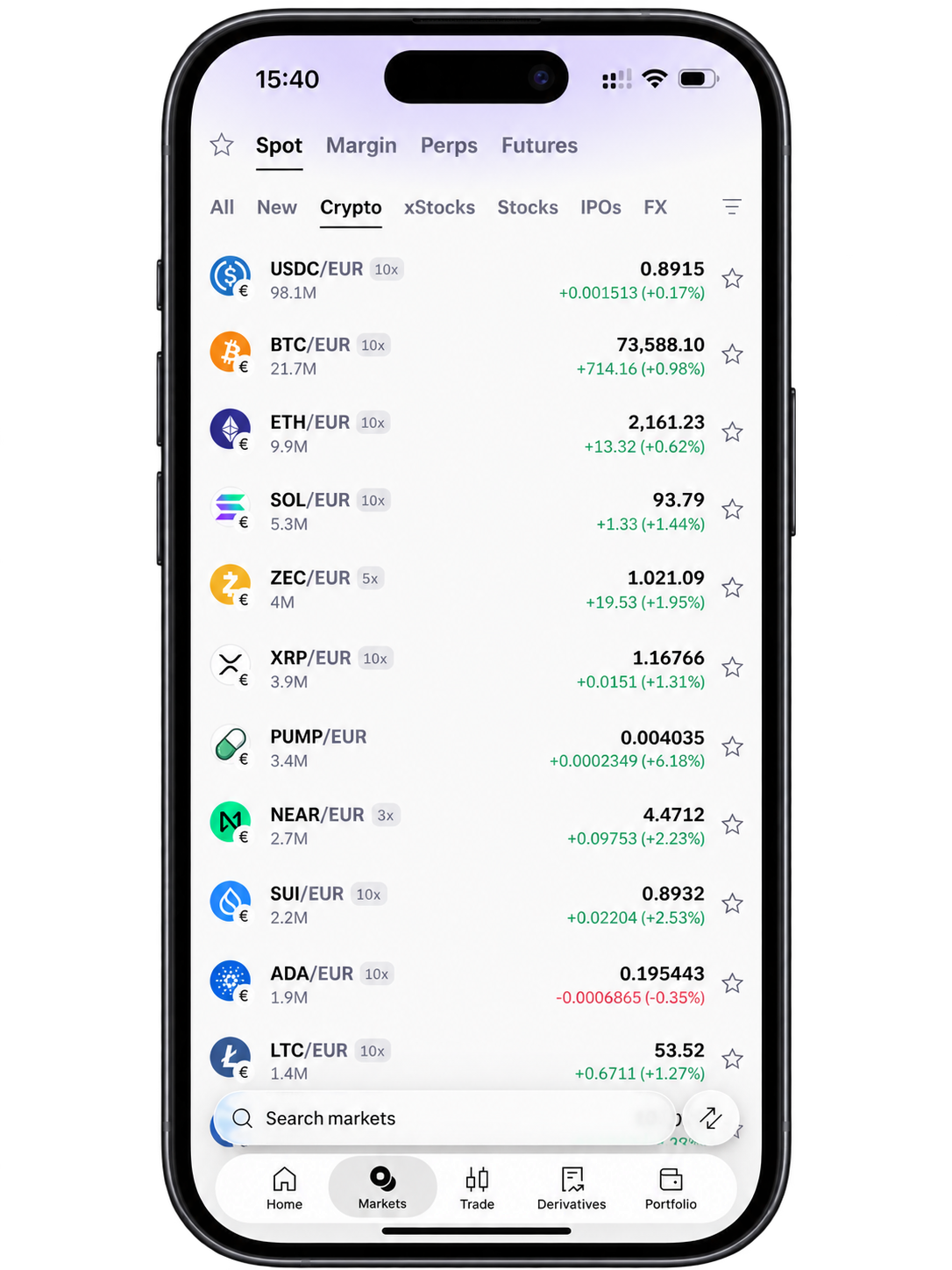
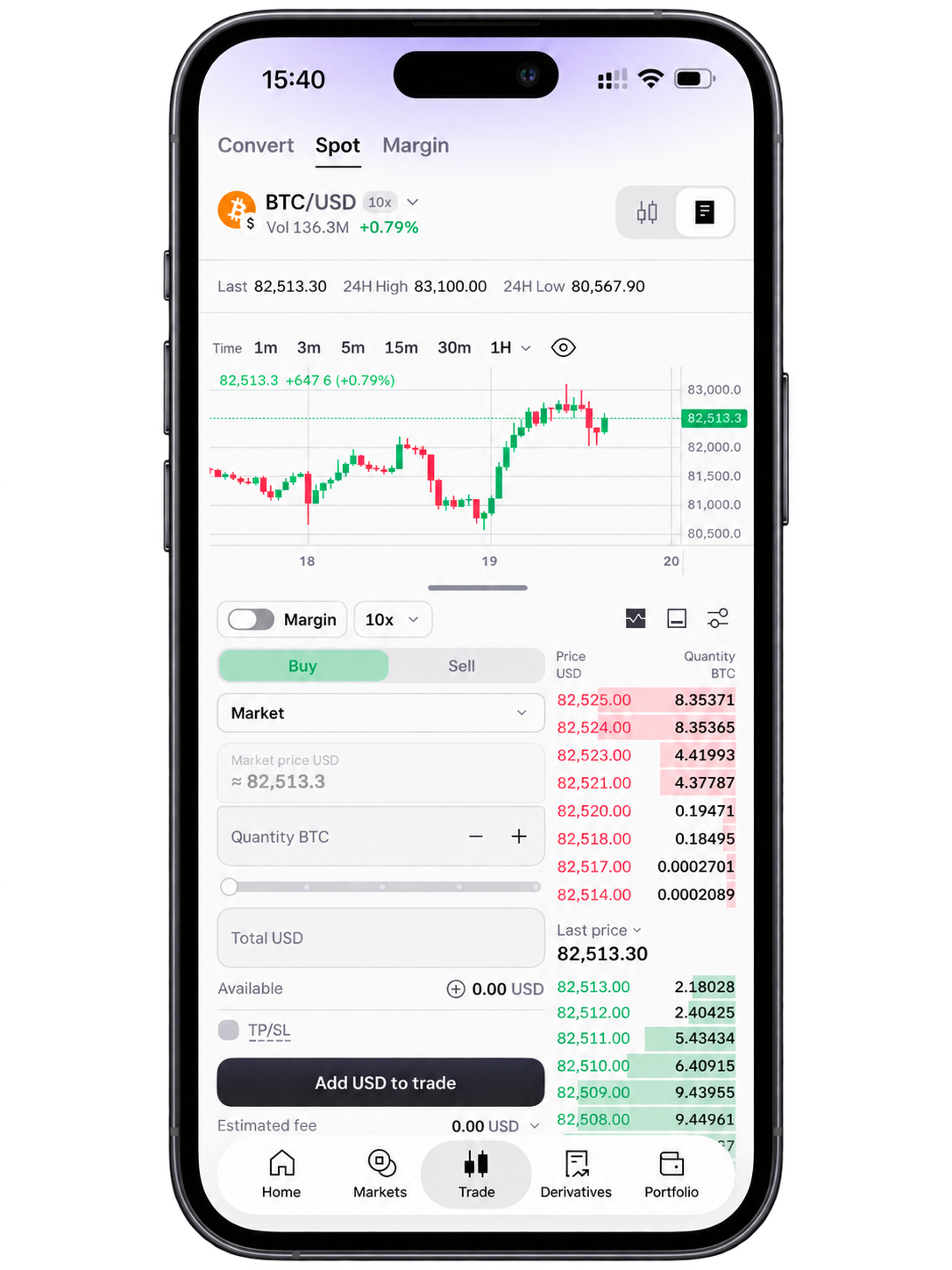
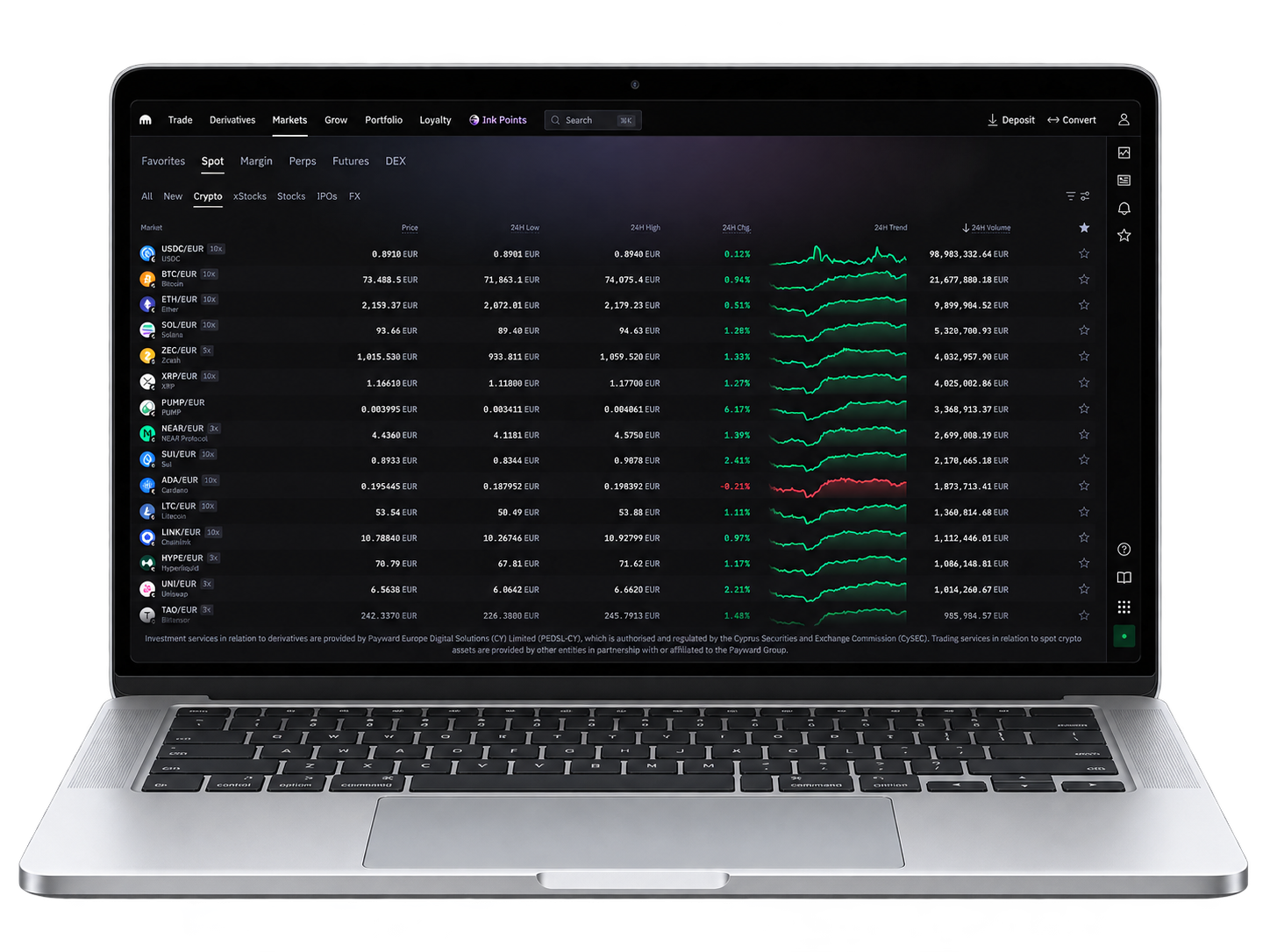
Kraken offers a comprehensive spot trading environment through Kraken Pro, combining real-time order books, market-depth information, TradingView-powered charts, technical indicators, and advanced order execution. The platform supports hundreds of cryptocurrencies across more than 1,400 trading pairs, providing access to major assets, stablecoins, and a growing selection of altcoins. Its professional interface is particularly useful for investors who want to analyze market conditions, monitor liquidity, and control execution prices rather than accepting instant purchase quotes.
Beyond conventional market and limit orders, Kraken Pro supports stop-loss, stop-limit, take-profit, trailing-stop, and iceberg orders. Its bracket-order functionality allows traders to establish both take-profit and stop-loss exits alongside supported primary orders, with one exit automatically canceling the other when triggered. Iceberg orders divide larger transactions into smaller visible portions, reducing the amount of liquidity displayed publicly at any given time. Kraken has also introduced TWAP Bot Orders, which spread execution over a selected period, although the feature is being rolled out progressively and may not be available to every account.
These tools provide greater control over trading, but execution quality remains dependent on market liquidity. A market order consumes available offers or bids and may execute across several price levels, while a limit order controls the acceptable execution price without guaranteeing that the transaction will fill. Stop-loss orders can also experience substantial slippage during sudden market movements, particularly when an asset has limited liquidity. Understanding order-book depth, spreads, and slippage is therefore important for traders placing larger orders or dealing with thinly traded cryptocurrencies. High-volume BTC and ETH markets generally provide deeper liquidity than newly listed tokens, although conditions can change rapidly during periods of volatility.
Kraken Pro also offers REST, WebSocket, and FIX API connectivity for supported trading and account-management operations, allowing developers and professional traders to integrate automated strategies and external execution systems. API permissions can be configured separately for balance inquiries, order management, and withdrawals, giving users control over what connected software can access. Trading applications generally do not need withdrawal authorization, making restricted API keys an important safeguard against unauthorized fund transfers. While Kraken’s built-in automation includes TWAP execution, its broader API infrastructure also supports traders who prefer developing or operating their own strategies.
Margin Trading, Futures, and Tokenized Equities
Kraken provides margin trading and cryptocurrency derivatives for eligible customers, allowing traders to establish leveraged positions and gain exposure to price movements without committing the full notional value of a trade. Available instruments include spot margin, perpetual futures, and other futures contracts, with market access determined by geographic location, account verification, and the applicable regulatory framework. These products have different collateral requirements, financing costs, and liquidation mechanisms, making their risk profiles considerably more complex than ordinary spot transactions.
Margin trading allows eligible customers to borrow funds against accepted collateral, increasing their buying or selling capacity. Borrowing introduces additional charges, including opening fees and recurring financing costs, while adverse price movements can reduce available equity and trigger liquidation. Kraken expanded access to U.S. retail margin trading in April 2026 through a separately regulated product operated by Kraken Derivatives US. Eligible U.S. customers can access this service through Kraken Pro after completing the required onboarding, while users qualifying as Eligible Contract Participants may have access to a different margin framework. International margin availability also varies, with additional conditions in markets such as the United Kingdom and Australia.
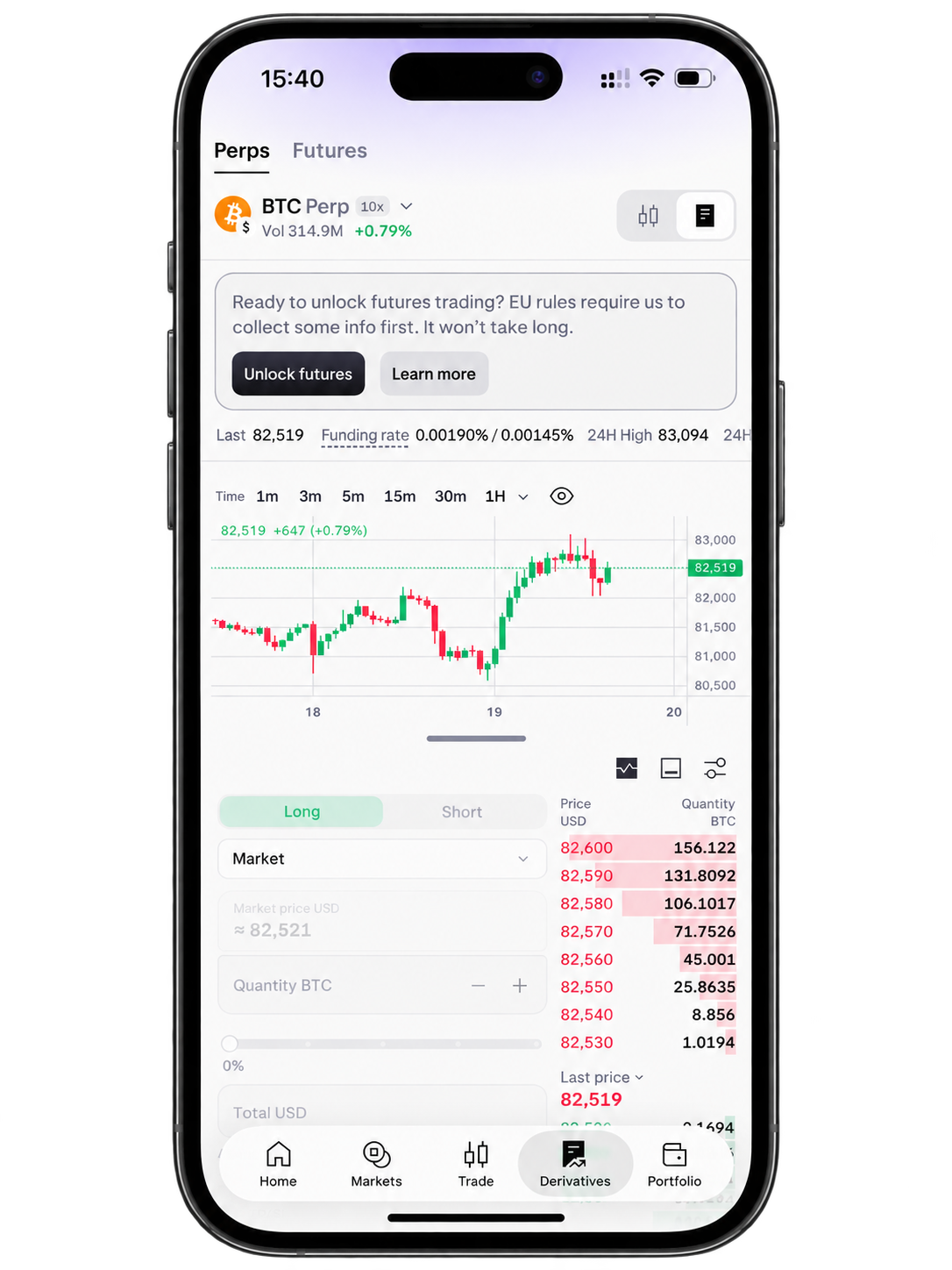
Kraken’s derivatives offering extends these capabilities through perpetual futures and other contracts that support leveraged long and short positions. Perpetual contracts use periodic funding payments to help maintain alignment between contract prices and their underlying markets, while futures with expiry dates follow separate settlement rules. Trading fees, funding rates, collateral valuation, and maintenance-margin requirements influence overall performance, and liquidation may occur when available margin falls below the required threshold. Eligible European Economic Area customers must complete an additional knowledge and experience assessment and provide relevant tax information before accessing Kraken Derivatives. Derivatives are also restricted or unavailable for certain customers in Canada, the United Kingdom, Australia, and other jurisdictions, depending on the applicable product and investor classification.
xStocks: Tokenized Stocks and ETFs
Kraken’s xStocks offering expands its trading ecosystem beyond cryptocurrencies by providing tokenized exposure to selected U.S. stocks and exchange-traded funds. Available assets include representations of companies such as Apple, Tesla, and NVIDIA, alongside ETFs tracking major market indices. Each xStock is designed to be backed by the corresponding underlying equity, with eligible users able to purchase fractional exposure and, where supported, transfer tokens to compatible blockchain wallets. Selected xStocks are also available for margin trading and extended-hours execution, although these capabilities vary considerably by region.
xStocks do not provide the same ownership rights as ordinary shares. Token holders generally do not receive shareholder voting rights, direct claims against the underlying company, or conventional cash dividend payments. Instead, applicable dividend benefits are reflected through an automatic reinvestment mechanism that adjusts the effective token balance. This provides economic exposure to certain corporate actions without transferring ordinary shareholder rights, while introducing additional dependencies on the token issuer, equity custodian, blockchain infrastructure, and available trading liquidity.
Geographic restrictions are particularly important. xStocks are unavailable to U.S. persons and customers in Canada, the United Kingdom, and Australia. In the European Economic Area, eligible customers must complete an appropriateness questionnaire and are limited to fiat-based purchases, sales, and conversions. EEA customers cannot use Kraken Pro’s ordinary xStocks order books or API trading, although supported conversion functionality remains available. Investors should therefore distinguish the global xStocks product catalogue from the transaction methods accessible through their own accounts.
Kraken Staking, Auto Earn, and DeFi Earn
Kraken offers several reward-generating services, including Bonded Staking, Flexible Staking, Auto Earn, and selected DeFi earning products. Although these features appear within the broader Kraken ecosystem, they involve different mechanisms for generating returns and different conditions governing access to deposited assets. Network staking rewards originate from proof-of-stake blockchain participation, while other earning arrangements may depend on stablecoin incentive programs, lending activity, or decentralized finance protocols.
Bonded and Flexible Staking
Bonded Staking allows eligible customers to allocate supported cryptocurrency to blockchain staking activities, with Kraken managing the underlying validator operations. Rewards depend on the network, validator performance, and the amount staked, while the assets may be subject to mandatory unbonding periods when withdrawn from staking. Kraken’s standard bonded staking commission begins at 25% of rewards for eligible balances below $1 million, with progressively lower commission rates available at larger qualifying balances. The commission applies to rewards rather than the original staking principal.
Flexible Staking offers greater liquidity by allowing supported assets to remain more accessible for trading or withdrawal. Kraken manages the necessary liquidity arrangements, and for assets with an underlying unbonding period, only a portion of the allocated balance may participate in staking at a given time. This can result in lower effective rewards than a fully bonded position, particularly when part of the balance must remain unstaked to support withdrawals. Flexible Staking generally carries a 30% commission on rewards, with certain assets subject to different treatment under the bonded staking fee schedule.
The trade-off between these arrangements is liquidity. Bonded positions may offer more direct exposure to network staking rewards but require users to wait through an unbonding process before their assets become available again. During this period, users generally cannot trade or withdraw the affected balance, and rewards may stop accruing. These staking unbonding periods can become particularly costly when cryptocurrency prices decline sharply before investors can exit. Validator penalties, slashing, and market volatility also remain relevant, regardless of whether Kraken handles the technical staking process.
Auto Earn and Other Rewards Programs
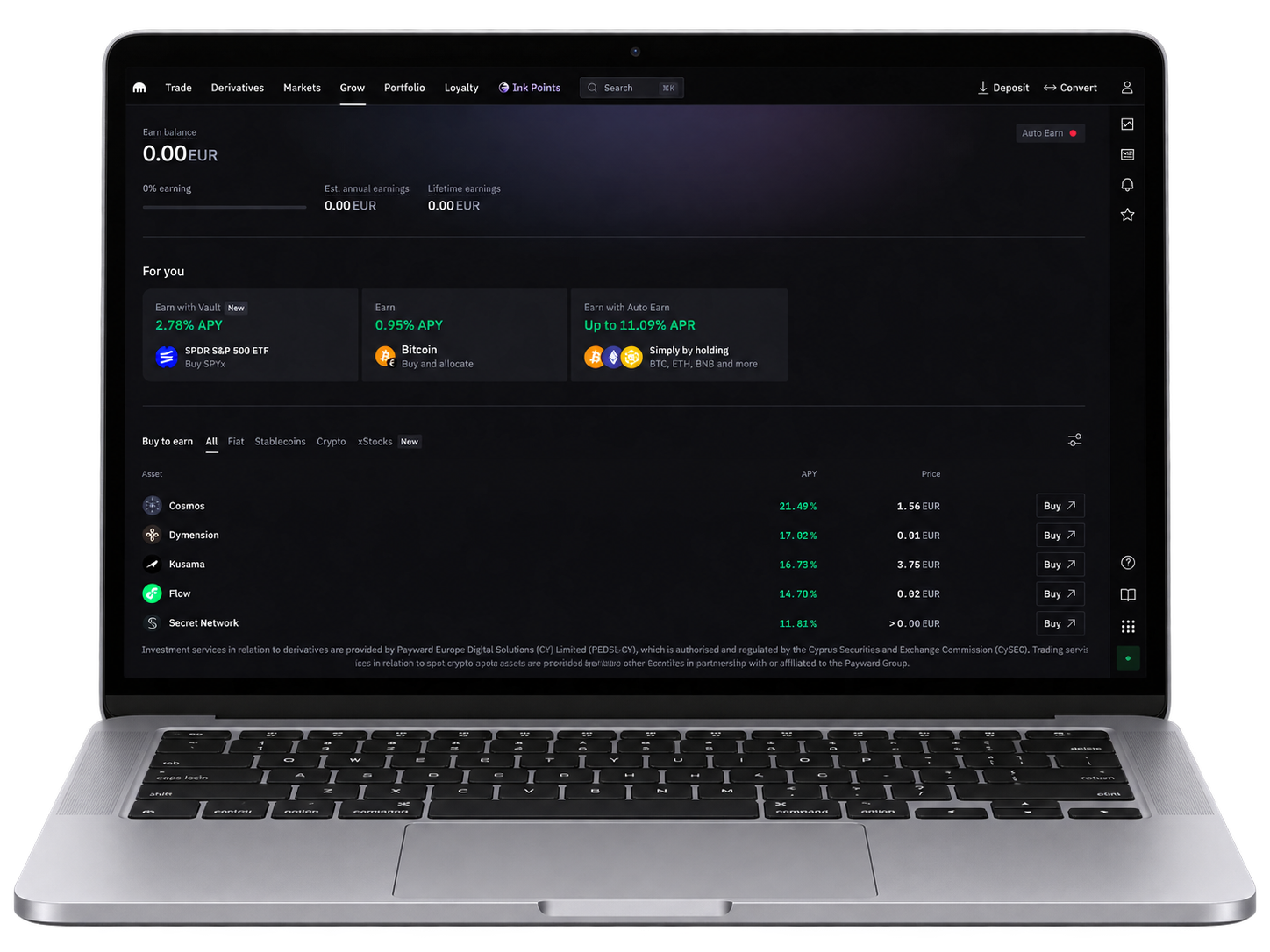
Auto Earn simplifies rewards management by automatically allocating eligible account balances to supported earning programs after the customer enables the feature. Unlike conventional bonded staking, Auto Earn can include staking, Opt-In Rewards, and stablecoin rewards, depending on the customer’s location and the assets held. Eligible balances generally remain available for ordinary spot trading and withdrawal, while rewards accrue daily and are distributed weekly.
Kraken applies a 30% commission to staking rewards generated through Auto Earn, although other eligible rewards programs have their own terms and fee arrangements. The displayed annualized yields are estimates based on relevant reward activity and, for staking, may be presented before Kraken’s commission. Actual returns depend on the participating assets, network conditions, and the reward mechanism involved. Investors should therefore calculate the expected net yield rather than comparing advertised APYs without considering fees.
Opt-In Rewards also includes arrangements that are not ordinary proof-of-stake participation. Eligible stablecoins, selected cryptocurrencies, and certain tokenized assets may generate returns through separate programs, each with its own economic structure and risks. These products should not be treated as interchangeable with native blockchain staking simply because they appear within the same Earn interface.
DeFi Earn
Kraken also provides access to DeFi Earn through supported vaults, allowing eligible users to allocate assets to decentralized lending strategies. Unlike network staking, these products generate variable returns from activity within underlying lending protocols, with yields influenced by borrowing demand, available liquidity, and the specific vault strategy. Rewards accrue continuously within the vault, while applicable performance-related fees are deducted from earnings according to the product’s terms.
DeFi Earn introduces additional risks beyond ordinary custodial staking, including smart contract vulnerabilities, liquidation events, oracle failures, stablecoin depegging, and dependencies on third-party protocols. Kraken provides access through its interface but does not eliminate those underlying exposures. Supported assets, vault availability, and transaction costs vary by jurisdiction, making it important to assess the specific strategy rather than treating all earning products as equivalent.
Kraken’s broad selection of earning tools is useful for investors who want simplified access to staking and other reward-generating activities. However, commissions, withdrawal conditions, protocol exposure, and the volatility of the underlying cryptocurrency can materially influence the final return. The convenience of having these services within an exchange account does not make the advertised yield guaranteed or the deposited principal risk-free.
Supported Cryptocurrencies, Deposits, and Withdrawals
Kraken has expanded its asset selection considerably, supporting more than 700 cryptocurrencies and 1,400 trading pairs as of October 2026. Its catalogue covers Bitcoin, Ethereum, Solana, XRP, established stablecoins, major DeFi tokens, and a growing range of newer assets. However, availability varies by jurisdiction, and a cryptocurrency listed for spot trading may not support the same deposit networks, margin functionality, staking options, or withdrawal routes as another asset. Investors should check the specific market and blockchain network before assuming a token is fully supported across every Kraken service.
Fiat funding remains an important advantage, with eligible customers able to deposit and withdraw supported currencies through domestic and international banking networks. European users have access to SEPA and SEPA Instant transfers through supported providers, while U.S. customers can use ACH and selected wire-transfer services. Kraken also supports payment cards, PayPal, and other methods in qualifying regions, although processing charges and settlement times vary. Bank transfers can be more economical than card purchases, particularly for larger amounts, but the cheapest method depends on the customer’s country, banking provider, and intended transaction.
Deposit availability and withdrawal availability are not always identical. U.S. ACH deposits processed through Plaid can become available for trading shortly after confirmation while remaining subject to a seven-day withdrawal hold. Certain card purchases, PayPal transactions, and digital-wallet payments may also trigger a 72-hour restriction on withdrawing the affected value. These controls apply to cryptocurrency and fiat withdrawals, although the relevant hold normally concerns the amount of the qualifying deposit or purchase rather than automatically freezing every asset in the account. Additional reviews may occur when transactions exceed account limits or require further verification.
Cryptocurrency withdrawals require the correct destination address, supported blockchain network, and any applicable memo or destination tag. Assets such as ETH, USDC, and USDT can operate across several networks, but the receiving wallet or exchange must support the exact route selected. Choosing an incompatible network can result in inaccessible funds or permanent loss, while withdrawal fees and minimum amounts differ by cryptocurrency. Kraken provides the applicable network and fee information during the withdrawal process, allowing customers to review the transaction before confirmation.
For investors who primarily use Kraken for trading, maintaining an operational balance on the exchange provides convenient access to markets and fiat settlement. Longer-term holdings can instead be moved into self-custody, where the owner controls transaction-signing credentials and recovery information. This reduces ongoing reliance on centralized exchange custody but introduces personal responsibility for key protection, transaction verification, and backup management. Kraken’s withdrawal controls and security infrastructure are valuable, although they should complement rather than replace an appropriate long-term custody arrangement.
User Experience
User Experience, Mobile Apps, and Customer Support
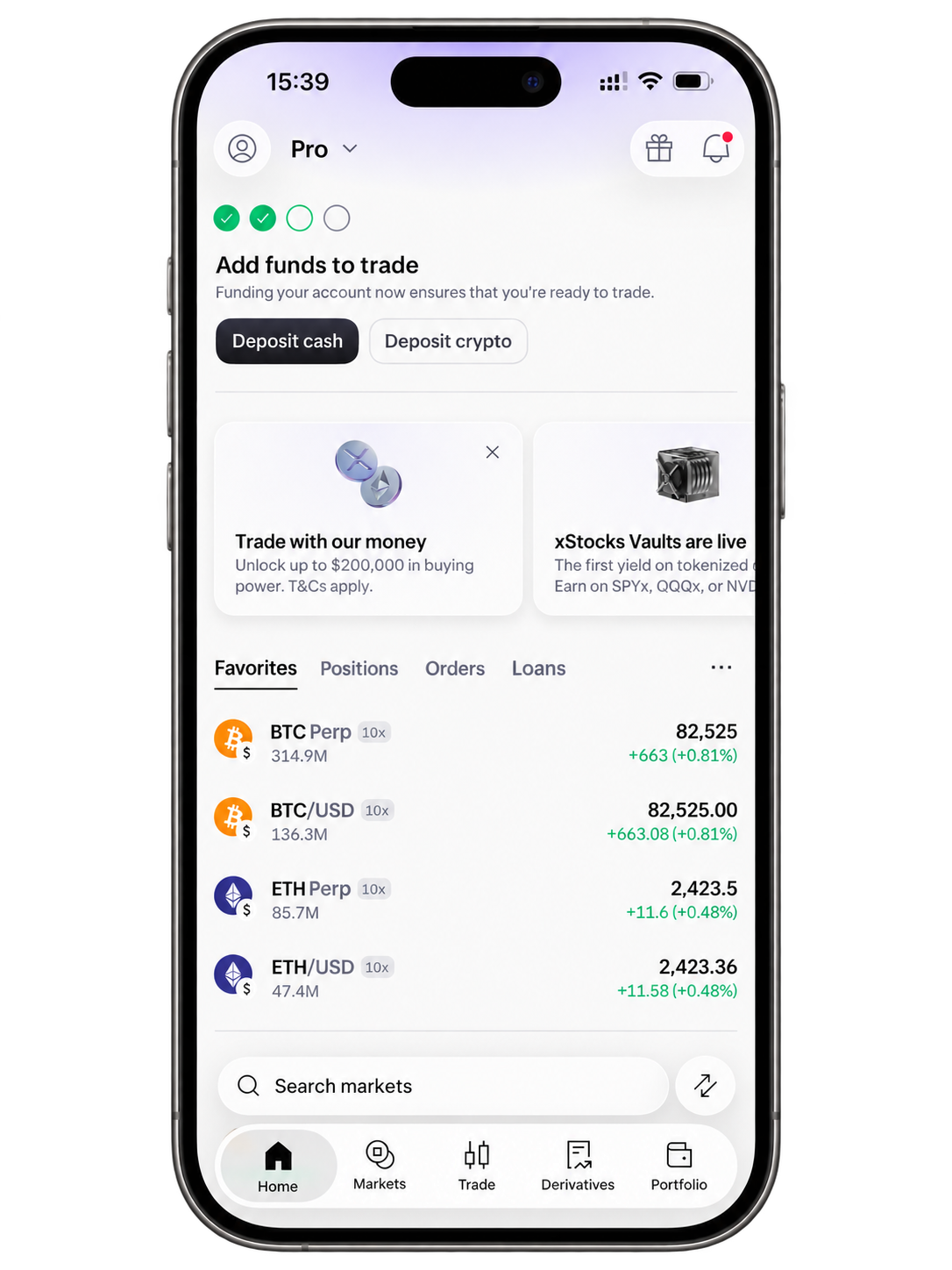
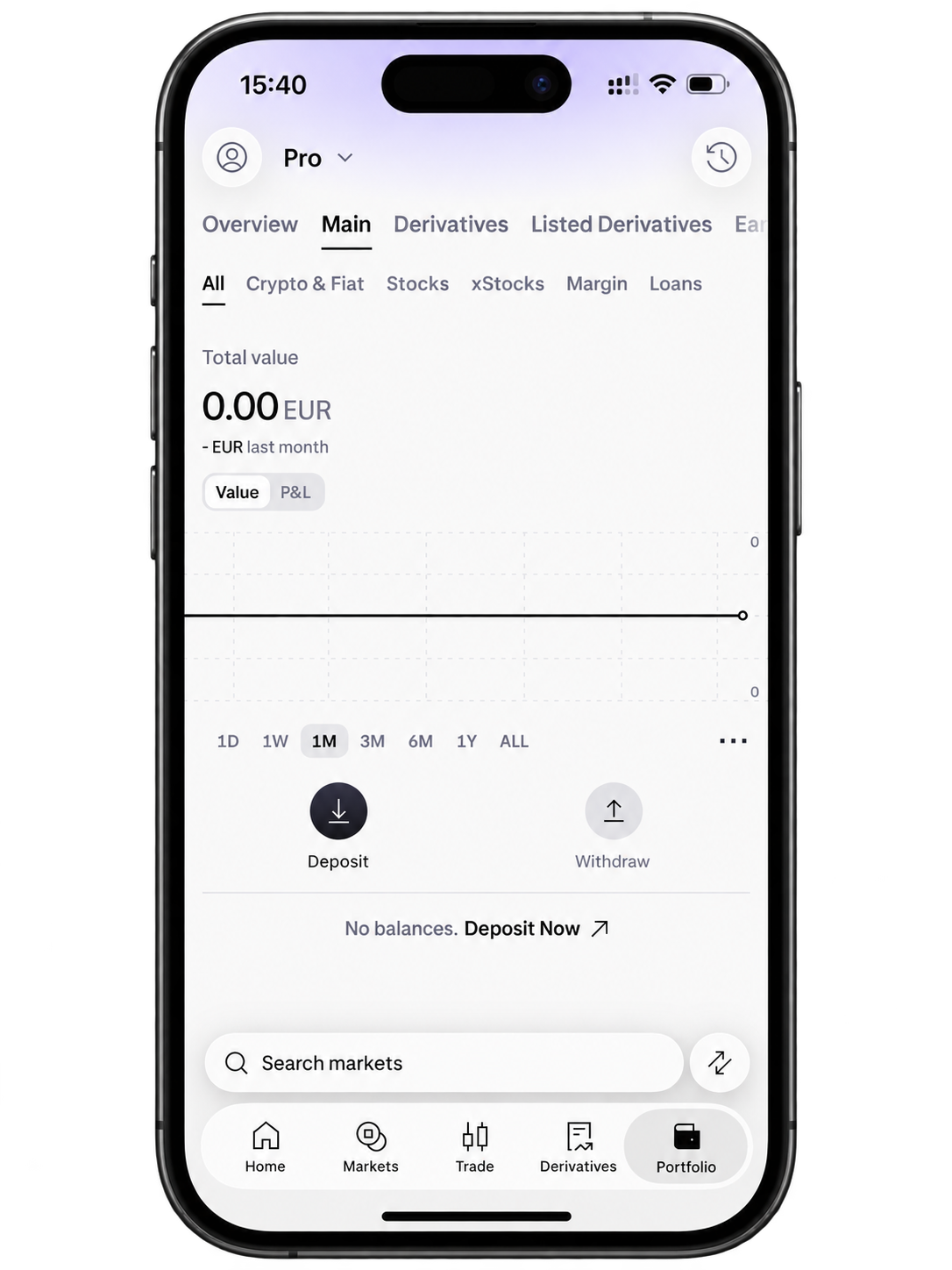
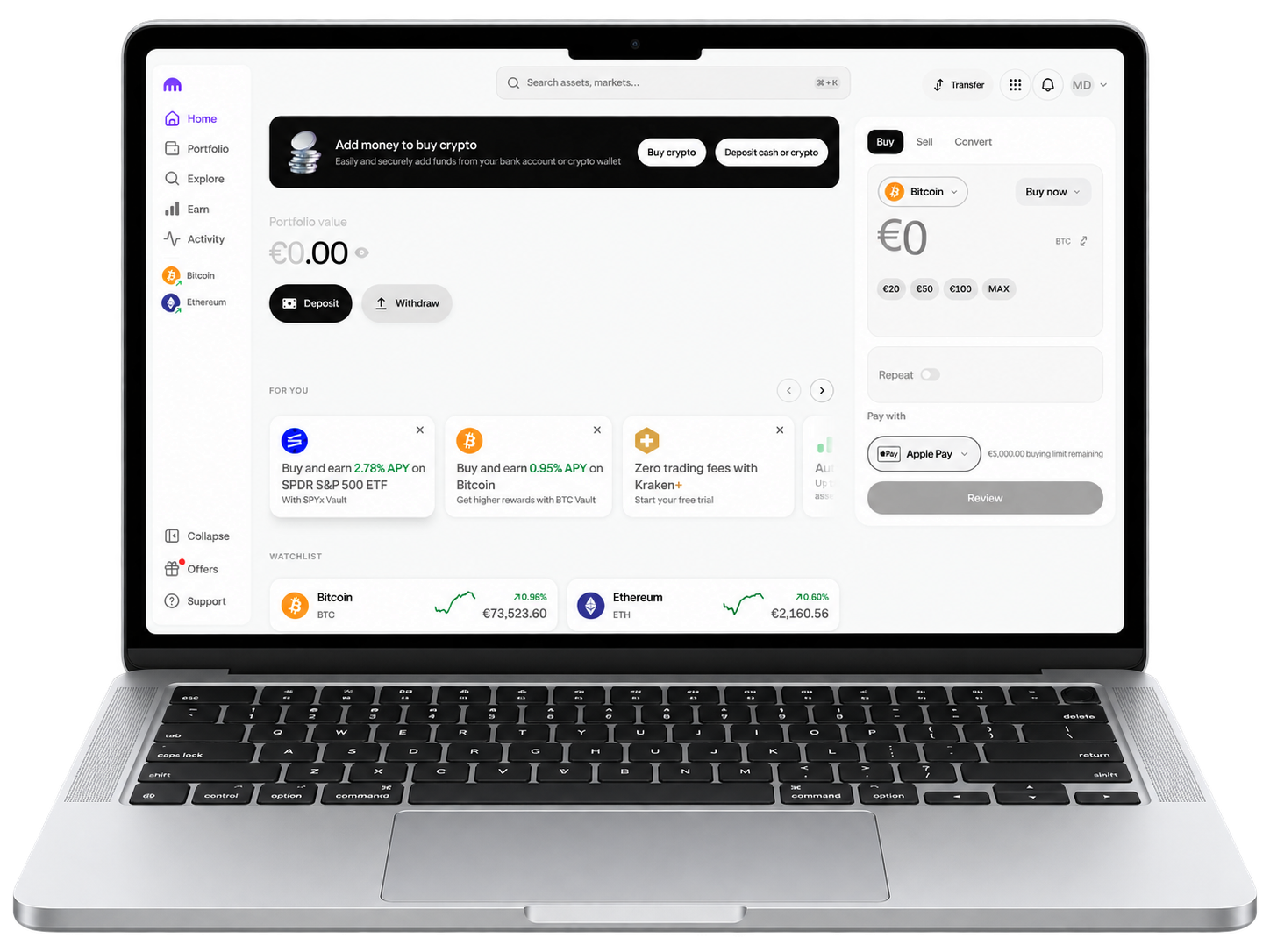
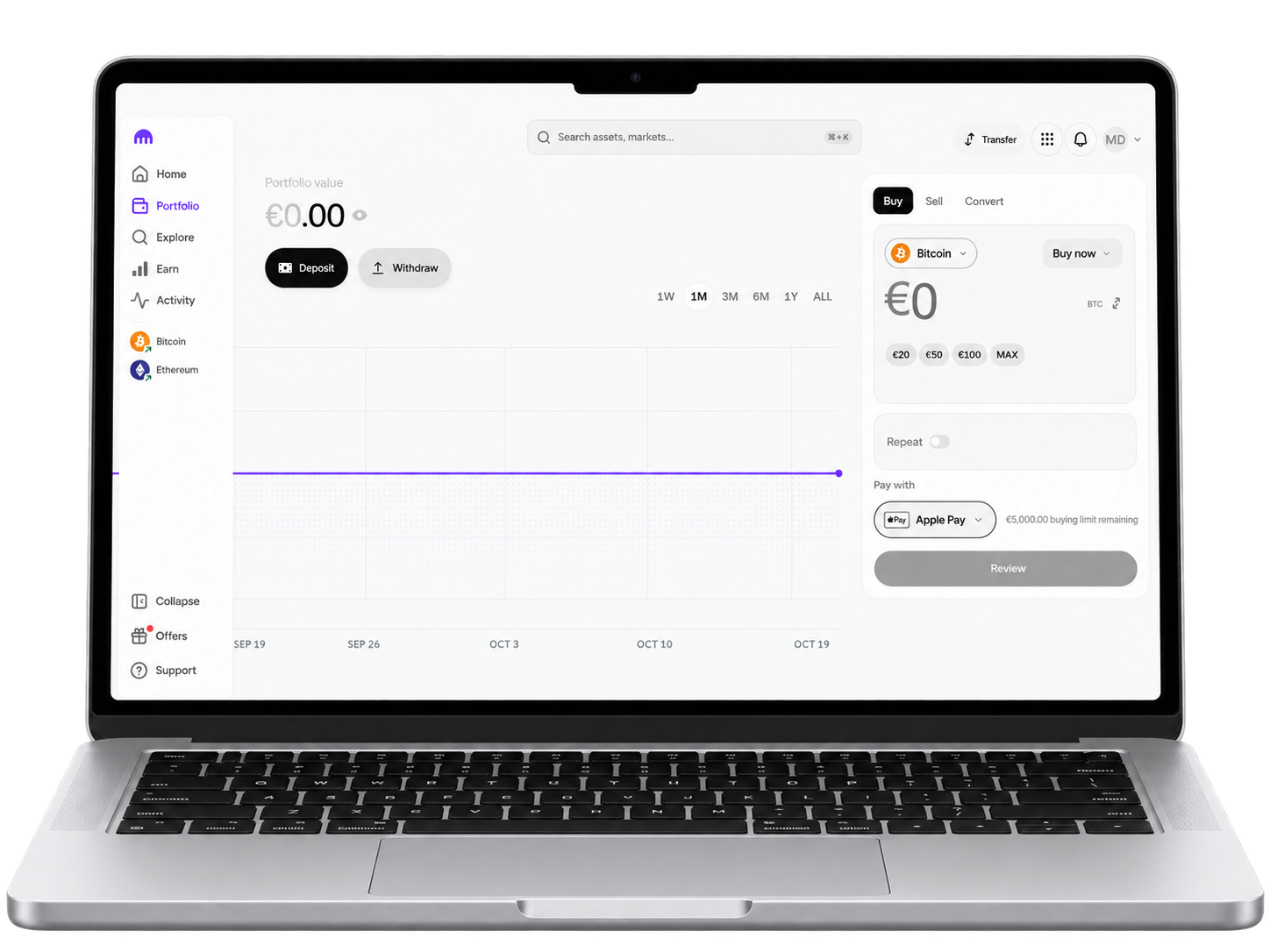
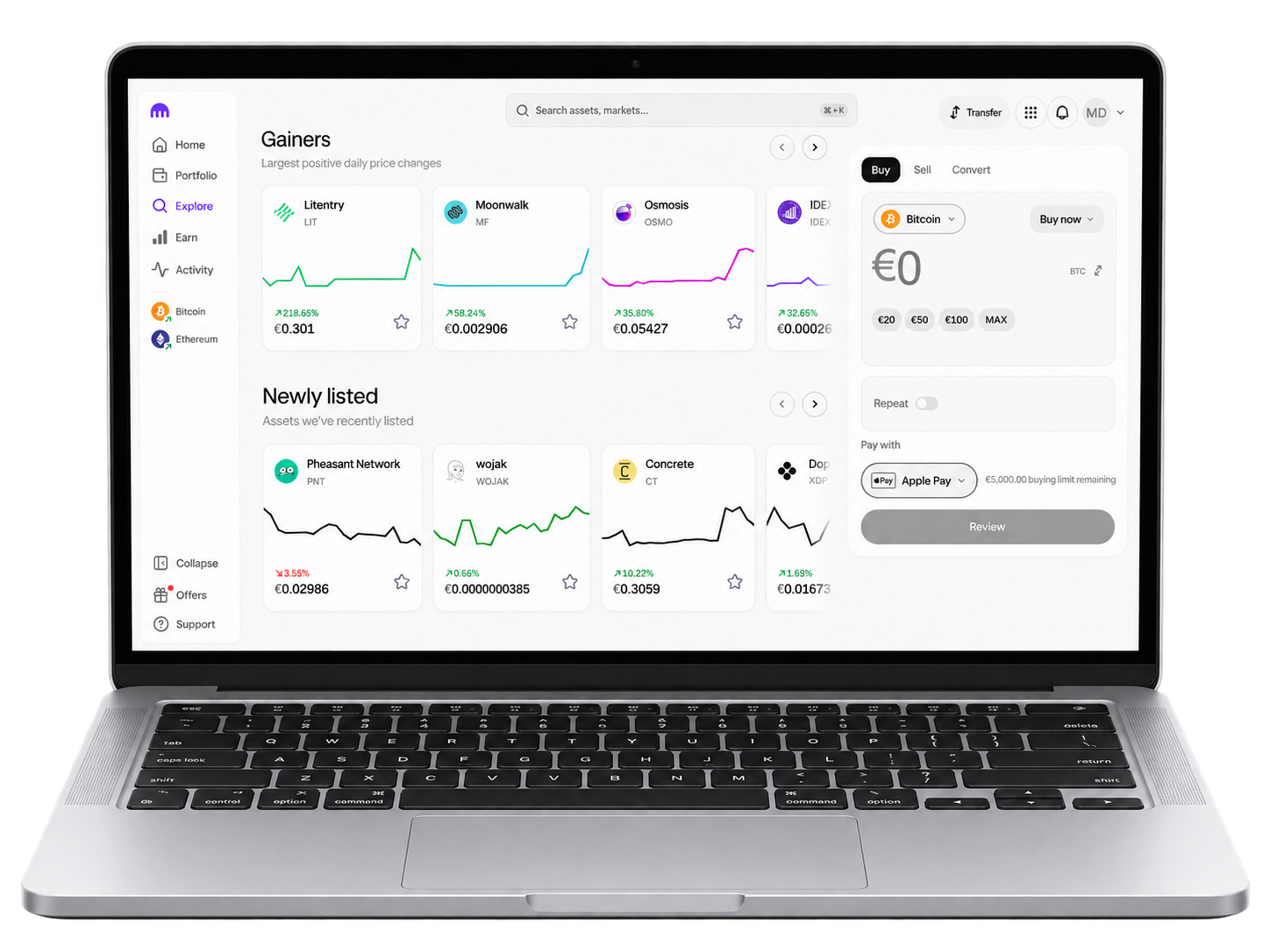
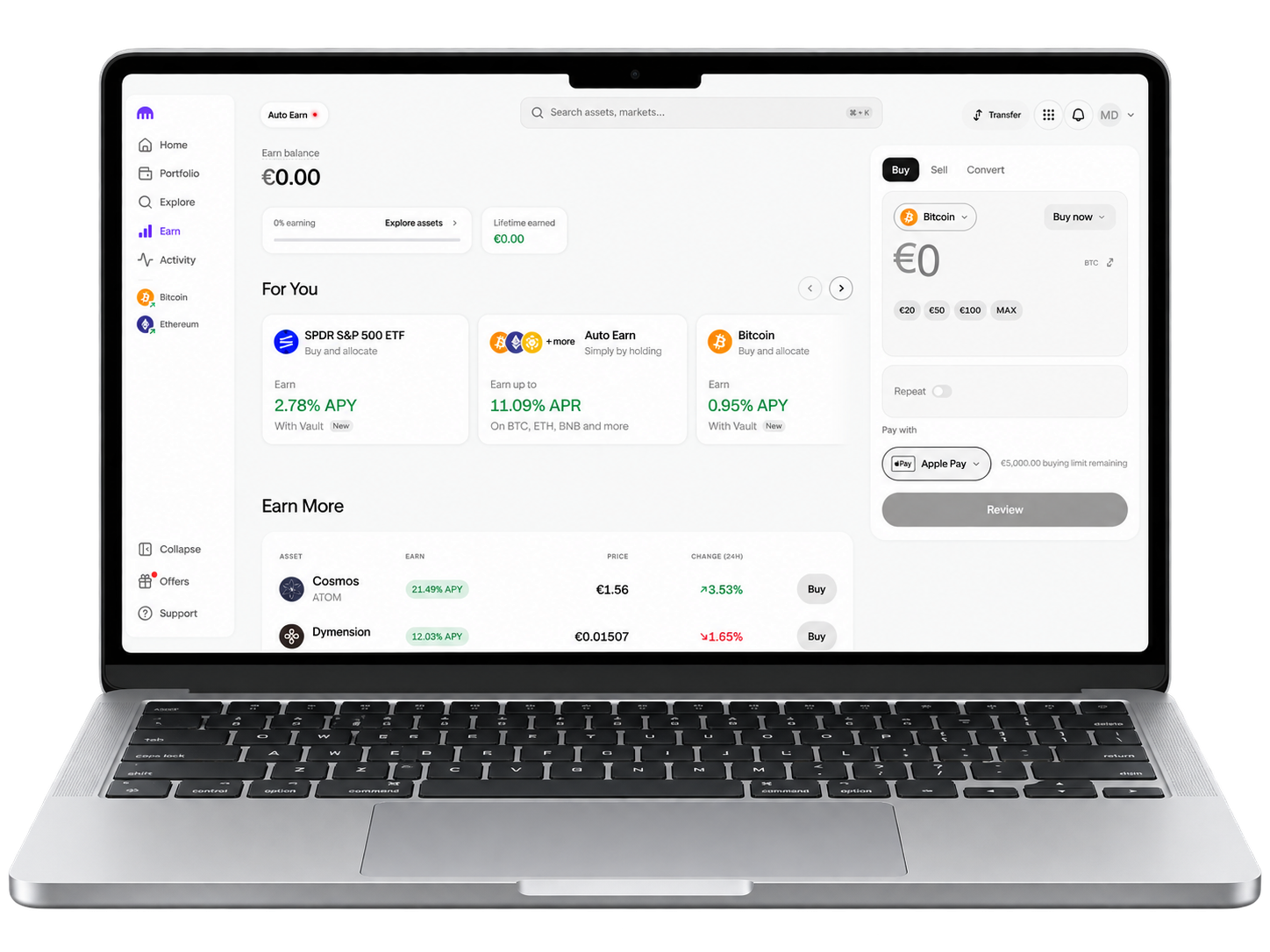
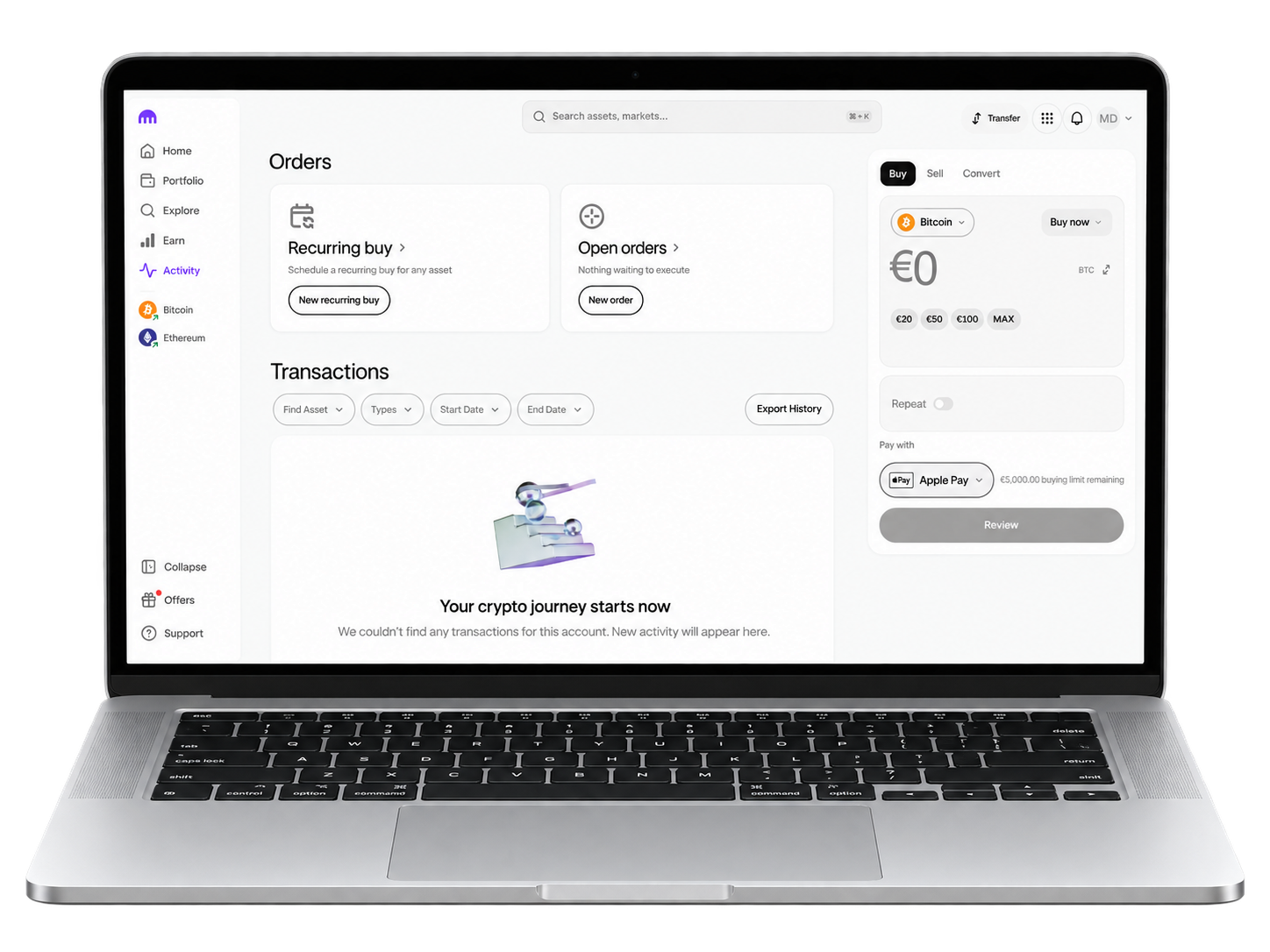
Kraken offers two distinct trading experiences designed for different levels of cryptocurrency expertise. The standard Kraken platform emphasizes accessibility, with straightforward cryptocurrency purchases, portfolio tracking, recurring investments, fiat transfers, and eligible earning services available through a clean interface. Investors can manage everyday transactions without navigating professional order books or complex trading controls, although the convenience of instant purchases comes with higher fees than Kraken Pro. This distinction is particularly important for beginners, who may pay considerably more for the same cryptocurrency simply because they choose the standard buying interface.
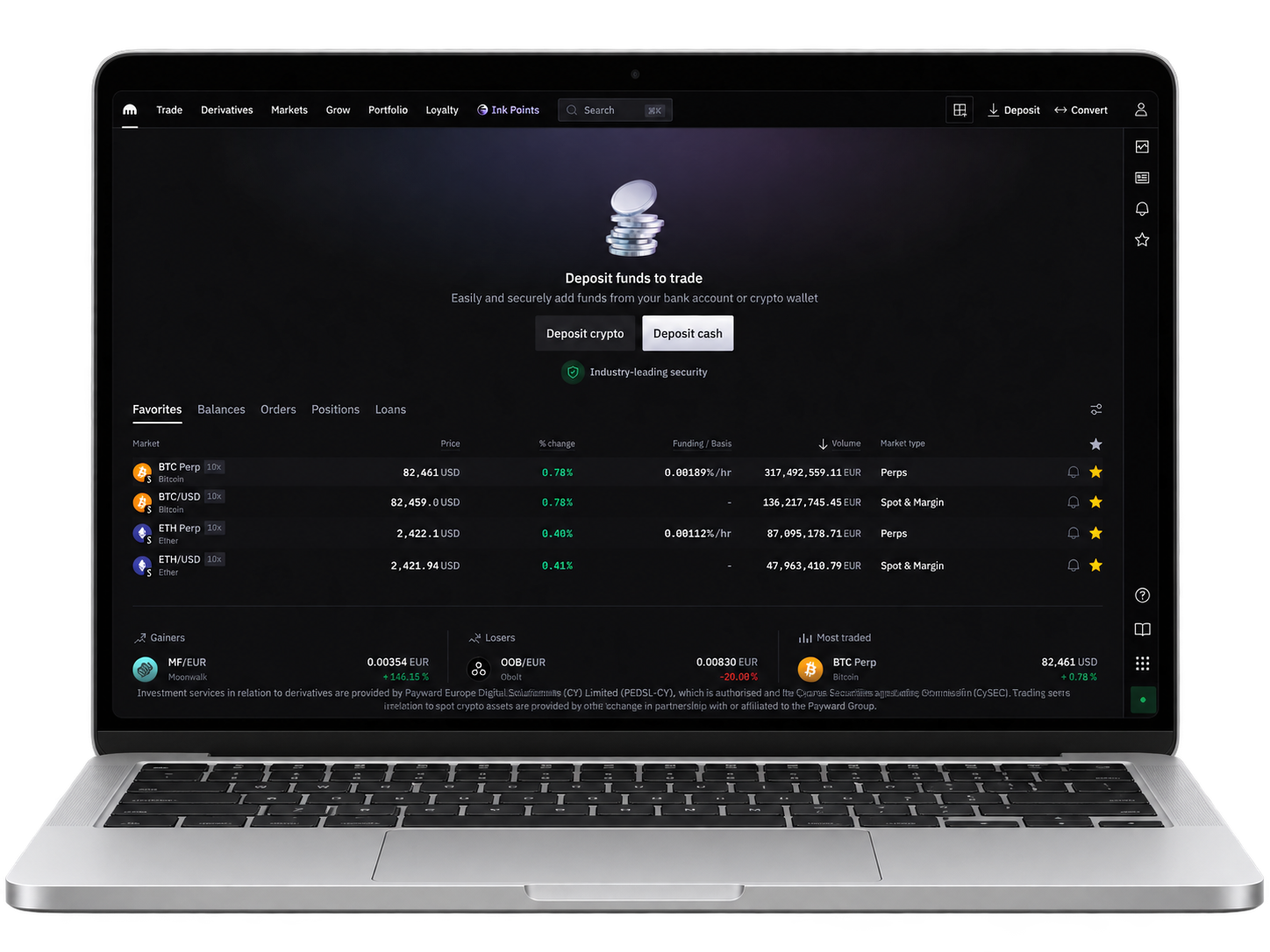
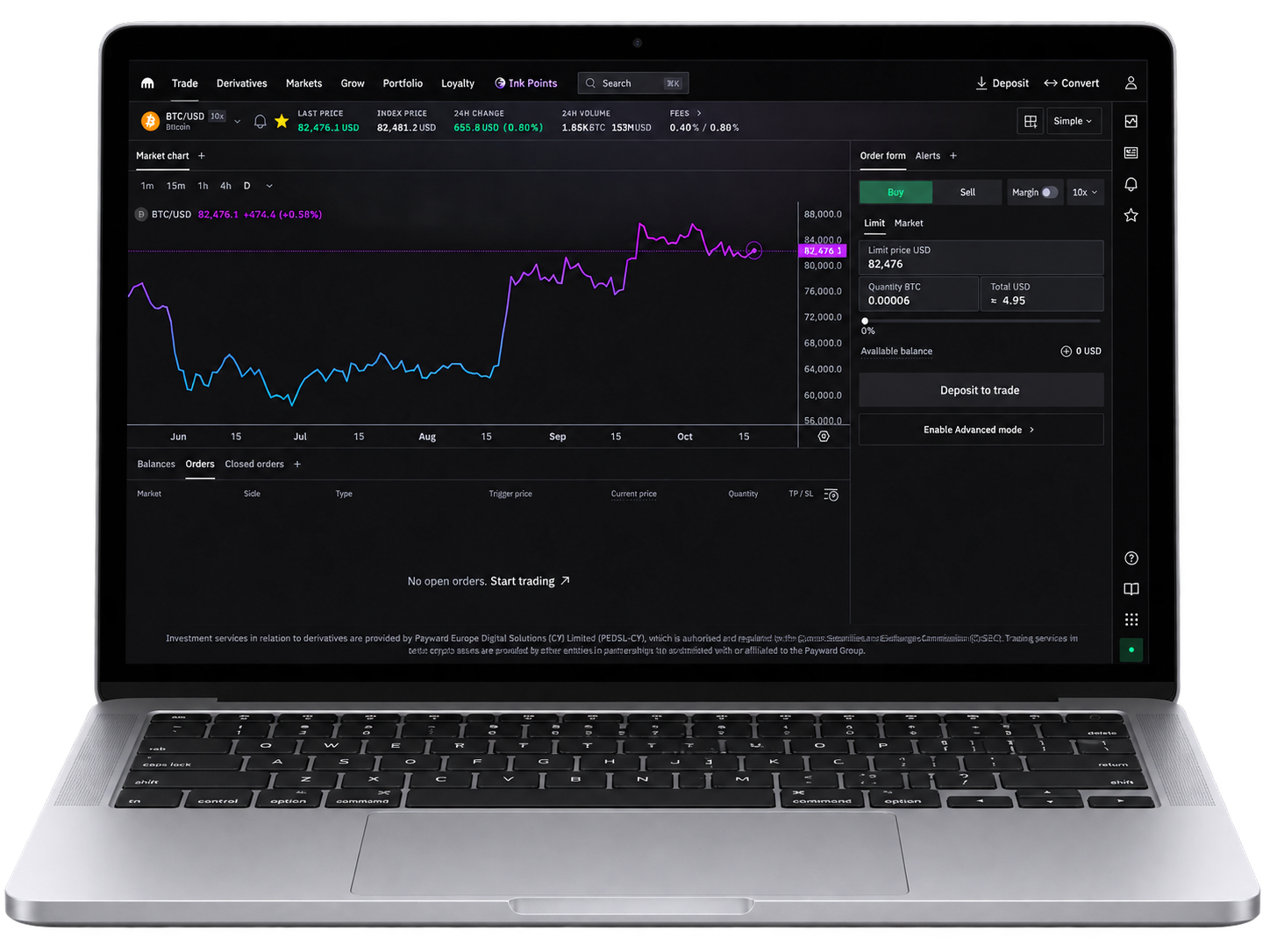
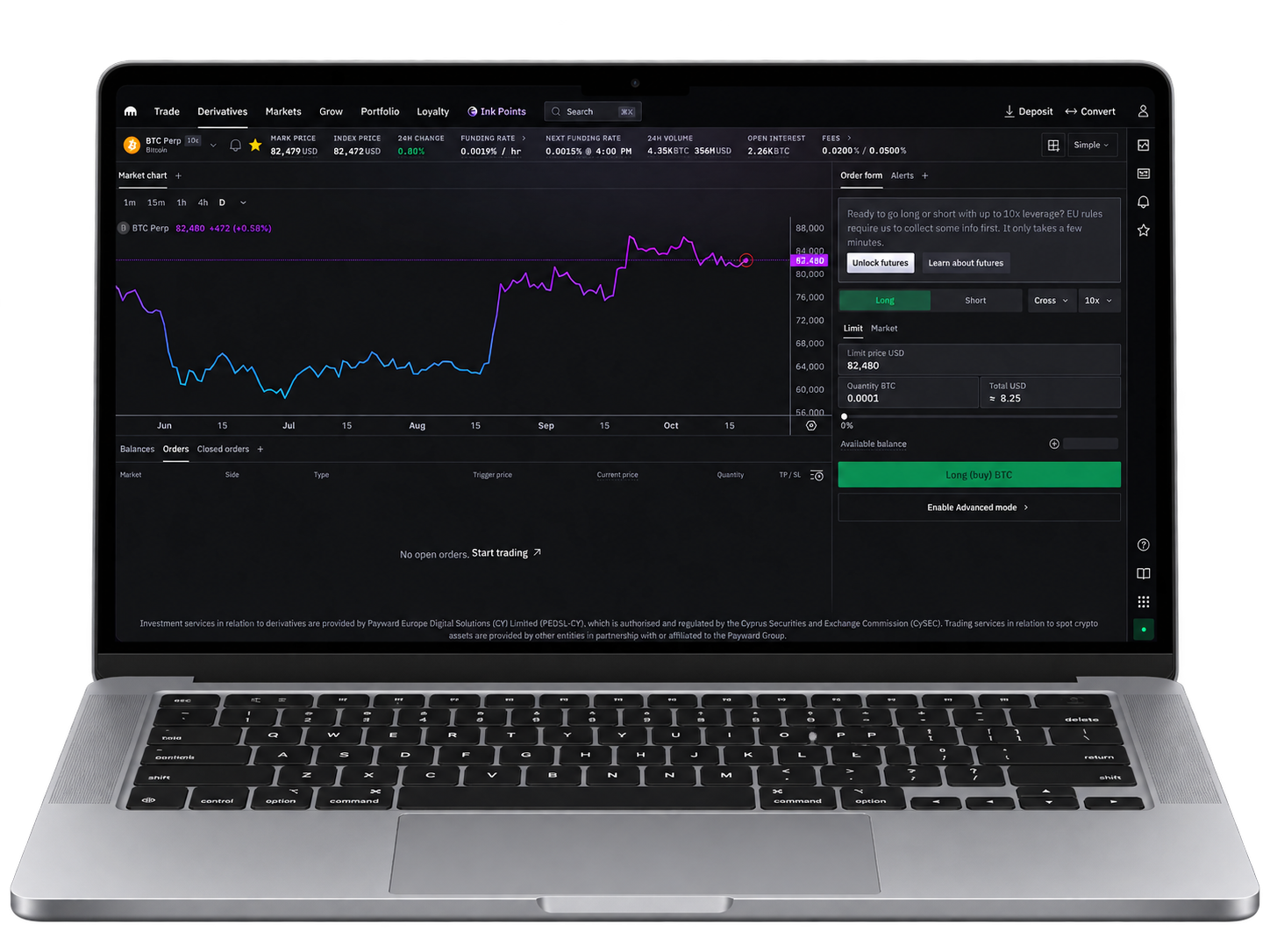
Kraken Pro provides a more sophisticated environment for active traders, combining advanced charts, real-time market depth, customizable order forms, and detailed portfolio information. Both platforms are available on desktop and mobile, using the same Kraken account, while Kraken Desktop offers an additional customizable workspace for traders who want more extensive market monitoring. The separate Kraken Pro mobile application supports advanced order types, margin and futures trading for eligible users, and staking management, allowing experienced customers to monitor positions and execute strategies away from their computers. The availability of specialized products depends on the account’s location and verification status rather than the application installed.
Customer support is accessible through Kraken’s Support Center and in-app messaging, with additional assistance available for account access, verification, funding, and trading issues. Kraken also offers voice support for selected situations, although telephone assistance must be initiated through the official mobile applications when the option is available. The platform includes in-app call verification to help users identify legitimate support representatives, reducing exposure to impersonation scams involving fraudulent customer-service numbers.
Account verification and compliance procedures introduce practical limitations that users should consider before depositing substantial amounts. Kraken may request identity documents, proof of address, or information about the source of funds, particularly when customers seek higher transaction limits or trigger additional reviews. Certain payment methods also impose temporary withdrawal holds, meaning funds can become available for trading before they can be transferred externally. These requirements are relevant to investors who need immediate access to liquidity, making it important to understand funding limits, verification status, and withdrawal conditions before relying on the exchange for time-sensitive transactions.
Overall, Kraken balances beginner accessibility with professional trading functionality, although the distinction between its interfaces has a direct impact on costs and available tools. Its mobile applications offer substantial flexibility, while account security and compliance requirements remain important considerations for customers who prioritize fast withdrawals and uncomplicated account management.
Preview
Kraken vs Competitors
Kraken vs Binance, OKX, and Coinbase
Kraken competes with Binance, OKX, and Coinbase across cryptocurrency trading, staking, fiat payments, and advanced investment services. While all four exchanges offer professional trading tools, their fee structures, account protections, automation features, and regulatory arrangements differ considerably. Kraken’s strengths lie in its security controls, independently reviewed Proof of Reserves, and established fiat infrastructure, while competing platforms offer advantages in trading costs, integrated automation, or beginner accessibility.
The following comparisons examine standard spot fees, product availability, trading functionality, and security. Actual costs depend on trading volume, account tier, jurisdiction, and the market being traded.
Kraken vs Binance
Binance is one of Kraken’s strongest competitors for active trading, offering extensive cryptocurrency markets, deep liquidity across major pairs, and a comprehensive range of derivatives and automated strategies. Its standard international spot fees start at 0.10% for makers and takers, considerably below Kraken Pro’s entry-level rates of 0.40% and 0.80%. Eligible Binance users can reduce those fees further to 0.075% by paying with BNB, although actual trading costs also depend on spreads, order-book depth, and available discounts.
Kraken distinguishes itself through more granular account-security controls, including its Master Key, Global Settings Lock, and separate authentication for withdrawals and sensitive account operations. Both exchanges publish Proof of Reserves information, but Kraken uses independently reviewed assessments with customer-verifiable balance inclusion, while Binance provides cryptographic verification through Merkle trees and zero-knowledge proofs. Binance offers a broader range of built-in trading bots, copy trading, and ecosystem services, whereas Kraken maintains a more focused experience across its standard application and Kraken Pro. Both platforms have regional restrictions that can substantially affect the products available to individual customers.
| Feature | Kraken | Binance |
|---|---|---|
| Standard Spot Fees | 0.40% maker / 0.80% taker | 0.10% maker / 0.10% taker internationally |
| Trading Fee Discounts | Volume, qualifying asset balances, and higher account tiers | Volume tiers and eligible 25% BNB fee discount |
| Advanced Trading | Kraken Pro, advanced orders, margin, futures, and APIs | Advanced terminal, futures, options, margin, and APIs |
| Trading Automation | TWAP orders and API-based automation | Grid bots, DCA, rebalancing, TWAP, and copy trading |
| Security Controls | Passkeys, Master Key, Global Settings Lock, Funding 2FA | Passkeys, two-factor authentication, anti-phishing controls, withdrawal allowlisting |
| Reserve Transparency | Independently reviewed Proof of Reserves | Cryptographic Proof of Reserves with zk-SNARK verification |
| Best Suited For | Security-conscious investors and traders prioritizing fiat access and account controls | Active traders seeking lower fees, extensive markets, and advanced automation |
Which is better? Binance offers a stronger proposition for high-frequency traders who prioritize low commissions, broad market access, and integrated automation. Kraken is particularly compelling for investors who value sophisticated account-security controls, fiat funding, and independently reviewed reserve transparency. Users should compare their locally available products before deciding, since Binance’s international fee schedule and derivatives catalogue do not apply universally.
Kraken vs OKX
OKX is another trading-focused alternative, combining professional spot markets with extensive automation, derivatives, and a separately operated self-custody wallet ecosystem. Its international spot fees generally start at 0.08% maker and 0.10% taker, providing a substantial pricing advantage over Kraken’s regular entry-level rates. European pricing differs: following the September 25, 2026 adjustment, ordinary EEA spot-only accounts start at 0.10% maker and 0.20% taker, while eligible accounts with X-Perps access have a separate schedule beginning at 0.08% and 0.10%.
OKX offers greater built-in automation through grid trading, recurring-buy strategies, and algorithmic execution tools, making it particularly attractive to experienced traders managing several strategies simultaneously. Its derivatives catalogue also provides extensive leveraged trading functionality where permitted, including separately regulated X-Perps for qualifying European customers. Kraken offers a more streamlined approach, with Kraken Pro supporting advanced order management, futures, margin, and API trading without placing as much emphasis on ready-made strategy bots. Both exchanges publish customer-verifiable reserve information, although OKX uses zk-STARK-based verification and Kraken employs independently reviewed reserve assessments.
| Feature | Kraken | OKX |
|---|---|---|
| Standard Spot Fees | 0.40% maker / 0.80% taker | International: 0.08% / 0.10%; EEA spot-only: 0.10% / 0.20% |
| Trading Fee Discounts | Qualifying volume, assets held, and account tiers | VIP tiers based on eligible volume and asset balances |
| Advanced Trading | Kraken Pro, futures, margin, advanced orders, and APIs | Professional terminal, futures, margin, options, and APIs where available |
| Trading Automation | TWAP orders and API-based strategies | Grid bots, DCA, and integrated algorithmic strategies |
| Security Controls | Master Key, Global Settings Lock, passkeys, Funding 2FA | Passkeys, withdrawal allowlisting, authentication controls, and withdrawal restrictions |
| Reserve Transparency | Independently reviewed Proof of Reserves | Recurring Proof of Reserves using zk-STARK verification |
| European Regulation | MiCA authorization through Irish entities | MiCA authorization through Malta; separate regulation for X-Perps |
| Best Suited For | Investors prioritizing account protection and professional spot trading | Experienced traders seeking automation, competitive fees, and derivatives |
Which is better? OKX is generally more attractive to traders who regularly use automated strategies, derivatives, and advanced execution tools while seeking lower spot commissions. Kraken offers a more straightforward trading environment with unusually detailed account protections and established fiat funding options. Both provide sophisticated features, but the comparison depends heavily on regional eligibility, particularly for derivatives and other regulated investment products.
Kraken vs Coinbase
Coinbase competes more directly with Kraken on accessibility, fiat funding, regulatory oversight, and security infrastructure. Both exchanges provide simplified cryptocurrency purchases alongside dedicated professional trading interfaces, allowing customers to move from occasional investing to advanced order execution. Coinbase places greater emphasis on beginner accessibility and integrated financial services, while Kraken offers particularly extensive account-security customization through its Master Key, Global Settings Lock, and separate funding authentication.
Trading costs vary considerably by region. Kraken Pro’s entry-level spot fees begin at 0.40% maker and 0.80% taker, compared with Coinbase Advanced’s 0.50% and 0.90% in the United States. However, Coinbase’s September 2026 fee revisions established lower European starting rates of 0.25% maker and 0.50% taker, making Coinbase Advanced more competitive for regular traders in those markets. Both exchanges offer volume-based discounts, while Kraken also considers qualifying asset balances when assigning certain fee tiers. Coinbase provides a broader consumer-finance ecosystem, including integrated onchain trading, stocks, payment services, and other eligible investment products, whereas Kraken remains more focused on exchange trading, staking, and selected tokenized financial instruments.
| Feature | Kraken | Coinbase |
|---|---|---|
| Standard Spot Fees | 0.40% maker / 0.80% taker | US: 0.50% / 0.90%; EU & UK: 0.25% / 0.50% |
| Trading Fee Discounts | Trading volume or qualifying platform assets | Trading volume, eligible USDC balances, and VIP tiers |
| Beginner Experience | Simple buying interface with separate Kraken Pro trading tools | Highly accessible interface with Coinbase Advanced |
| Advanced Trading | Advanced charts, conditional orders, TWAP, futures, and APIs | Coinbase Advanced, bracket orders, TWAP, derivatives, and APIs |
| Security Controls | Passkeys, Master Key, Global Settings Lock, withdrawal authentication | Passkeys, hardware security keys, withdrawal allowlisting, and account monitoring |
| Reserve and Financial Transparency | Independently reviewed Proof of Reserves | Public-company financial reporting and audited financial statements |
| European Regulation | MiCA authorization through Irish entities | MiCA authorization through Coinbase Luxembourg |
| Best Suited For | Security-focused investors and experienced crypto traders | Beginners and investors seeking straightforward buying and broader financial services |
Which is better? Coinbase is the more approachable choice for first-time cryptocurrency buyers and investors seeking a single platform for everyday transactions, recurring purchases, and professional trading as their experience develops. Kraken provides stronger account-security customization and independently reviewed reserve verification, making it particularly attractive to users who prioritize those protections. Trading costs are not universally lower on either platform, especially after Coinbase’s regional pricing changes, so investors should compare the fees and services applicable to their own accounts.
Ultimately, Kraken’s competitive advantage lies in its combination of professional trading, fiat accessibility, detailed security controls, and reserve transparency. Binance and OKX offer lower standard spot commissions in many markets, while Coinbase provides a particularly accessible experience and increasingly extensive financial functionality. For investors who value Kraken’s security architecture and operating history, its higher entry-level trading fees may be acceptable, although frequent traders should evaluate execution costs and available market liquidity before concentrating their activity on one exchange.
Bottom Line
Is Kraken Worth It in 2027?
Kraken remains an excellent cryptocurrency exchange for investors seeking professional trading functionality, extensive asset coverage, and a strong emphasis on security and transparency. Its independently reviewed Proof of Reserves, advanced account protections, and comprehensive Kraken Pro platform distinguish it from competitors that prioritize lower fees or extensive trading automation. However, its relatively high entry-level spot fees, expensive instant purchases, and substantial staking commissions reduce its appeal for cost-conscious investors. For users who value established infrastructure, reliable fiat access, and sophisticated account security, Kraken offers a compelling combination of trading capabilities and custodial safeguards. Active traders should nevertheless compare execution costs with lower-fee alternatives, while long-term holders should consider whether keeping substantial balances on a centralized exchange aligns with their custody preferences.
FAQs
Is Kraken safe for storing crypto long term?
Kraken has unusually comprehensive account controls and independently reviewed proof-of-reserves snapshots for selected assets, but it is still a custodial exchange. Long-term storage also involves platform, legal, and withdrawal risk, which is why users with substantial holdings often separate their trading balance from assets held in a private wallet.
What are Kraken Pro’s trading fees in 2027?
The standard entry-level spot schedule starts at 0.40% maker and 0.80% taker, with lower tiers available through qualifying activity or assets on platform. Some markets follow separate schedules, and fees should be checked in the live order preview before submitting a trade.
Is Kraken Instant Buy more expensive than Kraken Pro?
Instant Buy charges 1% plus any applicable spread, with payment-method costs potentially added; Kraken Pro’s maker-taker pricing can be less expensive even without volume discounts.
Can I stake ETH and other crypto on Kraken?
Eligible users can stake supported proof-of-stake assets through bonded or flexible options, while Auto Earn provides additional account-level reward allocation in some regions. Fees, yields, unbonding periods, and eligibility vary, and rewards are not guaranteed.
Does Kraken require KYC, and can withdrawals be delayed?
Kraken generally requires identity verification for standard cash-to-crypto access and can ask for additional documents or compliance checks. Certain payment methods also produce temporary withdrawal holds, including seven days for U.S. ACH Plaid deposits and up to 72 hours for some other funding flows.
Is Kraken better than Binance, OKX, or Coinbase?
Kraken stands out for its account-security controls, reserve transparency, and licensed European framework. Binance is often stronger for lower trading fees, OKX offers a broader automation and derivatives environment, and Coinbase prioritizes a simpler mainstream purchasing experience. The better exchange depends on jurisdiction, trade frequency, and whether security configuration or low-cost execution comes first.