






 X
 Facebook
 LinkedIn
 Google News
 Telegram
 Instagram
 RSS Feed


Introduction
OKX Review 2027: Fees, Security, Trading, Staking, and Alternatives
OKX is a major cryptocurrency exchange offering spot trading, derivatives, automated trading strategies, and crypto earning products within a comprehensive trading platform. Its appeal extends beyond buying and selling digital assets, with advanced order types, professional charting, trading bots, and API connectivity designed for investors who want greater control over execution and portfolio management. The exchange also provides straightforward cryptocurrency purchases, allowing beginners to access major assets without navigating its more advanced trading tools.
Trading functionality is where OKX distinguishes itself. Spot grid bots, recurring purchases, algorithmic execution, and competitive maker-taker fees give active traders considerable flexibility, while derivatives and margin products expand the available strategies in supported jurisdictions. However, these capabilities introduce differences in trading costs, leverage exposure, and account requirements that are not always apparent from the simplified interface. The exchange’s custodial structure also means users depend on OKX to safeguard deposited assets, unlike the separately operated self-custodial OKX Wallet.
OKX Overview
| Category | Details |
|---|---|
| Exchange history | Operating since 2017; formerly OKEx, rebranded as OKX |
| Exchange model | Centralized, custodial cryptocurrency exchange |
| Main products | Spot trading, advanced orders, trading bots, eligible derivatives, Earn products |
| Asset selection | Hundreds of cryptocurrencies globally; listings vary by jurisdiction |
| International regular spot fees | 0.08% maker / 0.10% taker on standard pairs |
| EEA regular spot-only fees | 0.10% maker / 0.20% taker on standard pairs after September 2026 changes |
| U.S. standard regular spot fees | 0.20% maker / 0.35% taker under the applicable U.S. schedule |
| European regulation | OKX Europe Limited holds a Malta MiCA crypto-asset service provider authorization |
| Reserve transparency | Recurring proof-of-reserves snapshots with zk-STARK verification tools |
| Mobile | iOS and Android applications, with availability varying by market |
| Overall editorial rating | 8.3/10 |
Is OKX Legit?
OKX is a centralized cryptocurrency exchange established in 2017 under the OKEx brand before adopting its current name in 2022. It operates order-book markets that match buyers and sellers, maintains customer trading balances, and provides access to cryptocurrency markets through desktop and mobile applications. Unlike decentralized exchanges, where transactions are executed through blockchain-based protocols, OKX manages trade execution and custody within its own infrastructure. Customers retain claims to their deposited assets but do not directly control the private keys securing exchange-held cryptocurrency.
OKX operates through different legal entities depending on the customer’s jurisdiction. In Europe, OKX Europe Limited holds authorization from the Malta Financial Services Authority under the Markets in Crypto-Assets Regulation (MiCA), covering cryptocurrency custody, exchange, and trading-platform services across the European Economic Area. European crypto derivatives, including X-Perps, are offered separately through OKX Europe Markets Limited under a MiFID II investment-services framework. In the United States, OKX US operates as a registered money services business and state-licensed money transmitter, offering eligible customers spot trading and cryptocurrency purchases rather than the full international derivatives catalogue.
Its regulatory history also warrants consideration. In February 2025, the Seychelles-based exchange operator Aux Cayes FinTech Co. Ltd. pleaded guilty to operating an unlicensed money-transmitting business and agreed to pay more than $504 million in fines and forfeiture. The case involved historical failures involving U.S. customers and anti-money-laundering controls. Subsequent licensing and regional expansion have strengthened OKX’s regulatory position, although authorization does not eliminate exchange custody risks, operational failures, or potential losses from leveraged trading.
Who Is OKX Best Suited For?
OKX is particularly well suited to active cryptocurrency traders seeking competitive spot fees, advanced order execution, automated strategies, and access to multiple markets through one account. Its trading bots, charting tools, and API integrations appeal to experienced users, while straightforward purchases and recurring investment options make the platform accessible to less active investors. Traders interested in derivatives may also find its product range attractive, subject to local eligibility requirements. However, beginners who only want occasional cryptocurrency purchases may prefer a simpler exchange, while long-term holders should consider withdrawing assets to a self-custodial wallet rather than keeping their entire portfolio on a trading platform.
Exchange Products
Spot Trading, Order Types, and Trading Bots
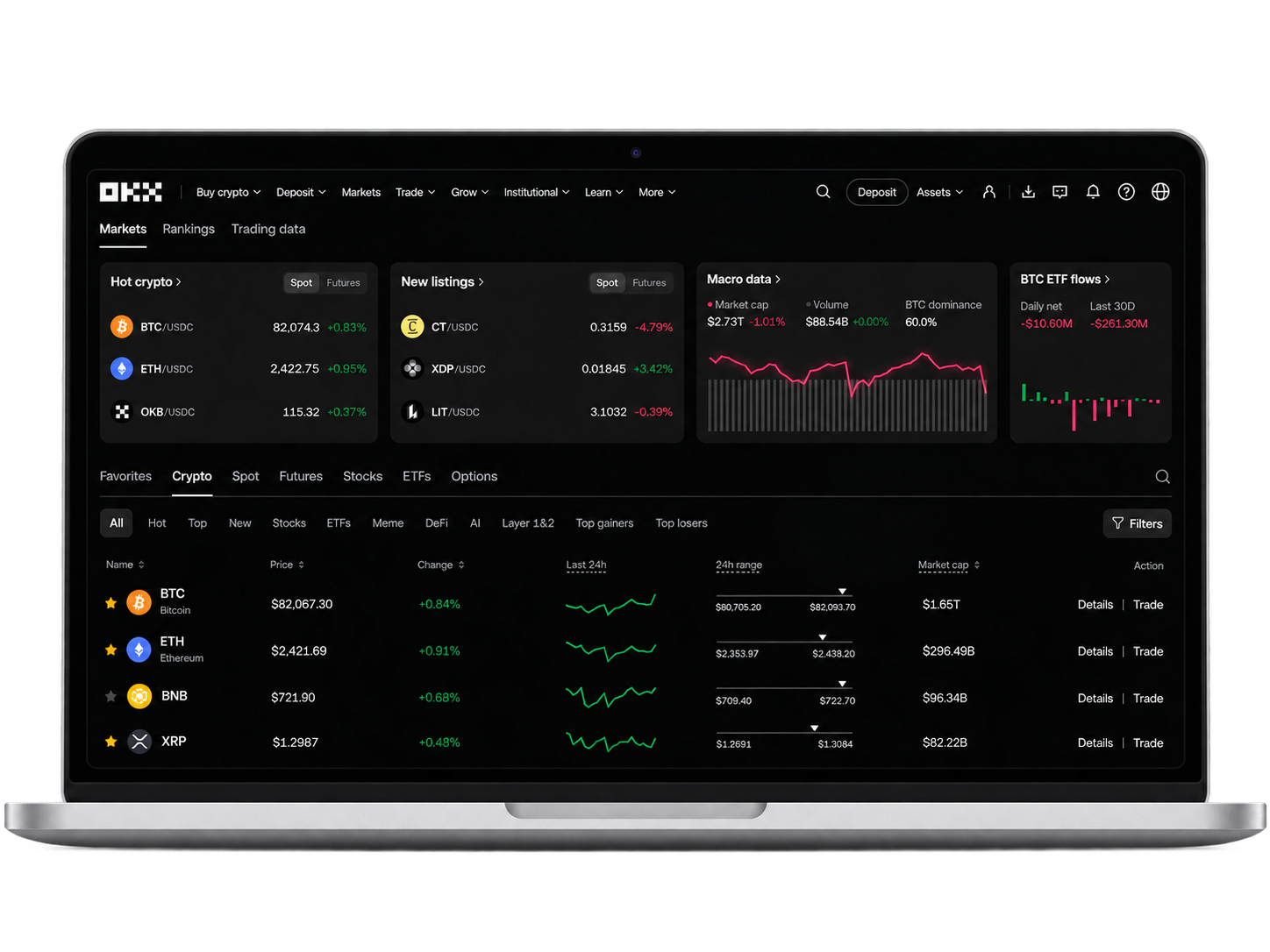
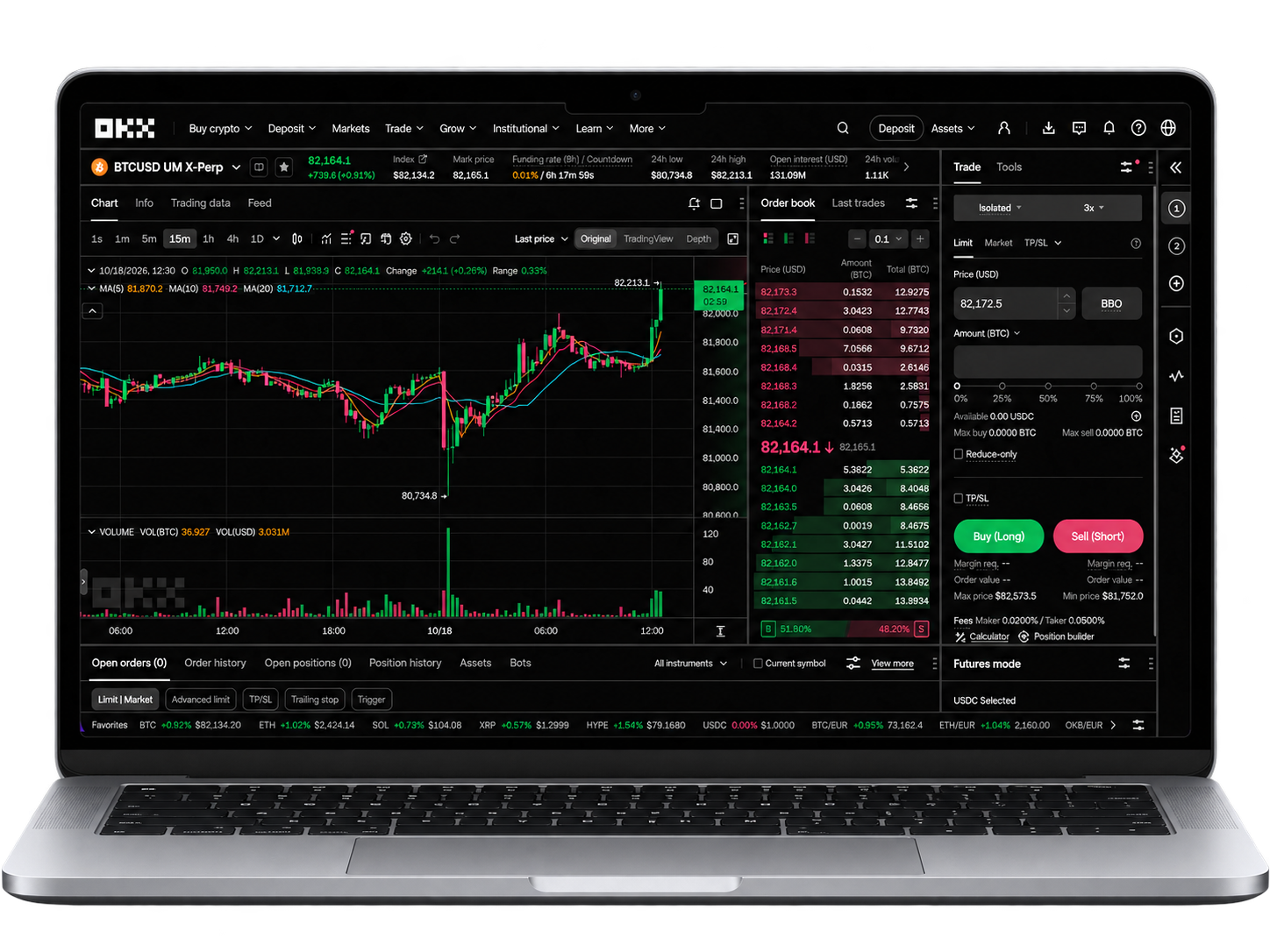
OKX provides a comprehensive spot trading platform with advanced charts, real-time order books, market depth indicators, and multiple order types. Traders can place market orders for immediate execution at available prices or use limit orders to control the price at which they are willing to buy or sell. More advanced options include stop orders, conditional execution, and algorithmic strategies, allowing users to manage entries and exits without continuously monitoring the market. The interface is designed for active trading, although beginners can also use simplified buying and selling options.
Execution quality depends on liquidity, order size, and market conditions. Market orders consume available bids or offers, potentially filling at several price levels when the order exceeds the liquidity available at the best quote. Limit orders provide price control but may remain unfilled if the market never reaches the specified level. Traders placing larger orders or trading less liquid cryptocurrencies should examine order-book depth, spreads, and slippage before choosing an execution method. A tight spread on a major Bitcoin pair generally makes trading more efficient, while smaller altcoins can experience considerable price movement when liquidity is limited.
OKX also supports automated trading strategies, including spot grid bots, recurring purchases, and more advanced execution algorithms where available. Grid bots place buy and sell orders at predetermined price intervals, attempting to capture repeated price movements within a selected range. Recurring-buy strategies automate cryptocurrency accumulation, while execution algorithms can divide larger orders into smaller transactions to manage market impact. These tools reduce manual intervention but do not eliminate trading risks. Grid strategies can accumulate depreciating assets during prolonged declines, and frequent transactions may generate substantial fees. Their usefulness depends on the strategy’s parameters, market conditions, and the trader’s ability to monitor performance.
Futures, Margin Trading, and Advanced Derivatives
OKX offers an extensive selection of cryptocurrency derivatives in supported jurisdictions, including perpetual futures, expiry futures, options, and leveraged trading products. These instruments allow eligible traders to establish long or short exposure, manage positions using different margin configurations, and employ conditional orders for risk management. Unlike spot trading, derivatives provide exposure to price movements without requiring ownership of the underlying cryptocurrency. Leverage also allows traders to control positions larger than their initial collateral, increasing potential returns and the speed at which losses can accumulate.
Perpetual futures are among OKX’s most widely used derivatives, allowing positions to remain open without a predetermined expiry date as long as margin requirements are maintained. Their prices are kept close to the underlying market through periodic funding payments between long and short traders. The mechanics of crypto perpetual futuresrequire careful attention to leverage, maintenance margin, mark prices, and liquidation thresholds. A position can be liquidated when available margin becomes insufficient, potentially before the last traded price reaches the level a trader expected.
For European Economic Area customers, OKX introduced X-Perps in 2026, offering eligible traders derivatives with many of the characteristics of perpetual futures but a fixed settlement date five years after issuance. These contracts use periodic funding payments and allow leveraged long or short exposure, while selected X-Perps track cryptocurrencies, stocks, ETFs, and commodities. Equity-linked contracts provide exposure to price movements without ownership of the underlying shares or associated shareholder rights. Access is provided through OKX’s separately regulated European investment-services entity and requires identity verification and an appropriateness assessment, with leverage limits and available markets determined by the applicable product rules.
Trading costs extend beyond opening and closing fees. Periodic funding rates can increase or reduce the net return on a position depending on market conditions and whether the trader is long or short. Margin selection also affects risk because isolated margin limits the collateral assigned to a particular position, while cross-margin arrangements can expose a larger portion of the available account balance. Although stop-loss and take-profit orders help structure exits, traders must check trigger prices, reduce-only settings, and potential slippage during volatile periods. OKX provides sophisticated derivatives tools, but their availability and appropriate use depend on jurisdiction, trading experience, and risk tolerance.
Supported Cryptocurrencies and Market Liquidity
OKX lists more than 300 cryptocurrencies across over 900 spot trading pairs, covering Bitcoin, Ethereum, major stablecoins, established altcoins, and a selection of newer blockchain projects. The exchange supports trading against several quote currencies, allowing users to move between cryptocurrency markets without repeatedly transferring funds to other platforms. Its broad asset selection is particularly useful for traders managing diversified portfolios, although available tokens and trading pairs vary according to regional regulations and listing requirements.
Market liquidity is a more meaningful consideration than the total number of listed cryptocurrencies. Major BTC and ETH markets generally benefit from greater trading activity and deeper order books, helping larger orders execute with less price impact. Newly listed or lower-volume assets may have wider spreads, thinner liquidity, and greater volatility, increasing the cost of entering or exiting positions. Traders should examine available depth, trading volume, and the expected execution price rather than assuming that every listed market offers comparable conditions.
Withdrawal compatibility is another factor when selecting less common cryptocurrencies. OKX may support several blockchain networks for deposits and withdrawals of the same asset, but these options are not necessarily available for every token or region. Before transferring funds, users should confirm the supported network, minimum withdrawal amount, applicable fee, and destination compatibility. The variety of listed assets makes OKX suitable for broad cryptocurrency trading, but liquidity and transfer availability ultimately determine how practical individual markets are.
Staking and OKX Earn: Products, Returns, and Risks
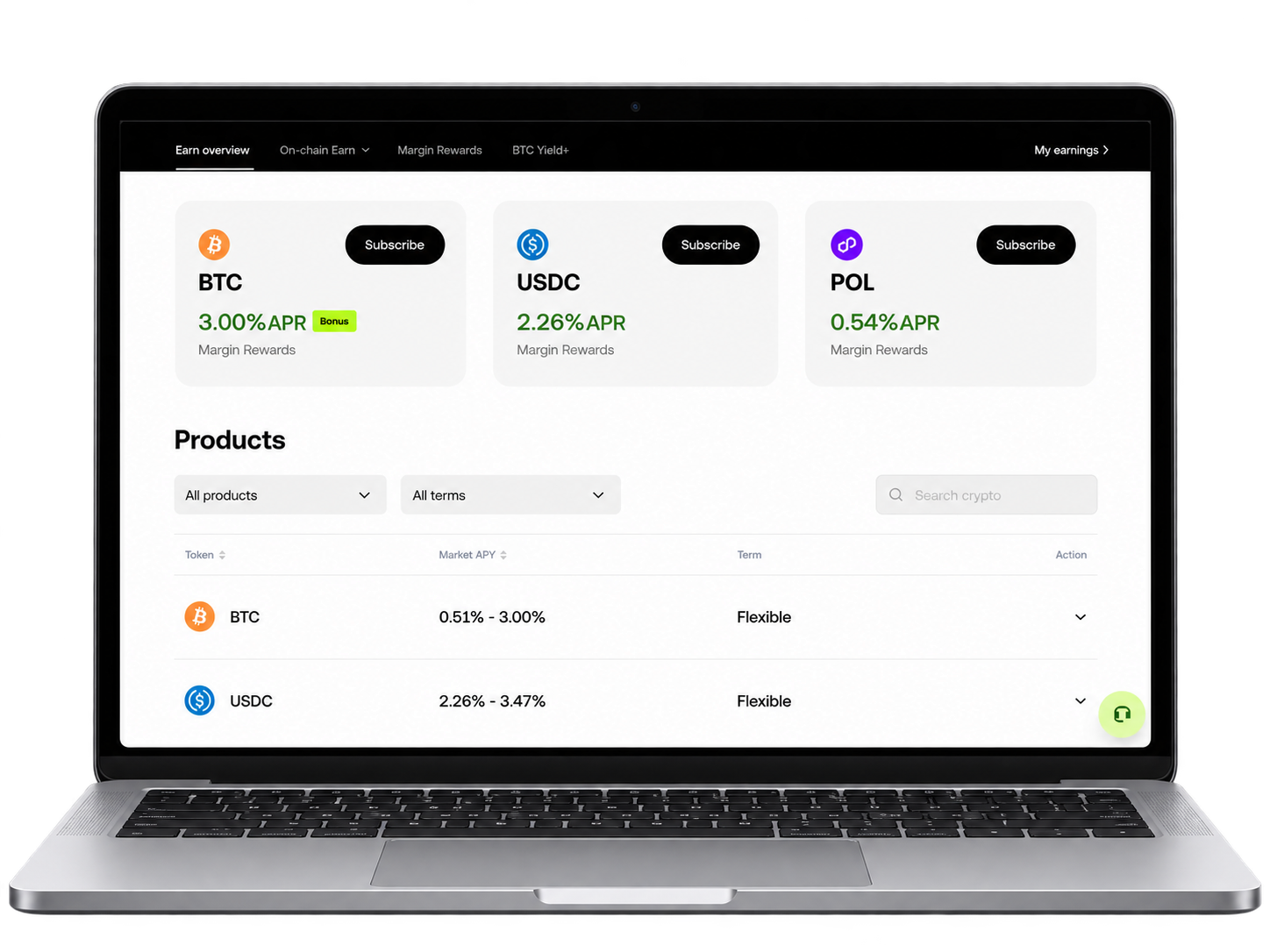
OKX provides cryptocurrency earning products through its Earn platform, allowing eligible users to generate returns on supported digital assets. These services include Simple Earn Flexible, fixed-term lending arrangements, and selected onchain staking or DeFi opportunities. Although they appear within the same platform, their returns originate from different activities and carry different liquidity, counterparty, and protocol risks. Understanding how each product generates rewards is more important than comparing advertised annual percentage rates alone.
Simple Earn Flexible primarily generates returns by making deposited cryptocurrency available to borrowers through OKX’s lending infrastructure. Interest earned from eligible borrowing activity is distributed to participating users according to the product’s terms, with rates influenced by borrowing demand and available lending supply. Flexible subscriptions normally allow redemption on demand, making them more accessible than fixed-term products. However, returns are variable, and OKX’s terms permit redemption delays or restrictions during exceptional liquidity conditions. Simple Earn is not principal-protected, meaning deposited assets can be exposed to financial loss rather than functioning like insured bank savings.
Simple Earn Fixed uses lending arrangements with predetermined terms and interest rates. Deposited assets are matched with borrowing demand, and the agreed lending period begins once the relevant borrowing order is funded. The fixed annualized rate provides greater visibility over expected interest, but funds generally cannot be redeemed early after the lending arrangement becomes active. Borrower repayment delays can also extend the effective lockup period, while defaults may result in losses if collateral liquidation does not fully cover the outstanding obligations. Fixed-term products therefore offer less liquidity in exchange for a more predictable contractual interest rate, without guaranteeing repayment of the principal.
On-chain Earn operates differently by providing access to rewards generated through blockchain protocols. Proof-of-stake opportunities derive returns from validator participation, while supported DeFi strategies may involve lending markets, liquidity provision, or other protocol-based activities. These arrangements introduce risks associated with validator performance, slashing, smart contract vulnerabilities, and network-specific withdrawal periods. Rewards also depend on the underlying asset and protocol conditions, so advertised APYs may change. Eligibility is particularly important in regulated markets: OKX’s European On-chain Earn documentation restricts access to accredited and institutional investors, while the availability of other staking-related services depends on the applicable product and account.
For investors considering OKX Earn, the essential comparison is between the source of returns and the conditions governing access to their assets. Lending products introduce borrower and platform exposure, fixed-term arrangements restrict liquidity, and onchain strategies depend on the performance and security of external blockchain infrastructure. OKX simplifies access to these opportunities through one account, but neither a high advertised yield nor the exchange’s regulatory status eliminates the possibility of losses.
Fees
OKX Fees: What Different Customers Actually Pay
OKX uses a maker-taker fee structure, with trading costs determined by the product, account tier, trading volume, and jurisdiction. Regular spot trading fees generally start at 0.08% for makers and 0.10% for takers on standard international markets, while European users may face different rates depending on their account configuration. High-volume traders can qualify for lower fees through OKX’s VIP program.
| Fee Type | Standard Fee | Details |
|---|---|---|
| Spot Trading (International) | 0.08% Maker / 0.10% Taker | Standard pairs; regional exceptions apply |
| Spot Trading (EEA, Spot-Only Account) | 0.10% Maker / 0.20% Taker | Regular European accounts without X-Perps |
| Spot Trading (EEA, With X-Perps Account) | 0.08% Maker / 0.10% Taker | Regular EEA accounts with X-Perps enabled |
| Stablecoin Spot Pairs (EEA) | 0% Maker / 0.05% Taker | Eligible stablecoin trading pairs |
| Perpetual Futures | 0.02% Maker / 0.05% Taker | Standard rates; availability varies by region |
| Options Trading | Varies | Depends on the instrument, account tier, and jurisdiction |
| Margin Trading | Spot Fees + Interest | Borrowing interest depends on the asset and applicable rate |
| Futures Funding | Variable | Periodic payments between long and short positions |
| Crypto Deposits | Free | OKX charges no crypto deposit fee |
| Crypto Withdrawals | Variable | Depends on cryptocurrency and blockchain network |
| EUR SEPA Deposits | Free | Bank charges may apply |
| EUR SEPA Withdrawals | Free | Bank charges may apply |
| Debit/Credit Card Deposits | Variable | Depends on payment method and region |
| Convert / Instant Buy & Sell | Spread-Based | No separate maker-taker fee; costs are included in the quoted price |
| Account Opening and Maintenance | Free | No standard account opening or maintenance fee |
💡 These are standard published rates, not universal fees for every OKX user. Trading costs can decrease through VIP tiers, while certain pairs have promotional or specialized pricing. Cryptocurrency withdrawal charges fluctuate with network conditions, and trading products may be restricted in some countries. Users should consult the applicable OKX fee schedule before placing transactions.
Account Funding
Deposits, Withdrawals, and Account Verification
OKX supports cryptocurrency deposits, fiat bank transfers, and selected payment methods, with availability determined by the customer’s country and account verification status. In the European Economic Area, eligible users can deposit euros through SEPA and SEPA Instant, with standard transfers generally taking one to two business days and instant payments typically arriving within seconds when supported by the sending bank. OKX does not charge fees for EUR deposits through SEPA, although individual banks may apply their own charges. Card payments and other local funding options are also available in selected markets, with processing fees and transaction limits displayed before confirmation. Bank transfers must originate from an account held in the verified customer’s name, and third-party deposits may be rejected.
Cryptocurrency deposits are supported across numerous blockchain networks, with OKX charging no receiving fee for standard onchain transfers. However, the sending wallet or exchange may charge a network fee, and each asset has its own minimum deposit requirements. Withdrawals operate differently, with charges determined by the cryptocurrency and selected blockchain. For example, withdrawing USDT through Ethereum involves different network costs and transaction requirements than using TRON. The receiving platform must support the exact network selected, since sending assets through an incompatible blockchain can result in permanent loss. OKX also supports instant internal transfers between eligible OKX accounts without blockchain transaction fees, providing a convenient alternative when both parties use the exchange.
Account verification is mandatory for withdrawals and generally involves providing identification documents and personal information required under the applicable jurisdiction’s anti-money-laundering rules. Withdrawal limits depend on account eligibility, verification status, and the chosen payment method. European users withdrawing euros through SEPA must also verify ownership of their receiving bank account, with OKX currently charging no fee for standard EUR SEPA withdrawals. Security controls can temporarily restrict withdrawals following account changes, including password resets, changes to authentication methods, or updates to registered contact details. These changes generally trigger a 24-hour withdrawal restriction, while unusual activity, high-risk destinations, or compliance reviews may result in additional checks and longer delays.
The main consideration is that funds deposited on OKX remain under the exchange’s custody until successfully withdrawn. Account balances can be available for trading while withdrawals are temporarily restricted, making access to cryptocurrency dependent on the platform’s security procedures, liquidity, and operational availability. Traders should verify receiving addresses, network compatibility, and withdrawal charges before transferring substantial amounts, particularly when using a new wallet or blockchain for the first time. For investors who do not need continuous exchange access, moving longer-term holdings into a properly secured self-custody wallet reduces ongoing dependence on centralized exchange custody.
Security
Security, Proof of Reserves, and Asset Custody
OKX combines account authentication, withdrawal restrictions, and asset-monitoring controls to protect customer funds against unauthorized access. Users can enable passkeys, authenticator-based two-factor authentication, and withdrawal address allowlisting, which restricts cryptocurrency transfers to previously approved destinations. An optional 24-hour lock on newly added withdrawal addresses provides additional protection against attackers attempting to redirect funds after compromising an account. Changes to passwords or authentication settings can also trigger temporary withdrawal restrictions, reducing the opportunity for immediate fund theft. These safeguards are most effective when users secure their associated email accounts, enable strong authentication, and avoid approving unfamiliar login or withdrawal requests.
Exchange custody introduces risks that account-level protections alone cannot address, making reserve transparency an important part of evaluating OKX’s financial safeguards. The platform publishes recurring proof-of-reserves reports containing information about customer asset balances, exchange-controlled wallet holdings, and reserve ratios for supported cryptocurrencies. Its October 3, 2026 snapshot uses zk-STARK v2 cryptographic proofs, allowing users to verify that eligible account balances were included in the reported liabilities without publicly revealing individual customer holdings. OKX also publishes wallet ownership information and downloadable verification files, enabling examination of the assets backing its reported customer balances. These measures provide independently checkable evidence beyond a simple statement of assets held by the exchange.
However, proof of reserves should not be confused with a comprehensive financial audit or a guarantee of solvency. Cryptographic verification can establish important properties of the balances included in a report, but it does not necessarily account for every corporate liability, off-chain obligation, pledged asset, or exposure outside the reporting scope. Reserve figures also represent a particular point in time and cannot guarantee sufficient liquidity during future withdrawal surges or market disruptions. OKX’s reporting improves transparency and gives customers a way to examine published reserve claims, although operational security, regulatory oversight, and the risks associated with centralized custody remain separate considerations.
The distinction between OKX Exchange and OKX Wallet is equally important. Cryptocurrency deposited on the centralized exchange is held through OKX’s custody infrastructure, with customers relying on the platform to process withdrawals and maintain access to their balances. The separate OKX Wallet is non-custodial, meaning users control their private keys and authorize blockchain transactions directly. Moving funds into self-custody reduces dependence on the exchange but transfers responsibility for recovery credentials, transaction verification, and smart contract permissions to the wallet owner. For traders who require exchange liquidity, maintaining operational balances on OKX while storing longer-term holdings separately can limit unnecessary custodial exposure without sacrificing access to its trading services.
Mobile Experience
App Experience and Suitability for New Users
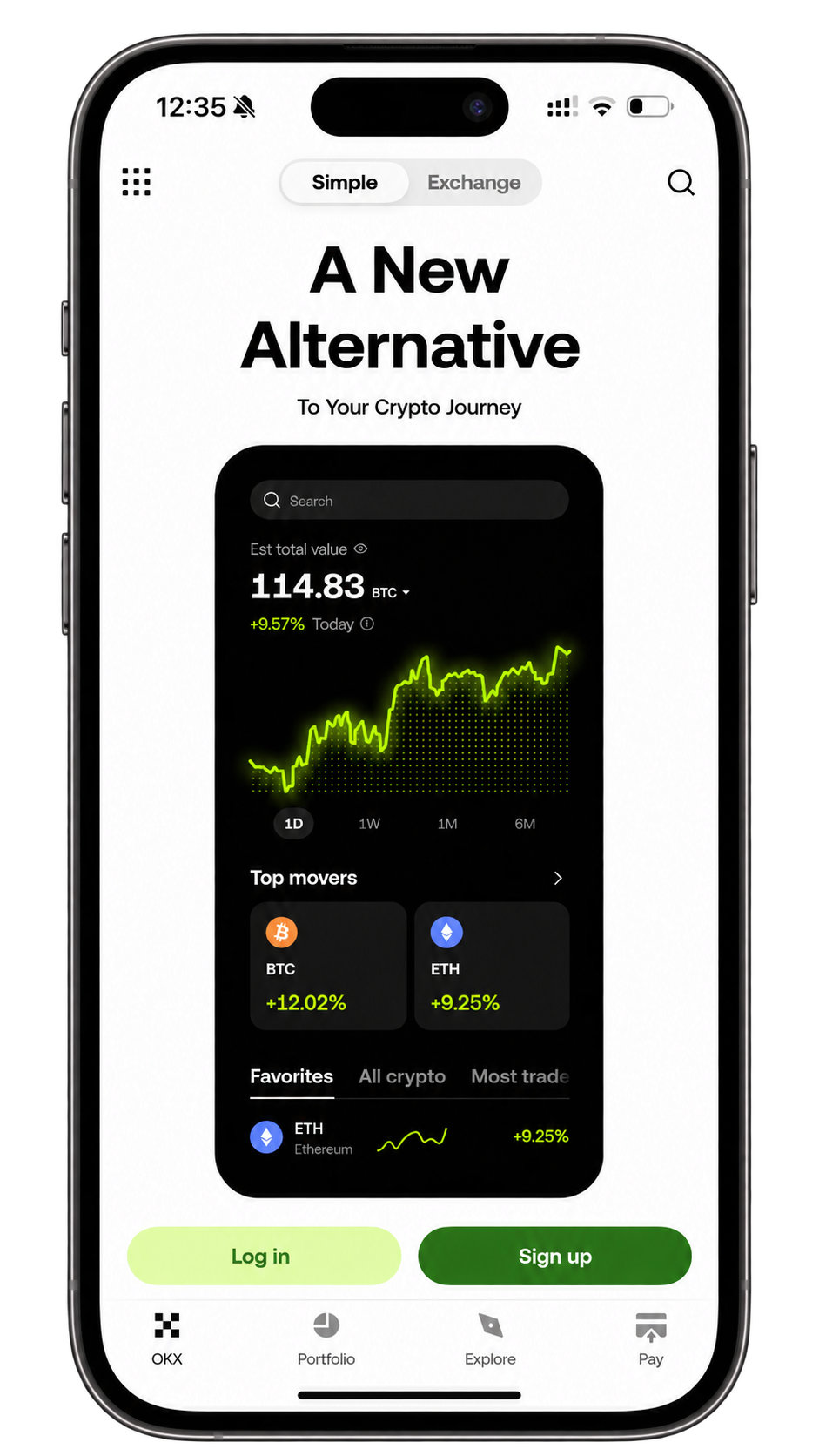
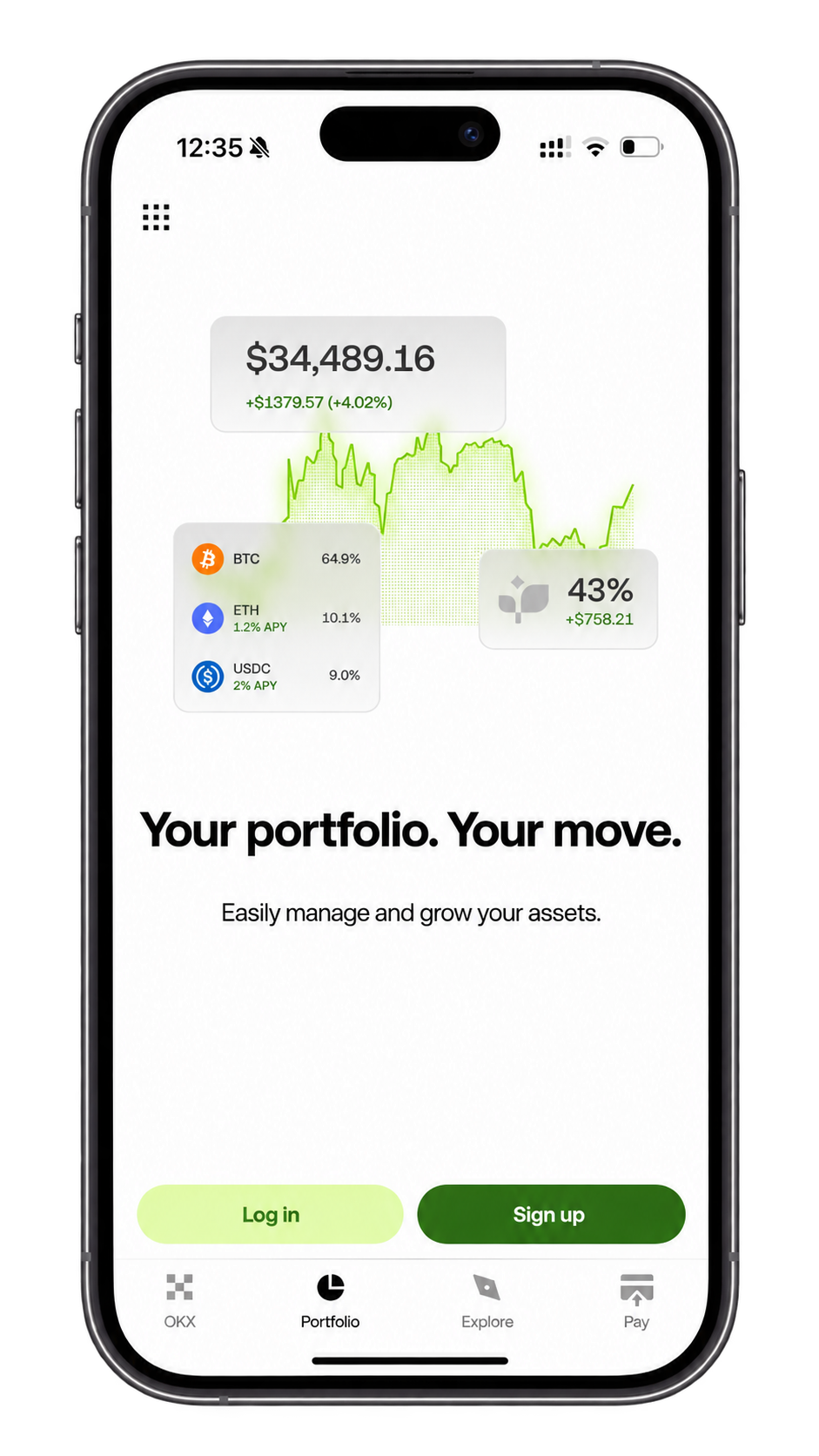
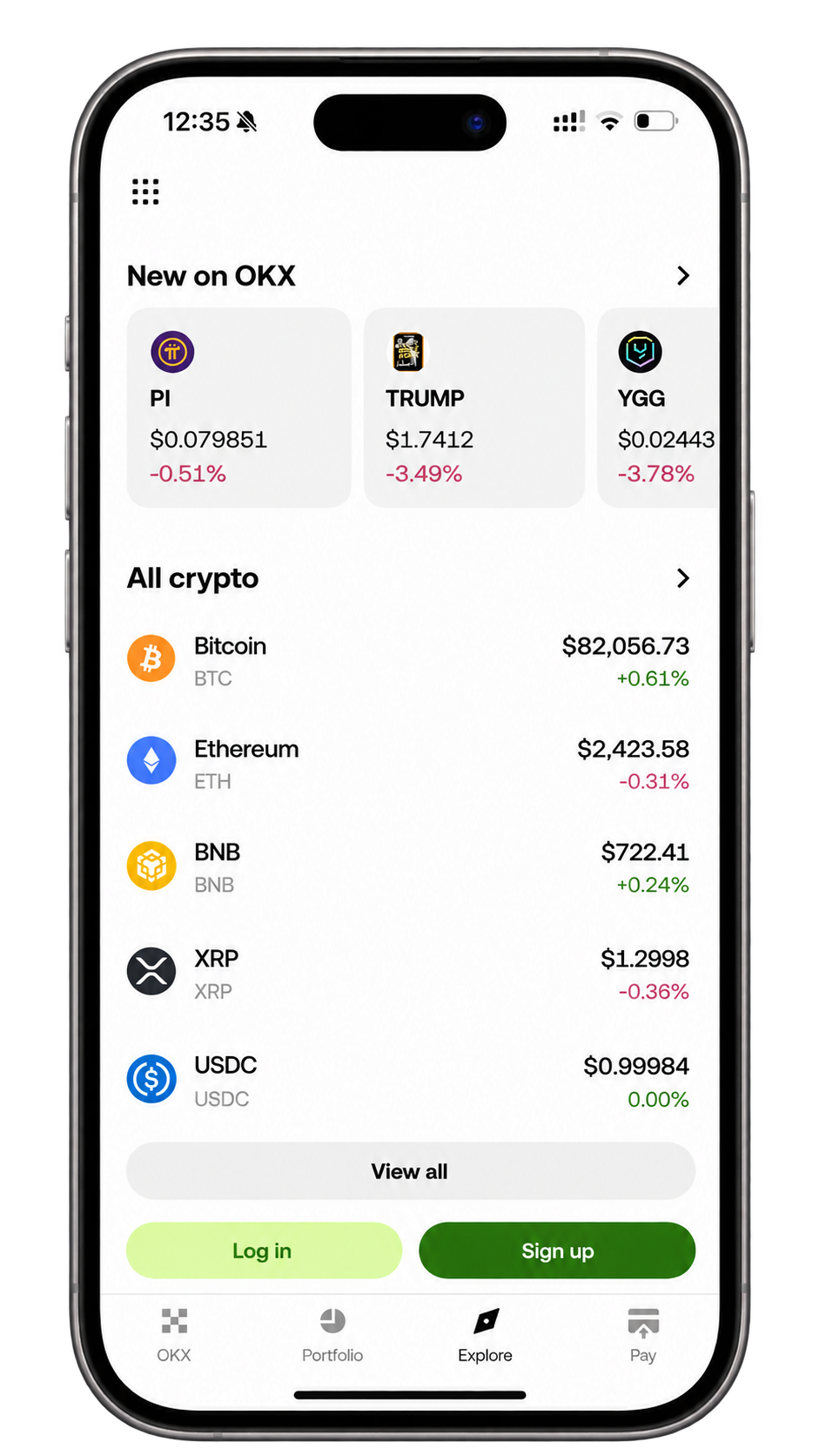
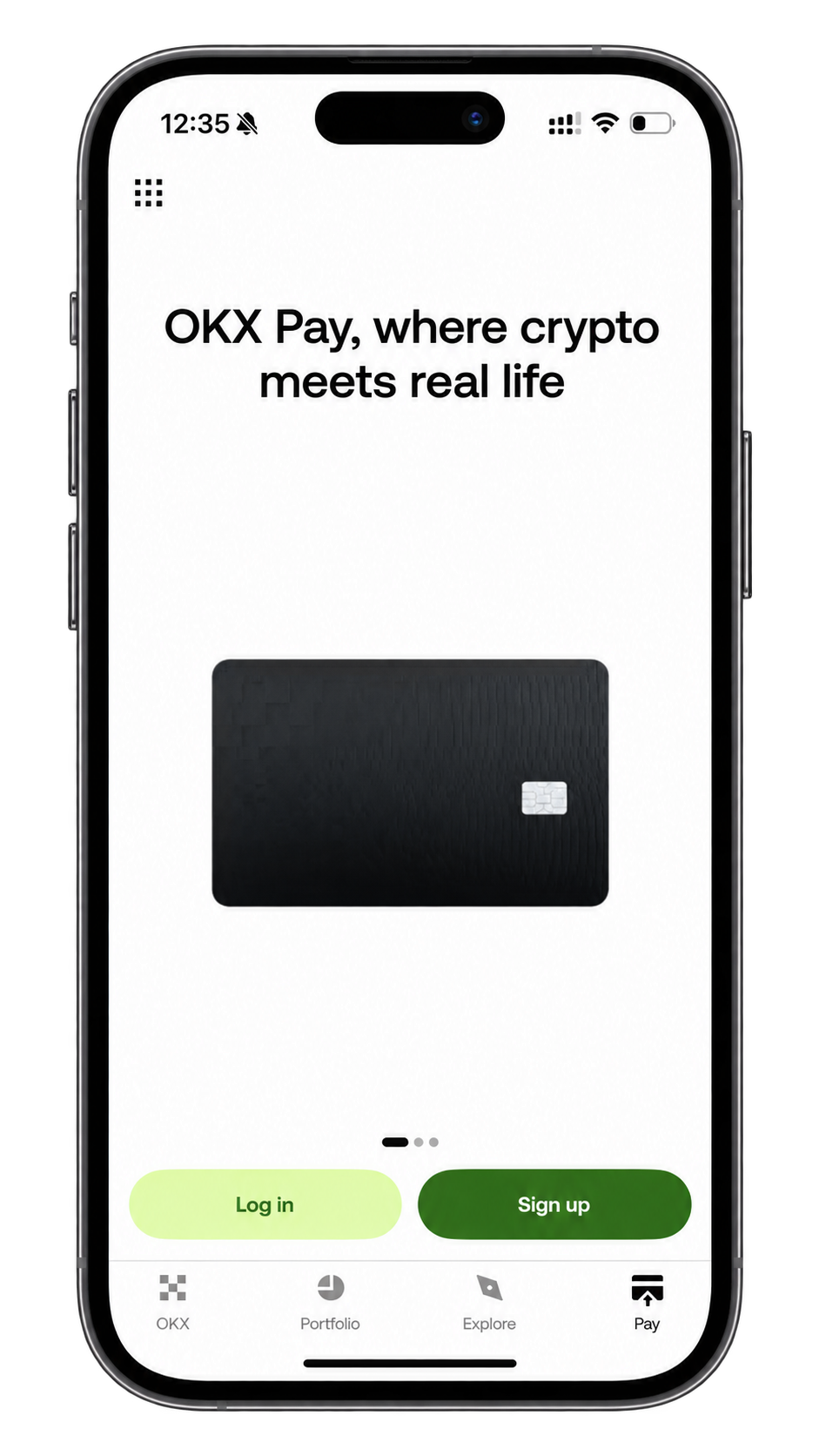
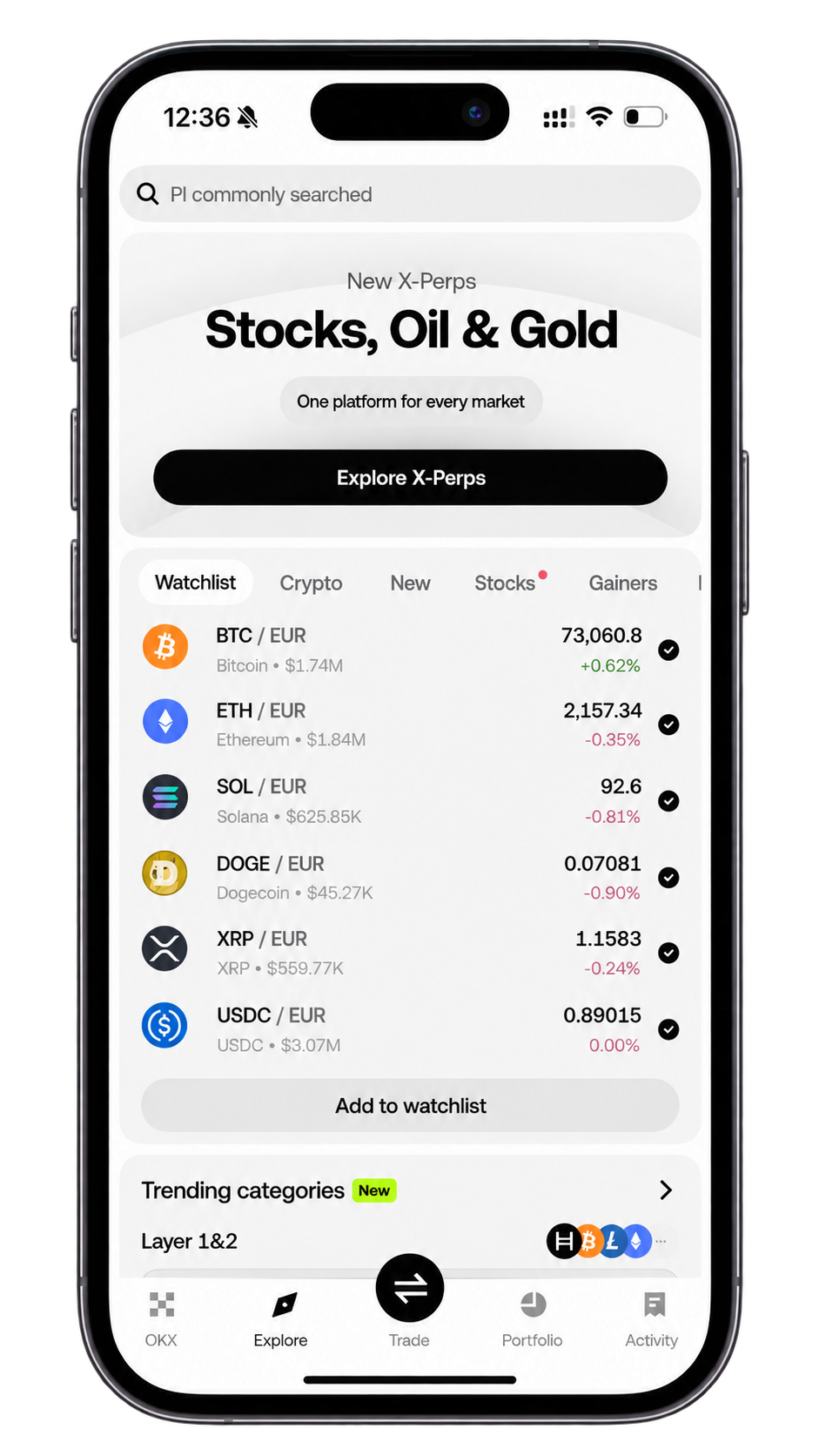
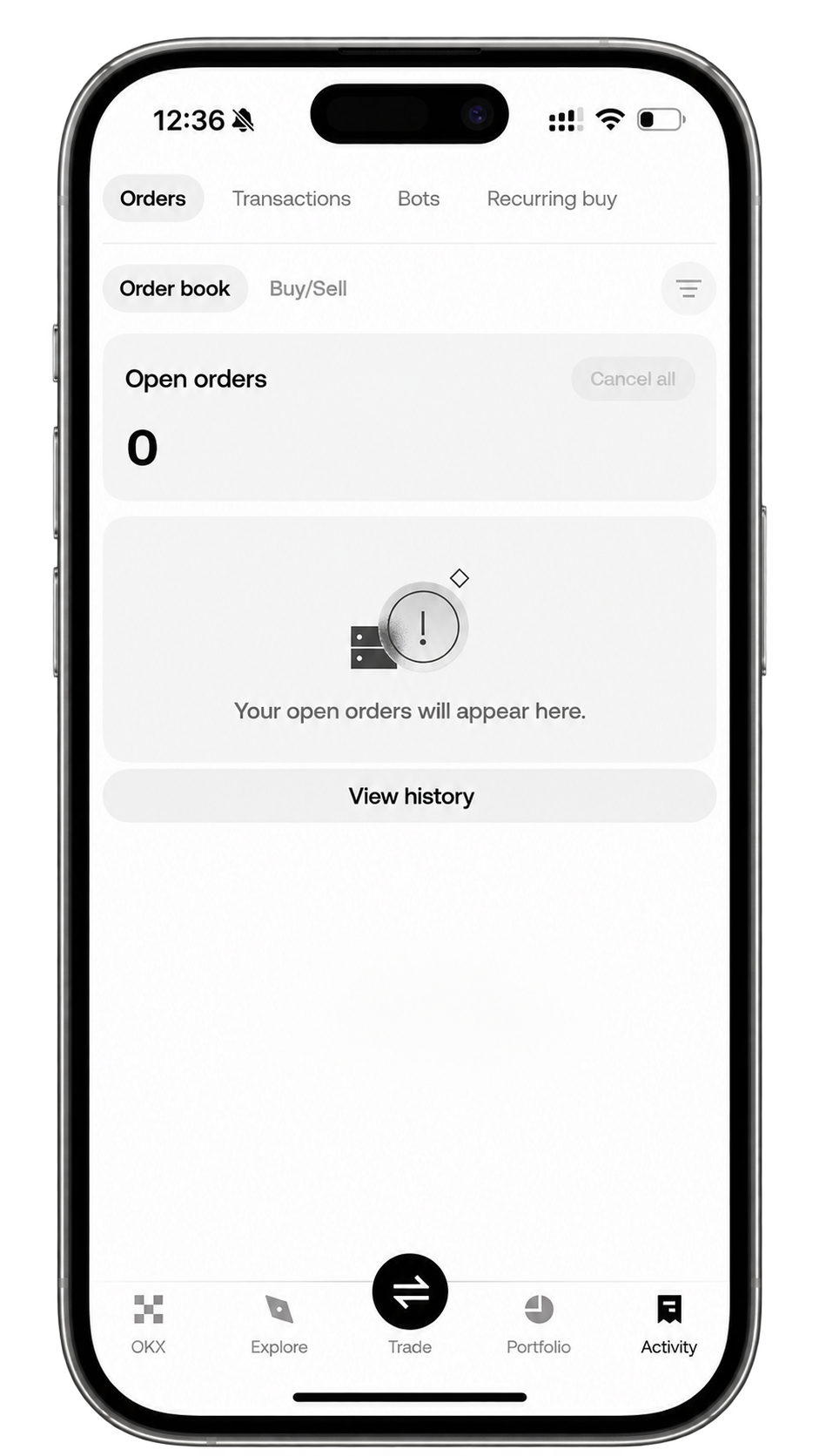
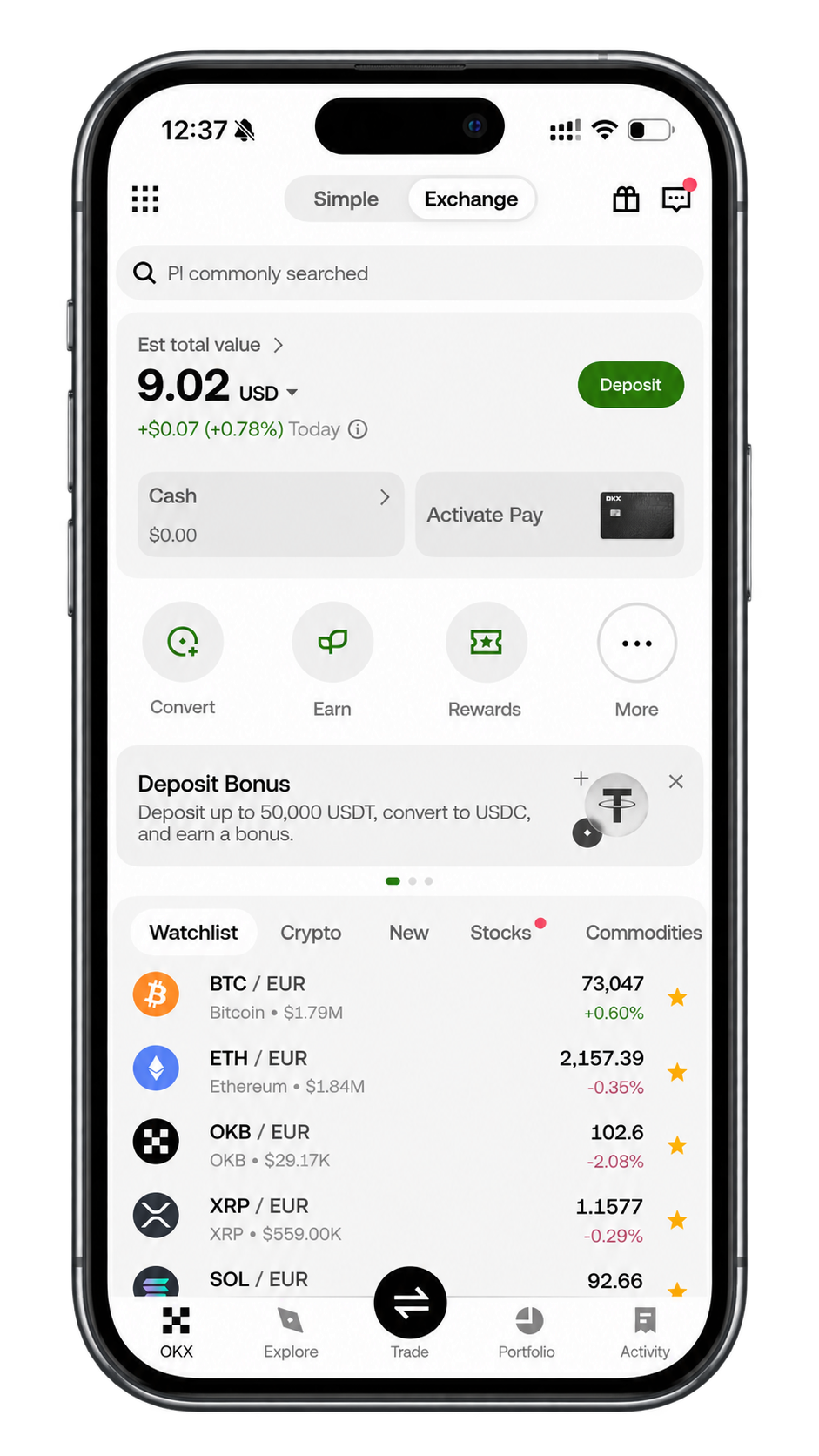
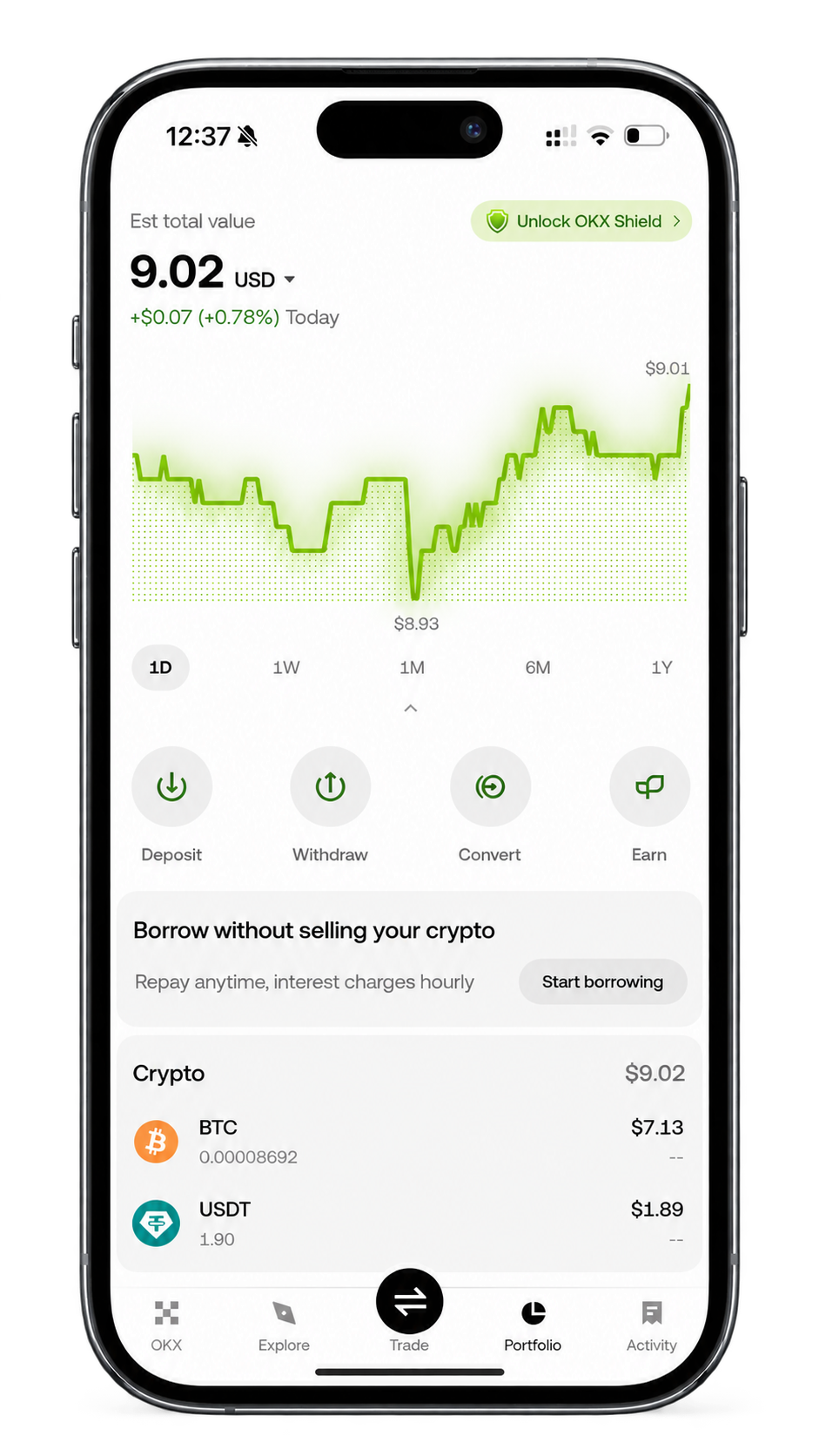
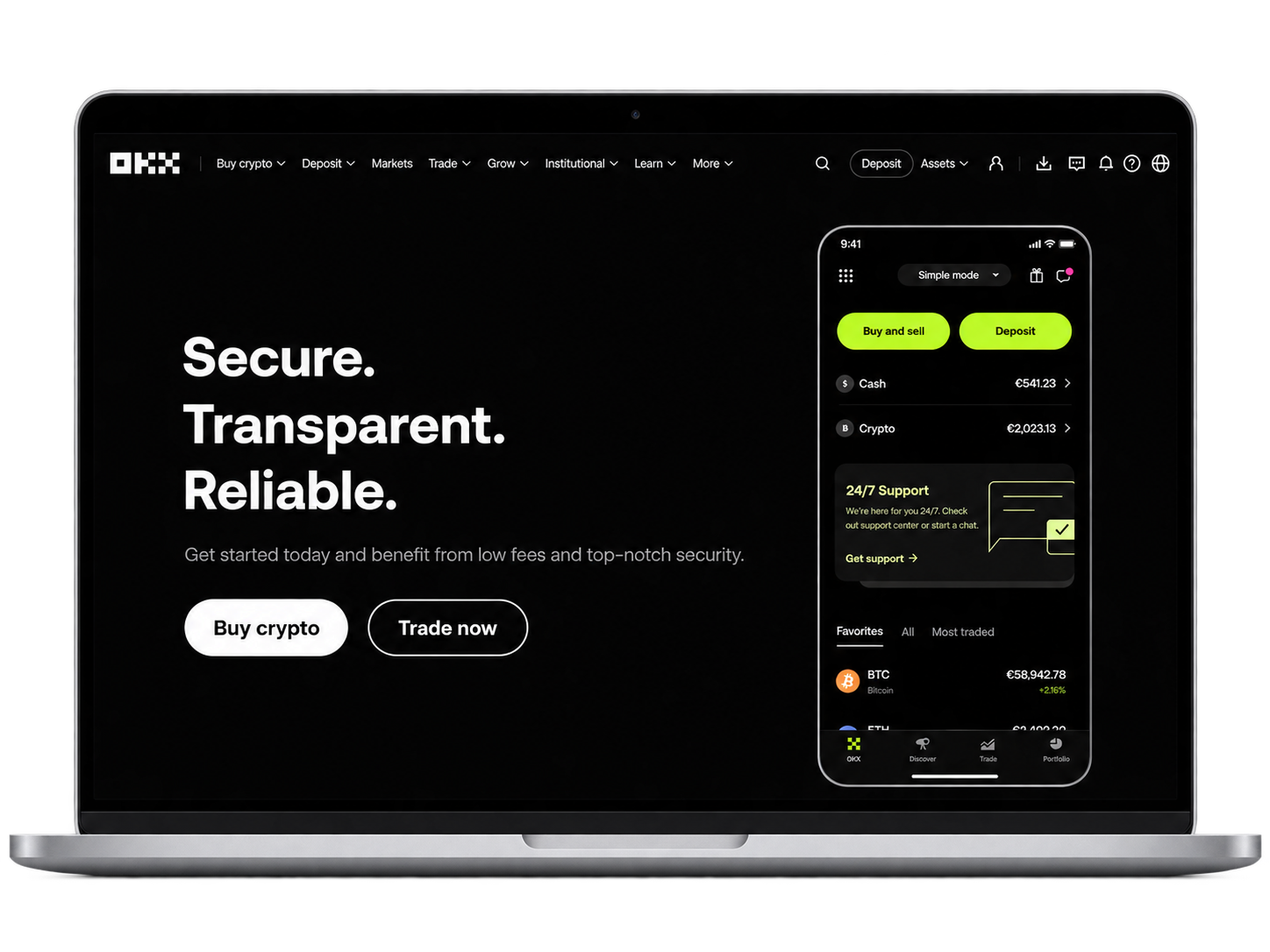
OKX offers a comprehensive mobile trading experience that brings cryptocurrency purchases, portfolio management, advanced charts, order placement, and automated strategies into a single application. The interface provides access to real-time market data, trading positions, order history, and account balances, allowing active traders to monitor markets and manage their strategies without relying on the desktop platform. More advanced users also benefit from technical indicators, customizable order types, and integrated trading bots, although the desktop terminal remains better suited to detailed market analysis and managing complex trading setups.
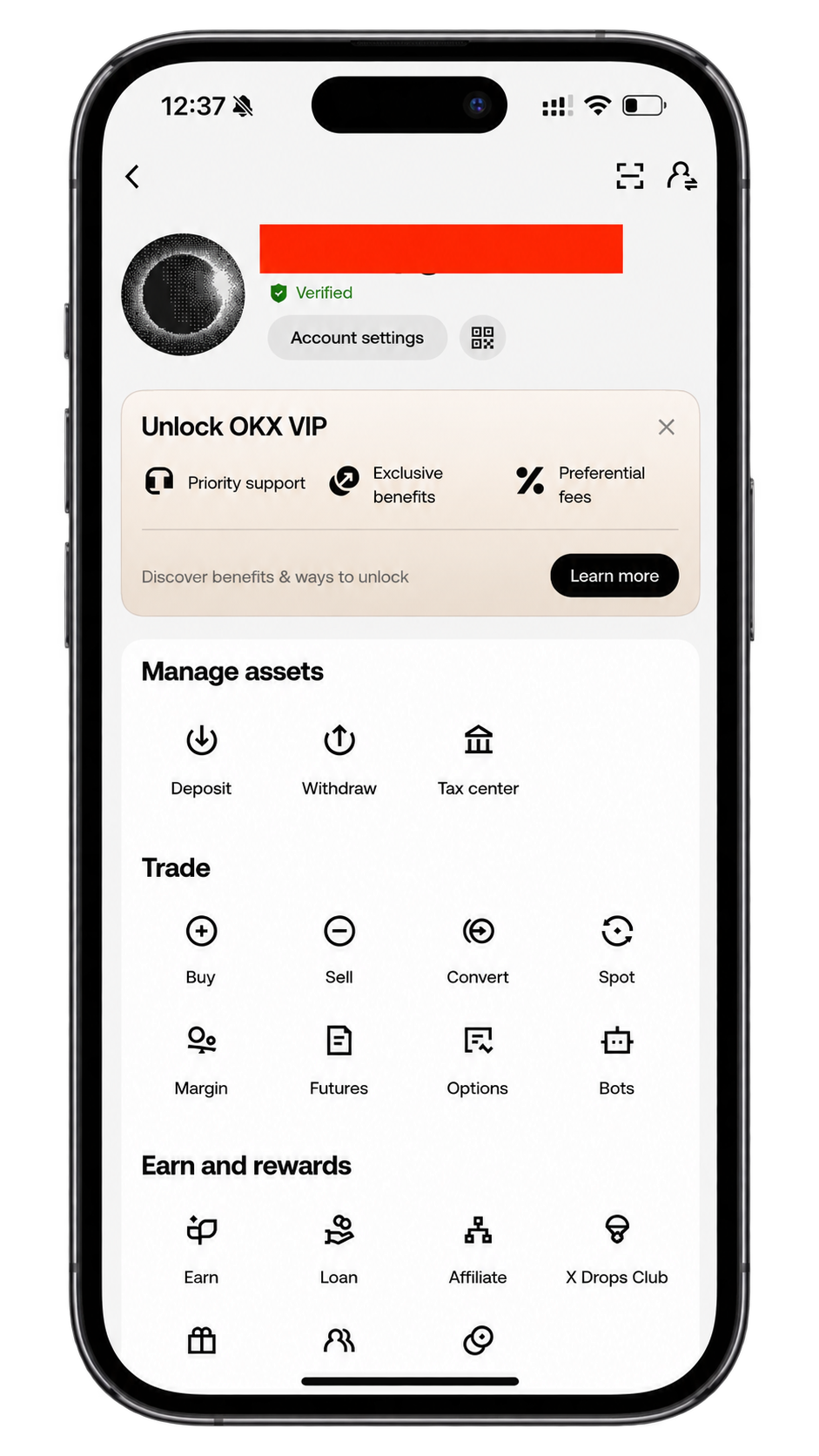
For beginners, OKX provides simplified cryptocurrency purchasing options that avoid the complexity of a professional trading terminal. However, the platform’s extensive product range creates a learning curve, particularly when distinguishing between instant purchases, spot trading, margin accounts, derivatives, and Earn products. These services have different fee structures, risk levels, and asset-handling requirements, making it important to understand which product is being used before depositing funds or placing orders. The separate OKX Wallet introduces another distinction, since its self-custodial structure differs from holding assets on the centralized exchange.
Overall, OKX provides a polished and feature-rich experience that becomes more valuable as users develop their trading skills. Beginners can comfortably manage basic purchases and transfers, but those seeking only occasional Bitcoin investments may find its extensive functionality unnecessary. The platform is particularly appealing to investors planning to move beyond simple cryptocurrency purchases into active spot trading, portfolio management, and automated strategies, where its broader tools can justify the additional complexity.
Preview
OKX vs Competitors
OKX vs Binance, Kraken, and Coinbase
OKX competes directly with Binance, Kraken, and Coinbase across spot trading, derivatives, and cryptocurrency investment services. Each exchange offers advanced trading functionality, but differences in fees, automation, market access, and account management influence which platform delivers the most value. The comparisons below focus on standard trading costs and practical features, with regional restrictions considered separately.
OKX vs Binance
Binance is one of OKX’s closest competitors, offering extensive cryptocurrency markets, advanced trading terminals, derivatives, and a comprehensive collection of automated strategies. Both platforms support spot grid trading, recurring investments, algorithmic orders, and API-based execution, making them suitable for active traders who require more than standard market and limit orders. Binance also operates a trading bot marketplace and offers a 25% spot trading fee discount when eligible fees are paid using BNB.
OKX has a slight advantage in standard international spot maker fees, charging 0.08% compared with Binance’s 0.10%, while both charge 0.10% for standard taker orders. However, Binance’s BNB discount can reduce eligible maker and taker fees to 0.075%, reversing that advantage. Actual execution quality depends on the trading pair, order-book liquidity, and transaction size rather than the published fee alone.
| Feature | OKX | Binance |
|---|---|---|
| Standard Spot Fees | 0.08% maker / 0.10% taker | 0.10% maker / 0.10% taker |
| Trading Fee Discounts | VIP tiers and volume-based reductions | VIP tiers and eligible BNB fee discounts |
| Trading Automation | Grid bots, recurring buys, algorithmic orders, APIs | Grid bots, DCA, rebalancing, TWAP, bot marketplace |
| Derivatives | Futures, perpetuals, options, and regional X-Perps | Futures, perpetuals, options, and margin products |
| Additional Services | Earn, self-custodial wallet, Web3 services | Earn, Binance Wallet, and other ecosystem services |
| Best For | Active traders prioritizing execution tools and flexible trading workflows | Traders seeking extensive markets, automation, and BNB-related fee benefits |
Which is better? OKX is a strong alternative for traders who prefer its interface, automation tools, and account structure. Binance is particularly competitive for users taking advantage of BNB fee discounts and its extensive trading ecosystem. Both require regional fee and product checks, especially for European customers whose available services may differ from international offerings.
OKX vs Kraken
Kraken offers a more streamlined trading experience, combining cryptocurrency purchases, fiat funding, staking services, and professional trading through Kraken Pro. Its advanced platform includes order-book trading, technical charting, margin and derivatives products where available, and extensive API connectivity. Kraken has also introduced automated TWAP orders, although its built-in automation environment is less focused on ready-made retail strategies than OKX’s integrated trading bots.
Pricing creates a notable difference for regular traders. Kraken Pro’s standard spot fees currently begin at 0.40% maker and 0.80% taker, substantially above OKX’s international rates of 0.08% and 0.10%. Kraken provides progressively lower fees as eligible trading volume or assets held on the platform increase, so the difference narrows at higher account tiers. European customers must also consider OKX’s separate regional schedule, where regular spot-only accounts start at 0.10% maker and 0.20% taker.
| Feature | OKX | Kraken |
|---|---|---|
| Standard Spot Fees | 0.08% maker / 0.10% taker internationally | 0.40% maker / 0.80% taker on Kraken Pro |
| Fee Reductions | Trading volume and account tiers | Trading volume or qualifying assets on platform |
| Trading Interface | Feature-rich professional terminal | Kraken Pro with advanced charts and order controls |
| Trading Automation | Integrated bots, recurring strategies, APIs | TWAP bot orders and advanced trading APIs |
| Derivatives | Broad international offering; X-Perps for eligible EEA users | Futures and margin products for eligible users |
| Best For | Cost-conscious active traders and automation users | Investors prioritizing straightforward fiat access and professional execution tools |
Which is better? OKX offers more attractive standard spot pricing in many markets and a broader selection of ready-to-use trading bots. Kraken is particularly suitable for customers who value its established exchange infrastructure, fiat funding options, and Kraken Pro interface. The comparison becomes more competitive at higher Kraken fee tiers or when regional OKX restrictions reduce the products available.
OKX vs Coinbase
Coinbase provides a more accessible starting point for cryptocurrency purchases, with a simplified interface for beginners and a separate Coinbase Advanced environment for experienced traders. Its advanced platform supports real-time order books, technical analysis, configurable order types, APIs, and an expanding derivatives offering. Coinbase has also developed broader market access across eligible cryptocurrency, equity-linked, and commodity-related products, making it a more substantial competitor to OKX than its beginner-oriented interface might suggest.
Trading costs need to be compared using equivalent services. Coinbase’s simple buy-and-sell interface uses quoted pricing that can include transaction fees and spreads, while Coinbase Advanced applies tiered maker-taker fees based on qualifying activity or account balances. OKX likewise offers simplified purchasing alongside its professional order books, with different fees applying to each method. Comparing a Coinbase instant-purchase quote against an OKX spot limit order would not provide a meaningful assessment of the two exchanges’ trading costs.
| Feature | OKX | Coinbase |
|---|---|---|
| Standard Spot Fees | 0.08% maker / 0.10% taker internationally | Coinbase Advanced rates vary by account tier and market |
| Beginner Experience | Simplified purchases within a trading-focused platform | Dedicated beginner-friendly buy-and-sell interface |
| Advanced Trading | Spot, margin, derivatives, trading bots, and APIs | Coinbase Advanced with order books, derivatives, and APIs |
| Automation | Built-in grid bots, recurring purchases, algorithmic execution | Recurring purchases, advanced orders, and API-based automation |
| Regional Regulation | MiCA-authorized European exchange; separate regional entities | MiCA authorization through Coinbase Luxembourg; separate U.S. operations |
| Best For | Active traders seeking integrated automation and professional execution | Beginners and investors wanting straightforward purchases with advanced tools available |
Which is better? OKX is particularly attractive for traders who regularly use automated strategies and want extensive execution controls in one trading environment. Coinbase offers a more approachable entry point for first-time buyers while still providing serious trading functionality through Coinbase Advanced. Frequent traders should compare their actual fee tiers, available markets, and execution costs rather than assuming Coinbase is inherently more expensive or OKX offers every product in their jurisdiction.
Pros & Cons
- Deep spot-trading workspace with useful order controls, APIs, and eligible automation tools.
- Competitive international spot maker/taker pricing and volume-based fee tiers.
- Broad cryptocurrency selection across major assets, stablecoins, and altcoins.
- Published reserve verification and practical account-security controls.
- Products and trading fees differ significantly across regional OKX entities.
- Advanced tools and multiple account modes can overwhelm first-time traders.
- Earn products introduce lending, liquidity, or staking risks beyond holding crypto.
- Centralized custody and historical regulatory failures remain relevant considerations.
Bottom Line
Is OKX Worth Trading On?
OKX is a strong choice for active cryptocurrency traders, combining competitive spot fees, extensive market coverage, advanced order execution, and automated trading strategies within a comprehensive platform. Its regularly published Proof of Reserves reports provide additional transparency, while its trading tools and derivatives offerings make it particularly attractive to experienced users. However, regional restrictions, varying fee schedules, and the risks associated with Earn products and centralized custody require careful consideration. For traders who regularly use its advanced features, OKX offers considerable value and flexibility, although occasional cryptocurrency buyers may find a simpler exchange better suited to their needs.
FAQ
Is OKX safe to use in 2027?
OKX publishes recurring reserve proofs and offers passkeys, two-factor authentication, address allowlisting, and other withdrawal protections. Those are meaningful safeguards, but no centralized exchange eliminates custodial, operational, regulatory, or account-takeover risk. Reserve snapshots do not establish a complete solvency audit, and account holders remain subject to verification and withdrawal controls.
What are OKX's trading fees?
Regular spot fees vary by region and account setup. The international standard-pair schedule lists 0.08% maker and 0.10% taker, while the September 2026 EEA spot-only schedule lists 0.10% and 0.20%. The standard U.S. schedule lists 0.20% and 0.35%. VIP tiers, selected pairs, and other products may use different rates, so the account's live fee schedule takes precedence.
Does OKX require KYC to withdraw crypto?
Identity verification is required for exchange withdrawals, and additional checks or temporary restrictions can apply when account security settings change or compliance reviews are opened. The exchange's verification requirements should not be confused with the separate self-custody OKX Wallet, where the user controls transaction signing.
Does OKX offer futures and perpetual trading everywhere?
Traditional derivatives products are not available to every customer, and U.S. exchange access is materially narrower than the international offering. In eligible European markets, X-Perps require an appropriateness assessment and have a five-year contractual expiry even though their trading mechanics resemble conventional perpetual futures.
Can users stake crypto on OKX, and are rewards guaranteed?
Eligible accounts may have access to staking-related products or Simple Earn, but their mechanisms differ. Simple Earn can involve lending assets to borrowers, while protocol staking depends on blockchain validator economics. Returns are variable unless a specific product contract states otherwise, capital is not necessarily protected, and withdrawals can be delayed by lockups or liquidity restrictions.
Is OKX better than Binance, Kraken, or Coinbase?
OKX is particularly competitive for traders who want a dense execution workspace, automation, and multiple markets in one account. Binance may offer an edge in market breadth in eligible regions, Kraken appeals to users focused on its regulatory and fiat infrastructure, and Coinbase is often easier for occasional purchasers. The most useful comparison is based on local access, total trading cost, security controls, and the products the customer will actually use.