







BTC $80,948.00 +0.05% ETH $2,366.70 -0.72% XRP $1.31 +1.49% BNB $744.13 +0.62% SOL $102.59 -0.08% TRX $0.3287 -0.31% DOGE $0.0779 -1.24% Check more
Head 2
Tether

Tether

USDT Rank 3
$0.9991 +0.00%
Mkt. Cap Market capitalization (market cap) in crypto is the total FIAT value of a cryptocurrency's circulating supply. Market Cap = Current Token Price × Circulating Supply Read More $182.46B
24h The total monetary value of a cryptocurrency bought and sold across participating exchanges over a rolling 24-hour window. Read More $36.32B
Circ. supply Circulating supply is the number of tokens considered available in the market. It usually excludes locked team tokens, investor allocations under vesting, treasury tokens that are not active, and tokens reserved for future emissions. Read More 182,624,397,368USDT
FDV Fully diluted valuation, or FDV, estimates what a project would be valued at if the relevant full token supply were counted at the current token price. FDV = Current Token Price × Maximum Supply Read More $187.92B
Head 1
Tether Price Today Introduction How USDT Works? USDT vs. USDC Buying & Storing USDT Conclusion Tether FAQ
Tether Price Today Tether icon

Today, October 25, 2026, Tether is trading at $0.9991

Tether is trading at $0.9991 as of October 25, 2026, reflecting a 0.00% change over the past 24 hours. USDT's market capitalization stands at $182.46B, maintaining 6.5% dominance over the total crypto market.

Over the past seven days, Tether has moved 0.00%, while the 30-day trend shows a -0.06% shift. Trading volume over the past 24 hours reached $36.32B.

Tether is currently 24.31% below its all-time high of $1.32, reached on July 23, 2018.

Introduction

What Is USDT (Tether)? A Complete Guide

Tether (USDT) is a cryptocurrency designed to maintain a value close to one U.S. dollar, allowing people to transfer, trade, and hold dollar-denominated assets across blockchain networks. Unlike Bitcoin and Ethereum, whose prices can fluctuate significantly, USDT belongs to a category of cryptocurrencies known as stablecoins, which aim to provide greater price stability by referencing traditional currencies or other assets.

Launched in 2014, Tether has become one of the most widely used digital assets in cryptocurrency markets. Traders use USDT to move between cryptocurrencies without repeatedly converting funds into conventional money, while businesses and individuals use it for payments, international transfers, and decentralized finance (DeFi). Its availability across multiple blockchains makes these transactions possible without relying on traditional banking infrastructure for every transfer.

However, USDT’s stability comes from a different mechanism than the monetary systems underlying Bitcoin or Ethereum. Tether issues tokens against financial reserves intended to support their dollar value, while redemption arrangements and secondary-market trading help keep the price close to $1. Understanding those mechanisms, alongside the issuer’s financial obligations and the risks of transferring tokens between networks, is essential before using USDT.

What Is USDT in Simple Terms?

USDT is a digital token intended to represent approximately one U.S. dollar. Someone holding 100 USDT therefore owns a cryptocurrency designed to maintain a market value close to $100, rather than an asset primarily intended to appreciate through changes in its market price.

Its main purpose is to bring the familiarity of dollar-denominated value into cryptocurrency markets. For example, a trader who sells Bitcoin for USDT can retain a relatively stable dollar-based balance on a cryptocurrency exchange without immediately withdrawing the proceeds to a bank account. Similarly, someone can send USDT to another person’s compatible wallet, allowing the recipient to hold the tokens, spend them through supported services, or convert them into local currency.

Unlike Bitcoin, USDT does not operate through an independent blockchain. Instead, Tether issues tokens on existing networks such as Ethereum, Tron, and Solana. This allows the same dollar-pegged cryptocurrency to function across different blockchain ecosystems, although transaction fees, wallet compatibility, and transfer requirements vary considerably between them.

The distinction between the issuer and the asset is straightforward: Tether is the company responsible for USDT’s issuance and reserve arrangements, while USDT is the cryptocurrency that users hold and transfer.

How USDT Works?

How USDT (Tether) Works?

Tether originated in 2014, when cryptocurrency exchanges were growing but moving money between digital assets and conventional banking systems remained difficult. Traders frequently encountered slow bank transfers, restricted fiat payment services, and limited opportunities to move dollar-denominated funds between exchanges.

The project, initially called Realcoin, was developed by a founding team that included Brock Pierce, Reeve Collins, and Craig Sellars. Its central idea was to create a blockchain-based token representing the U.S. dollar, allowing participants to move relatively stable value through cryptocurrency infrastructure without repeatedly entering and exiting traditional financial systems.

USDT initially operated through Bitcoin’s Omni Layer protocol before expanding to Ethereum, Tron, and numerous other networks. These integrations helped the token become a major trading asset, particularly as exchanges introduced markets quoted in USDT instead of conventional dollars. The project subsequently expanded beyond trading into payments, decentralized finance, and international transfers.

This development established an important distinction between USDT and decentralized cryptocurrencies. Bitcoin’s supply and transaction rules are enforced through a distributed network without a central issuer, while Tether maintains responsibility for creating tokens, managing reserves, and processing eligible redemptions. The blockchain enables transfers, but the stability of the underlying asset ultimately depends on the issuer’s financial arrangements.

How Does USDT Work and Maintain Its $1 Peg?

USDT operates through three closely connected mechanisms: token issuance, reserve backing, and redemption. Tether issues tokens to eligible customers under its verification and funding requirements, maintains financial assets intended to support outstanding liabilities, and allows qualifying customers to redeem tokens according to its terms.

When an approved institutional customer acquires USDT directly from Tether, the company supplies the corresponding tokens against accepted funds or assets. Those tokens can then circulate through cryptocurrency exchanges and wallets, where users transfer or trade them without requiring Tether to approve every ordinary transaction. When eligible customers redeem USDT, the tokens return to the issuer and are removed from circulation, with the corresponding payment processed under the applicable redemption arrangements.

How the Dollar Peg Works

The ability to acquire and redeem USDT helps establish an economic relationship between its market price and the U.S. dollar. If USDT trades below $1, eligible market participants may purchase discounted tokens and redeem them through Tether, provided the price difference exceeds the associated costs. This creates an incentive to buy USDT when its market value falls below the intended reference price.

The reverse mechanism can operate when USDT trades above $1. Eligible participants may acquire additional tokens and sell them into the market, helping increase available supply and reduce the premium. Together with exchange liquidity and market-making activity, these incentives help maintain USDT’s price near its dollar target.

However, USDT is not guaranteed to trade at exactly $1 at every moment. Temporary deviations can occur because of liquidity conditions, market demand, trading fees, and disruptions to redemption access. Larger or prolonged deviations, known as depegging, can emerge when market participants question the reliability of the mechanism supporting the stablecoin.

The causes of stablecoin depegging extend beyond ordinary price fluctuations, particularly when reserve concerns, banking problems, or insufficient market liquidity undermine confidence. Understanding this distinction is essential because a stablecoin’s target value should not be confused with an unconditional guarantee of repayment.

What Backs Tether (USDT)?

USDT is supported by reserves that Tether maintains to cover its outstanding token-related obligations. Contrary to the common assumption that every USDT corresponds to one dollar sitting in a conventional bank account, the company’s backing consists of several categories of financial assets with different liquidity and risk characteristics.

U.S. Treasury bills and short-term financial instruments form a substantial part of the reserve portfolio, alongside repurchase agreements and other liquid assets. Tether also maintains exposure to precious metals, Bitcoin, secured loans, and additional investments. These holdings can generate income for the issuer, but their suitability for stablecoin backing depends on their market value, liquidity, and availability when redemptions occur.

Tether’s Reserve Position

According to Tether’s financial figures and reserves report for June 30, 2026, the company reported approximately $187.75 billion in assets against $183.64 billion in liabilities, leaving a surplus of roughly $4.11 billion.

Reserve Metric June 30, 2026
Total reported assets $187.75 billion
Total reported liabilities $183.64 billion
Reported excess reserves $4.11 billion
Principal reserve holdings U.S. Treasury securities and short-term liquidity instruments
Independent assurance provider BDO
Reserve reporting Quarterly

The reported surplus provides a financial cushion against certain asset losses, although its value changes with market conditions and Tether’s ongoing operations. Reserve composition is particularly important because short-term government securities and cash equivalents generally offer different liquidity characteristics from Bitcoin, precious metals, or secured lending arrangements.

Are Tether’s Reserves Audited?

Tether publishes quarterly reserve reports accompanied by independent assurance opinions from accounting firm BDO. These provide information about the company’s reported assets and liabilities at specified reporting dates, giving investors and other market participants a way to examine the financial backing associated with its tokens.

Nevertheless, a reserve attestation and a comprehensive financial statement audit are not interchangeable. An attestation addresses information within a defined scope, while a full audit generally examines a broader set of financial statements and accounting matters. The June 2026 report should therefore be understood according to the scope of its published assurance opinion.

The distinction matters because reserve transparency is one of the main factors separating stablecoin ownership from conventional bank deposits. USDT holders depend on the issuer’s financial position, redemption arrangements, and the accessibility of its assets rather than receiving the same protections normally associated with insured banking products.

Can You Redeem USDT for Real Dollars?

USDT can be converted into conventional currency, although most individual holders do so through cryptocurrency exchanges rather than directly through Tether.

Direct issuer redemption is available to approved customers who complete identity verification and satisfy Tether’s minimum transaction requirements. Under its published fee schedule, the minimum direct redemption is $100,000 equivalent, with a fee equal to the greater of $1,000 or 0.1% of the amount redeemed.

These conditions make direct redemption impractical for many retail users. Someone holding 500 USDT, for example, would generally sell the tokens through an exchange or payment provider supporting fiat conversion rather than requesting a $500 redemption directly from Tether.

The process typically involves depositing USDT through a supported blockchain, exchanging it for dollars, euros, or another available currency, and withdrawing the proceeds through an eligible banking or payment service. Trading spreads, exchange commissions, identity checks, and withdrawal charges can affect the final amount received.

Choosing suitable stablecoin on-ramps and off-ramps therefore requires evaluating the complete payment route, including which blockchain the provider accepts and whether the resulting fiat balance can actually be withdrawn to the intended bank account.

Which Blockchains Support USDT?

USDT operates across multiple blockchain networks, allowing users to choose between different transaction costs, wallet integrations, and settlement systems. Ethereum and Tron are among its most widely used networks, while Solana, GRAM, and other supported blockchains extend its availability across additional applications and payment services.

Despite sharing the same ticker and intended dollar value, USDT tokens on different blockchains cannot simply be transferred to one another as if they existed on a single network. Every transaction must use a compatible sending and receiving route.

Major USDT Networks

Blockchain Token Format Fee Currency Main Characteristics
Ethereum ERC-20 ETH Extensive exchange and DeFi compatibility
Tron TRC-20 TRX / network resources Widely used for transfers and payments
Solana Solana token SOL Fast processing and low ordinary fees
GRAM Jetton GRAM Wallet and payment ecosystem integration
Aptos Fungible Asset APT Alternative smart contract infrastructure

The network selected has a direct influence on transaction costs. Ethereum transfers require ETH for gas and may become more expensive during congestion, while Tron uses its bandwidth and energy resource system, with TRX needed when available resources are insufficient. Solana generally offers low transaction fees but requires SOL to process ordinary transfers.

Another important distinction concerns the origin of the token. Some blockchains and applications support tokens described as wrapped or bridged USDT, which represent value held or managed through separate interoperability systems. These assets can introduce additional custody, bridge, and smart contract risks that differ from directly issued tokens.

Users should therefore verify not only the ticker symbol but also the exact blockchain, contract address, and receiving platform’s supported deposit method.

How Do You Send and Receive USDT Safely?

Sending USDT follows the basic process used for most cryptocurrencies: the sender selects the token and blockchain, enters the receiving address, reviews the transaction details, and authorizes the payment through a wallet or exchange.

The most important step is matching the network on both sides. For example, someone withdrawing TRC-20 USDT from an exchange must ensure the receiving wallet or service supports USDT on Tron. A destination configured exclusively for ERC-20 deposits on Ethereum should not be treated as an interchangeable receiving route.

This becomes more confusing when blockchains use similar wallet address formats. Ethereum and several EVM-compatible networks can display identical-looking addresses even though the assets exist on separate ledgers. A transfer might be valid on the sending blockchain but remain inaccessible through the recipient’s intended account or service.

These wrong-network cryptocurrency transfer mistakes can lead to lengthy recovery procedures or permanent losses, particularly when assets are sent to centralized platforms that do not support the selected network.

Transaction Fees and Wallet Requirements

USDT holders also need to account for network fees. On most supported blockchains, the token itself does not ordinarily pay the gas required to initiate a transfer. Instead, users need the relevant network’s native asset or an alternative fee arrangement provided by a compatible application.

A wallet containing USDT on Ethereum, for example, generally needs some ETH to send the tokens. The same principle applies to SOL on Solana and TRX resources on Tron. This requirement explains why someone can see a stablecoin balance in their wallet yet be unable to transfer it immediately.

Understanding native gas tokens and blockchain transfer fees is particularly useful for beginners managing stablecoins through self-custody. Before making a substantial payment, confirming network compatibility, maintaining the appropriate fee balance, and testing the route with a small amount can prevent expensive mistakes.

What Is USDT Used For?

USDT’s most established use is cryptocurrency trading. Exchanges offer numerous markets quoted in USDT, allowing users to move between assets such as Bitcoin, Ethereum, and Solana without converting every transaction into ordinary bank money. A trader who sells BTC for USDT can retain a dollar-denominated balance within the exchange’s trading environment, although doing so replaces Bitcoin price exposure with stablecoin and platform risks.

International payments are another important use case. Individuals and businesses can transfer USDT to compatible wallets across borders, potentially avoiding some of the delays associated with conventional international transfers. The recipient can then hold the tokens, spend them through participating services, or convert them into local currency. The practical benefit depends on network fees, exchange availability, local regulations, and the recipient’s access to reliable conversion services.

USDT also plays a significant role in DeFi, where it can be used for lending, borrowing, liquidity provision, and decentralized trading. These applications allow stablecoins to participate in financial activities through smart contracts, but they introduce additional risks involving protocol security, market liquidity, collateral, and withdrawal conditions.

Holding USDT in a wallet does not automatically generate interest. Any advertised yield comes from a separate service or financial arrangement and should be assessed independently. Its relatively stable price makes USDT useful as a unit of account, but not inherently profitable or risk-free.

Is USDT Safe? Understanding the Main Risks

USDT’s main advantage is its intended price stability, but that characteristic does not eliminate financial, operational, or security risks. Holding Tether involves dependence on the issuer’s reserve management, financial condition, and ability to process eligible redemptions. If confidence in those arrangements weakens, USDT could trade below its intended value.

The issuer also retains certain powers over tokens circulating on supported networks. Tether can freeze or restrict designated addresses in connection with sanctions, legal requirements, security incidents, or other compliance matters. Although such measures can help prevent the movement of stolen or illicit assets, they demonstrate that USDT is not equivalent to a fully censorship-resistant cryptocurrency. A person may control the private keys to their wallet while still holding tokens subject to issuer-level restrictions.

Custody introduces another layer of risk. USDT held on a centralized exchange depends on that company’s security and withdrawal policies, while self-custody requires the owner to protect private keys and recovery information. Using stablecoins in decentralized applications can add smart contract vulnerabilities, and transferring them through bridges may introduce separate operational and financial dependencies.

Regulation also affects where USDT can be traded or held. In the European Economic Area, the implementation of the Markets in Crypto-Assets Regulation (MiCA) has resulted in restrictions on certain stablecoin services, including USDT availability at some cryptocurrency platforms. Users should verify current access and local requirements rather than assuming a token available internationally is supported by every regulated provider.

These considerations make it important to distinguish stablecoin price stability from overall asset safety. USDT can perform its intended function for ordinary payments and trading while still exposing holders to risks that would not arise in the same form with insured bank deposits.

USDT vs. USDC

USDT vs. USDC: What Is the Difference?

USDT and USD Coin (USDC) are both dollar-pegged stablecoins designed to provide relatively stable value through blockchain-based tokens. Their core purpose is similar, but they differ in issuer structure, reserve arrangements, regulatory treatment, and availability across exchanges and payment services.

USDT is issued by Tether and has particularly broad adoption across international cryptocurrency trading markets. USDC is issued by Circle and has developed strong integrations with exchanges, payment infrastructure, and regulated financial services. Both operate across multiple blockchains, can be affected by issuer-level restrictions, and depend on reserves and redemption mechanisms to support their dollar pegs.

The practical decision often depends on the intended transaction rather than which token is universally better. USDT may be more convenient for a particular trading pair or international transfer route, while USDC may offer stronger compatibility with another payment provider or regulated service.

The differences between USDT and USDC fees, network support, and issuer controls are especially relevant when deciding how funds will be transferred and eventually converted back into conventional currency.

Neither should be treated as an unconditional substitute for cash. Their reliability depends on the issuer, reserves, blockchain infrastructure, custody arrangements, and the services through which they are used.

Buying & Storing USDT

How to Buy and Store USDT Safely

Most beginners purchase USDT through a cryptocurrency exchange or supported payment provider. The process typically involves registering with an eligible service, completing any required identity checks, depositing funds, and purchasing USDT at the available market rate.

Before buying, users should check the trading fees, withdrawal conditions, supported networks, and available methods for converting USDT back into fiat currency. These details matter because an exchange may offer convenient purchases while supporting only a limited selection of blockchain withdrawal routes.

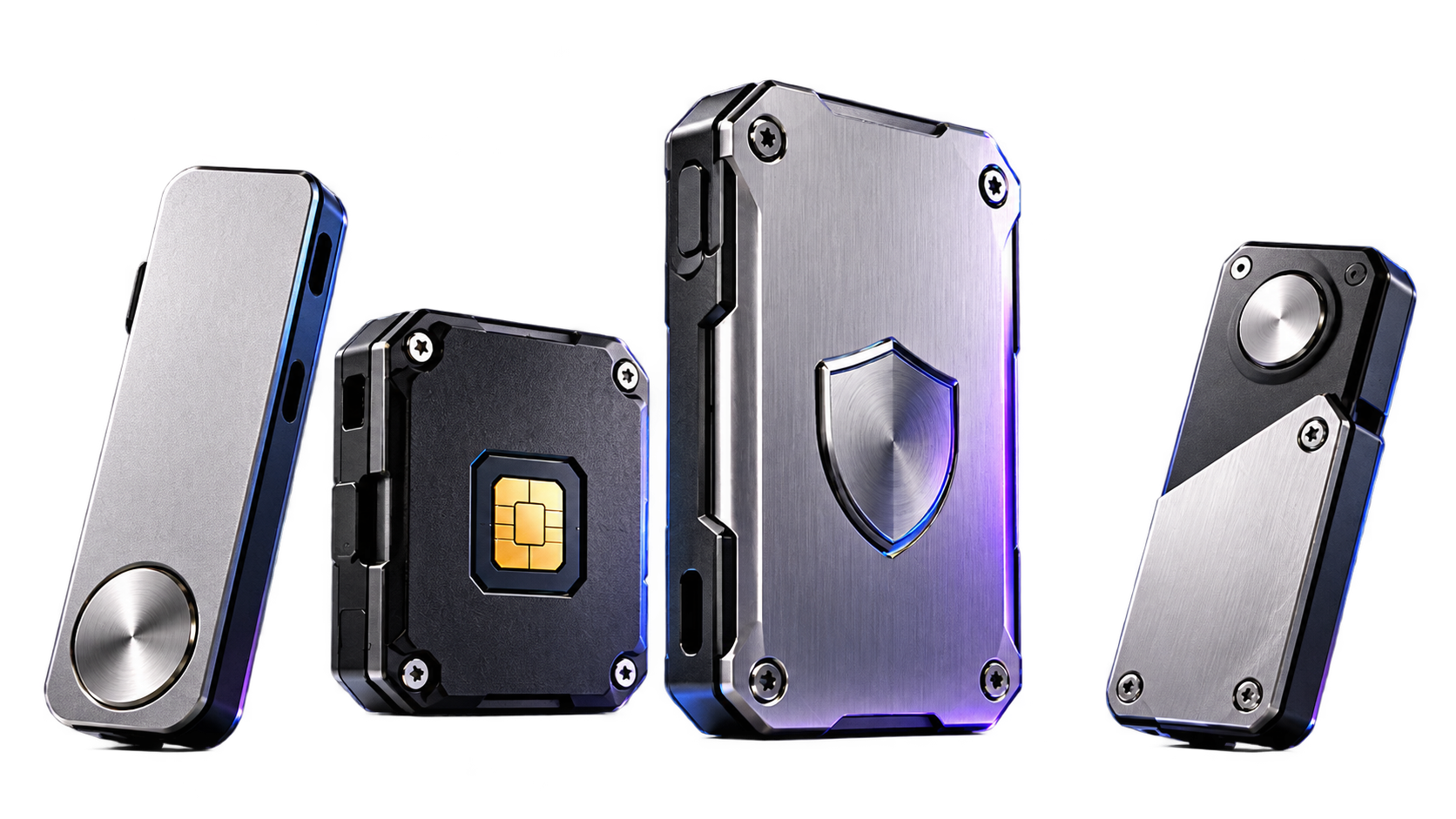
USDT can be stored in custodial exchange accounts or compatible self-custody wallets. Exchanges simplify trading and account management but retain control over customer assets, while self-custody wallets allow users to manage their own keys and authorize transfers directly. Hardware wallets can provide additional protection for supported blockchain networks, particularly when managing substantial balances.

The most important security considerations involve protecting recovery information, verifying the correct token contract, and avoiding suspicious wallet connections. Fraudulent tokens can imitate USDT’s name and branding, while malicious applications may attempt to obtain token approvals or access to wallet assets.

For beginners, starting with a small amount and completing a test transfer is often more useful than immediately attempting complex DeFi transactions. Understanding the selected network, its transaction fees, and the available withdrawal route provides a stronger foundation for using USDT confidently.

Conclusion

Conclusion

Tether (USDT) provides a way to hold and transfer dollar-denominated value within cryptocurrency markets, combining the familiar reference price of the U.S. dollar with the accessibility of blockchain-based transactions. Its extensive trading liquidity and availability across multiple networks have made it an important asset for exchanges, international payments, and decentralized finance.

Its financial model remains fundamentally different from cryptocurrencies such as Bitcoin. USDT is centrally issued and depends on Tether’s reserves, redemption arrangements, and financial condition to support its intended dollar peg. Although the company publishes quarterly reserve attestations and has reported assets exceeding its liabilities, these disclosures do not remove issuer, liquidity, regulatory, or custody risks.

For everyday users, the most important considerations are understanding how the peg works, selecting the correct blockchain, protecting wallet access, and confirming that a reliable route exists for converting the tokens when needed.

USDT makes digital dollar transfers possible across cryptocurrency networks, but using it safely requires understanding both the financial backing of the token and the infrastructure through which it moves.

Tether FAQ

Is USDT Always Worth Exactly $1?

No. USDT is designed to maintain a value close to one U.S. dollar, but its market price can fluctuate depending on trading demand, liquidity, redemption access, and market confidence. Small deviations are common, while larger or prolonged movements away from $1 are known as depegging. Tether's reserves and redemption arrangements help support the peg, but they do not guarantee that every holder can sell USDT for exactly one dollar under all market conditions.

Is Tether Backed by Real Money?

USDT is supported by financial reserves maintained by Tether, including U.S. Treasury securities, short-term financial instruments, precious metals, Bitcoin, and other assets. It is not backed exclusively by cash held in ordinary bank accounts. As of June 30, 2026, Tether reported approximately $187.75 billion in assets against $183.64 billion in liabilities, representing excess reserves of around $4.11 billion. The reliability of its backing depends on the value, liquidity, and availability of those assets.

Can You Convert USDT into Real Dollars?

Yes. Most users convert USDT into conventional currency through cryptocurrency exchanges or payment providers supporting fiat withdrawals. Direct redemption through Tether is available to eligible verified customers, subject to a minimum transaction amount of $100,000 equivalent and applicable fees. Smaller holders generally sell their tokens through exchanges and withdraw the resulting balance through supported payment methods. Conversion spreads, identity checks, and transaction charges may affect the amount received.

What Is the Difference Between ERC-20 and TRC-20 USDT?

ERC-20 USDT operates on Ethereum, while TRC-20 USDT operates on Tron. Both are associated with Tether's dollar-pegged cryptocurrency but use separate blockchain networks with different transaction fees and wallet requirements. Ethereum transfers generally require ETH for gas, while Tron transactions use its bandwidth and energy resource system. The sending and receiving services must support the same network, as choosing an incompatible route can result in lost or inaccessible funds.

Can Tether Freeze USDT in a Personal Wallet?

Yes. Tether maintains issuer-level controls that can restrict certain addresses on supported blockchains. These powers may be exercised in connection with sanctions, legal proceedings, stolen assets, or other compliance requirements. Even when someone controls the private keys to a self-custody wallet, the USDT tokens held within it may remain subject to applicable issuer restrictions. This is an important difference between centralized stablecoins and native cryptocurrencies such as Bitcoin.

Is USDT a Safe Investment?

USDT is primarily designed to maintain dollar-denominated value rather than generate returns through price appreciation. It may be useful for cryptocurrency trading, transfers, and short-term settlement, but it carries reserve, issuer, redemption, custody, and regulatory risks. Holding USDT does not automatically provide deposit insurance or interest income. Financial products advertising yields on USDT involve additional lending, smart contract, liquidity, or counterparty risks that should be evaluated separately from the stablecoin itself.

