






 X
 Facebook
 LinkedIn
 Google News
 Telegram
 Instagram
 RSS Feed


Introduction
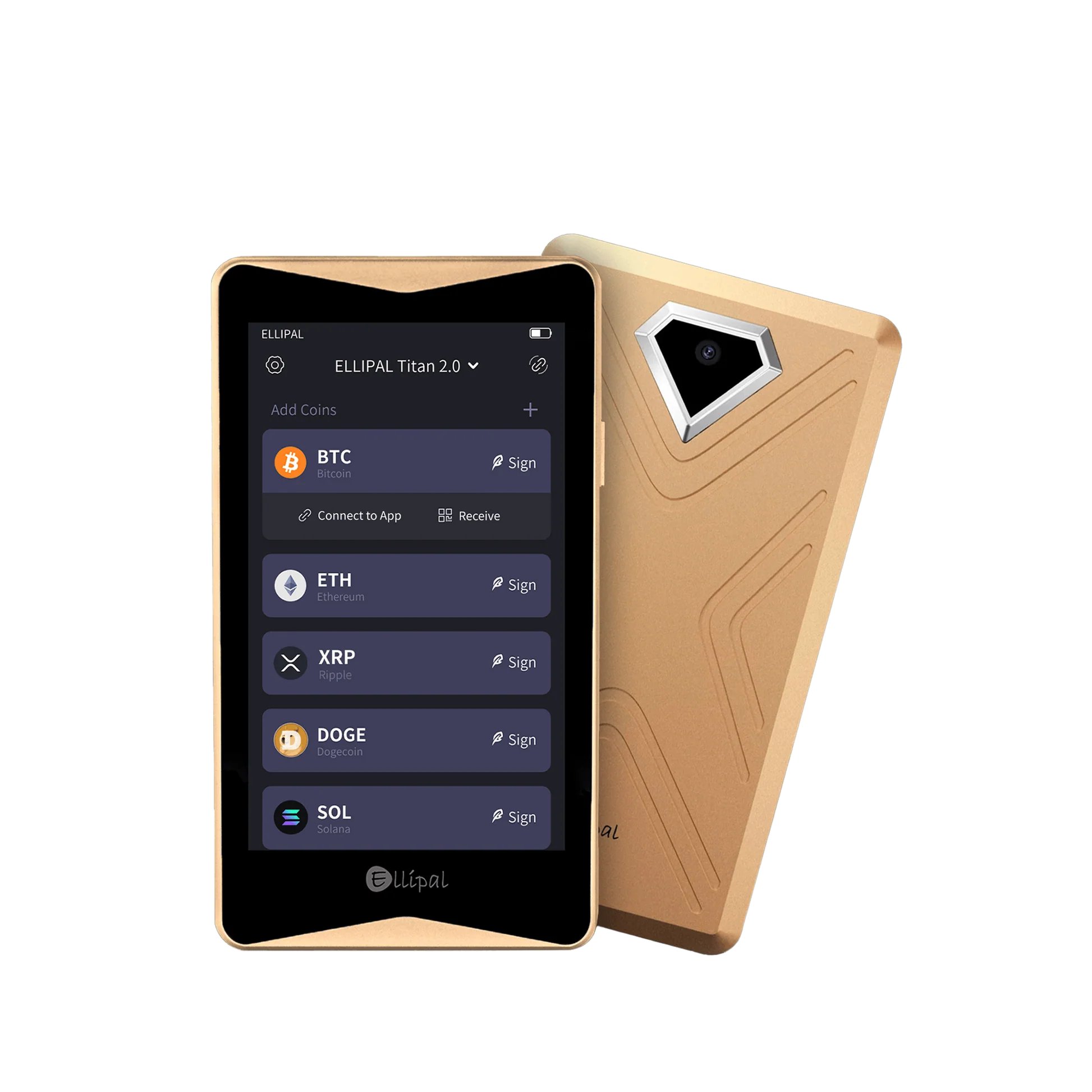
The ELLIPAL Titan 2.0 is an air-gapped crypto hardware wallet designed to protect private keys through offline transaction signing and a tamper-resistant metal enclosure. Unlike wallets that connect through USB or Bluetooth, it uses QR codes to exchange transaction data with a companion smartphone app, keeping sensitive keys isolated from internet-connected devices. A four-inch touchscreen, CC EAL5+ secure element, and offline firmware updates strengthen its appeal for investors prioritizing long-term cryptocurrency storage.
Priced at approximately $169, the Titan 2.0 supports more than 10,000 tokens across over 45 blockchains, including Bitcoin, Ethereum, Solana, XRP, and major stablecoins. Its broad compatibility makes it suitable for diversified portfolios, while the large display allows users to review transaction details directly on the device before approving transfers.
The ELLIPAL Titan 2.0 combines strong physical isolation with accessible mobile asset management, although its QR-based signing process requires more interaction than conventional connected wallets. Its security also depends on the integrity of its firmware, recovery backup, and the transactions users approve, making it better suited to investors who prioritize deliberate transaction verification over speed.
What Is the ELLIPAL Titan 2.0?
Introduced in November 2023, the ELLIPAL Titan 2.0 is a self-custody hardware wallet that combines offline private-key storage with smartphone-based cryptocurrency management. Its sealed metal construction and tamper-detection mechanisms are designed to resist physical intrusion, while the accompanying mobile app handles balances, transaction preparation, and blockchain communication.
Like other air-gapped hardware wallets, the Titan 2.0 separates transaction preparation from signing. The mobile app generates an unsigned transaction, which the wallet scans and signs offline before returning the signed data through another QR code. This approach eliminates direct USB, Bluetooth, Wi-Fi, and NFC communication during signing, reducing the device’s exposure to compromised computers and smartphones.
Private keys remain under the owner’s control, with recovery depending on securely preserving the wallet’s backup. Losing the device does not necessarily mean losing access to funds, but an exposed or misplaced recovery phrase can compromise the entire wallet. Similarly, air-gapped signing cannot prevent losses caused by approving malicious transactions or granting unsafe smart contract permissions.
The Titan 2.0 differs from the original ELLIPAL Titan and smaller Titan Mini through its updated security hardware, larger touchscreen, and refined construction. Its combination of broad asset support, physical protection, and fully offline signing makes it particularly appealing to long-term holders seeking an alternative to connected hardware wallets.
Design
ELLIPAL Titan 2.0 Design and Interface
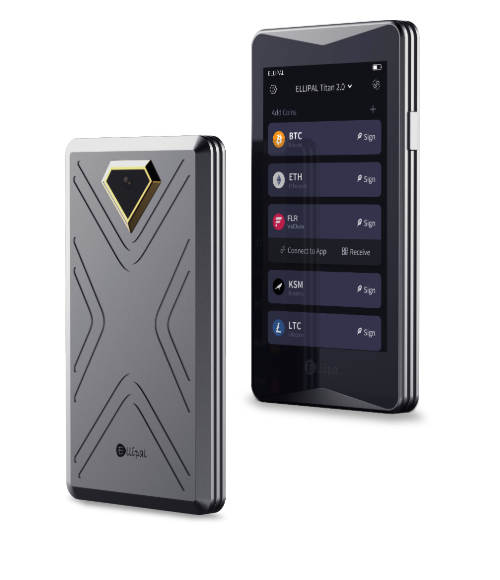
The ELLIPAL Titan 2.0 features a 4-inch color touchscreen that makes transaction verification considerably more comfortable than on compact hardware wallets with smaller displays. Long wallet addresses, payment amounts, network fees, and account information are easier to inspect without repeatedly navigating between screens. Its touchscreen interface also simplifies switching between cryptocurrency accounts and reviewing transactions directly on the offline device rather than relying exclusively on information displayed by a connected smartphone.
Measuring 118 × 66 × 9.7 mm and weighing 140 grams, the Titan 2.0 is noticeably larger than conventional USB-style hardware wallets. Its sealed metal enclosure provides a solid, tamper-resistant construction designed to withstand physical interference, although the integrated design limits repairability. A built-in 1,400 mAh rechargeable battery supports standalone operation, making the device more suitable for secure storage and occasional transfers than for users seeking an ultra-compact wallet to carry throughout the day.
The larger display improves transaction transparency, particularly for straightforward cryptocurrency transfers where users can verify the recipient address, amount, and network fees before signing. More complicated DeFi interactions require additional scrutiny because smart contract permissions and nested transaction operations may not always be fully represented in a human-readable format. The quality of transaction verification ultimately depends on the information the wallet can decode and display, not simply the size of its screen.
For everyday usability, the Titan 2.0 favors deliberate transaction approval over the speed of connected hardware wallets. Its touchscreen makes navigation accessible, but users conducting frequent swaps or multiple DeFi transactions may find its camera-based signing process slower than USB or Bluetooth alternatives.
How ELLIPAL Titan 2.0 QR Code Signing Works
The ELLIPAL Titan 2.0 uses an entirely offline signing process that separates private-key operations from blockchain communication. Its companion mobile app manages balances, prepares transactions, and communicates with blockchain networks, while the hardware wallet independently authorizes transactions without establishing a direct data connection to the smartphone.
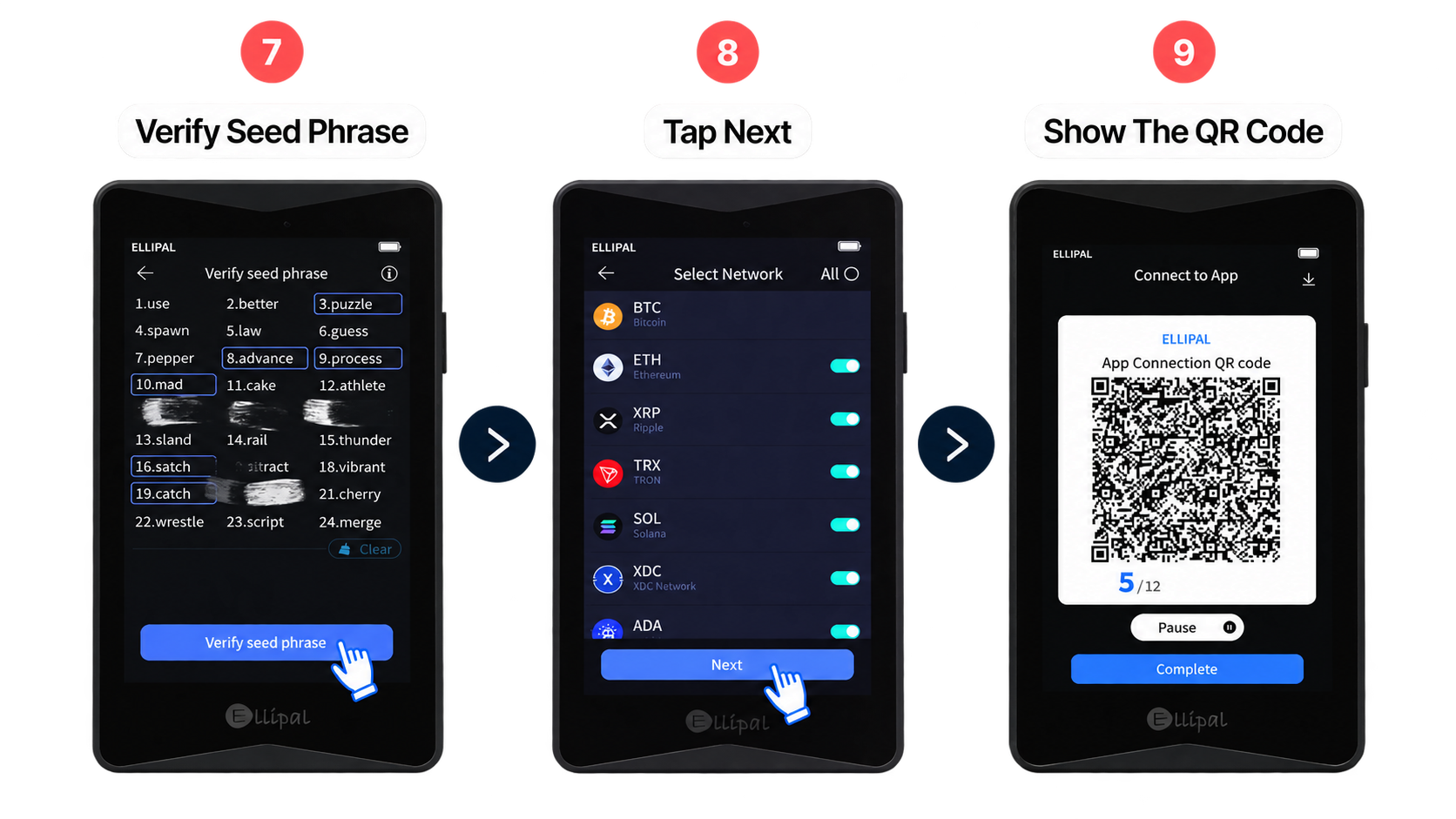
When sending cryptocurrency, the ELLIPAL app generates an unsigned transaction and converts it into a QR code. The Titan 2.0 scans the code using its integrated camera, decodes the request, and presents the available transaction details on its touchscreen. After the user approves the transaction, the wallet signs it internally and generates another QR code containing the signed data. The smartphone scans this result and broadcasts the transaction to the blockchain.
This architecture eliminates USB data connections, Bluetooth, Wi-Fi, and NFC from the signing process, reducing opportunities for malware on a connected device to interact directly with the hardware wallet. Private keys remain isolated throughout the transaction, while the smartphone handles the network-facing operations necessary to complete transfers.
However, QR codes are simply a method of transferring data and do not guarantee that a transaction is legitimate. A compromised smartphone can still generate a malicious signing request, substitute a recipient address, or present misleading transaction information. The Titan’s independent display allows users to check the details decoded by the wallet before authorizing a signature, although unfamiliar smart contract interactions may require additional verification.
Receiving cryptocurrency requires similar attention to address accuracy. Users should verify receiving addresses through the hardware wallet wherever the supported asset and application allow it, rather than relying entirely on addresses copied from the companion app. Sending a small test transaction can help identify network or address errors before transferring larger amounts.
The QR-based workflow is particularly suitable for long-term cryptocurrency holders who prioritize offline signing and physical separation from connected devices. Its main limitation is the dependence on ELLIPAL’s mobile application for transaction preparation, broadcasting, and portfolio management. Although the app supports decentralized application connectivity through compatible integrations, the wallet is less convenient for high-frequency transactions or users who prefer extensive desktop-based wallet integrations.
Security
ELLIPAL Titan 2.0 Security and Anti-Tamper Protection
The ELLIPAL Titan 2.0 combines a CC EAL5+ secure element, sealed metal construction, and an automatic data-wipe mechanism to protect private keys against physical tampering. Cryptographic keys are generated and stored within the secure chip, while the metal enclosure is designed to resist unauthorized disassembly. If an intrusion is detected, the wallet’s self-destruct mechanism is intended to erase sensitive data, preventing an attacker from accessing the stored keys.
The secure element provides hardware-level protection against key extraction, although its CC EAL5+ certification applies to the evaluated chip rather than the complete wallet, firmware, or companion application. The Titan 2.0’s enclosure adds another defensive layer through a sealed touchscreen that is difficult to remove without visible damage. Published physical tampering tests demonstrated substantial screen damage during forced opening, but the tests used uninitialized devices and did not establish whether the automatic key wipe would succeed under a real-world attack.
These protections are particularly relevant to hardware wallet supply-chain attacks, where malicious components can be installed before a device reaches its owner. A concealed circuit capable of capturing recovery information may bypass conventional firmware protections without compromising the secure element itself. The Titan 2.0’s tamper-resistant construction makes such modifications more difficult to conceal, although purchasing through authorized channels and checking the device’s physical condition remain important precautions.
Recovery security is handled separately through a 24-word BIP39 seed phrase and an optional passphrase. The additional passphrase creates a distinct wallet derived from the same recovery words, protecting its contents if the seed phrase is exposed without the passphrase. However, losing either required secret can permanently prevent recovery, making durable, private seed phrase storage essential regardless of the wallet’s physical defenses.
ELLIPAL’s closed-source firmware presents a limitation for users who prioritize independent security verification. Unlike fully open-source hardware wallets, the Titan 2.0 does not provide equivalent opportunities to inspect its complete firmware implementation or reproduce official builds independently. Its hardware isolation and tamper-resistant design offer meaningful protection, but users must still trust the manufacturer’s firmware development, update integrity, and security testing.
Firmware Updates and Long-Term Maintenance
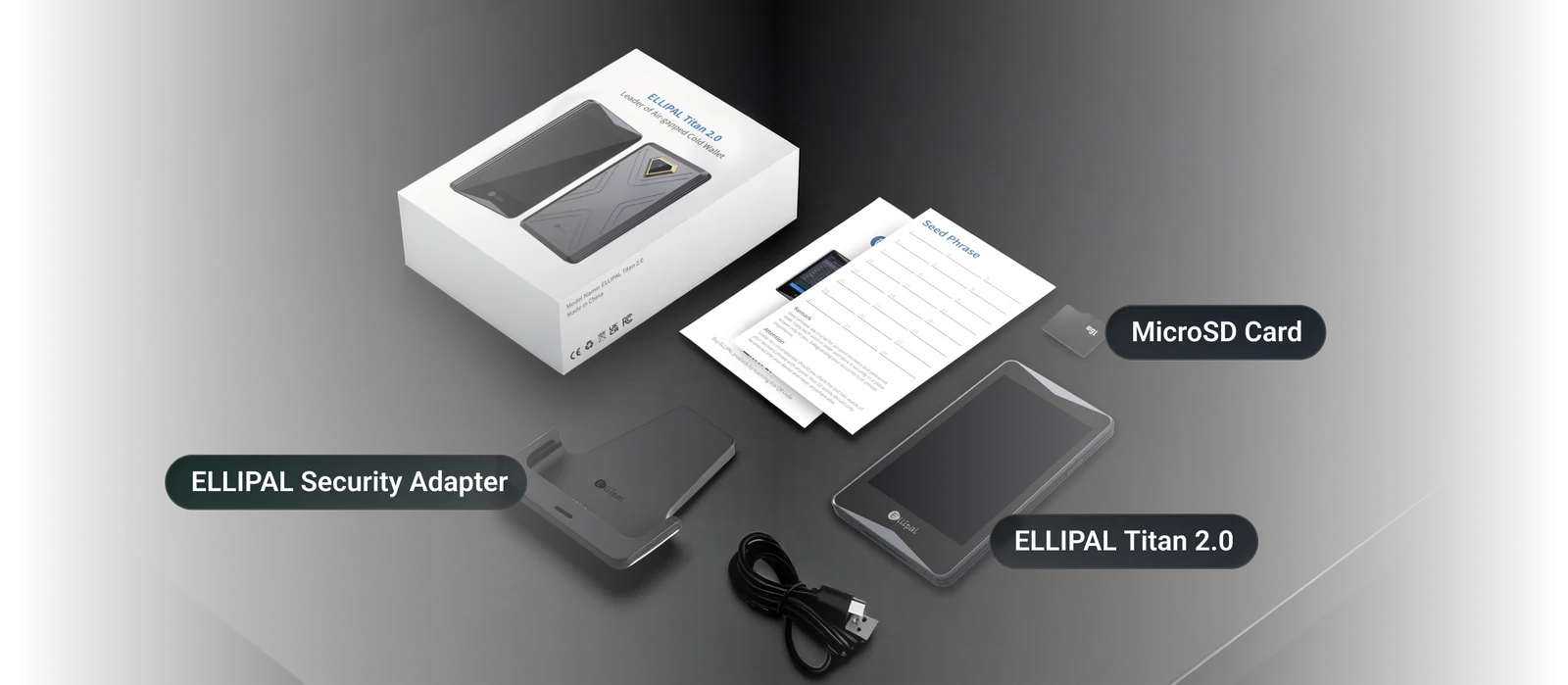
The ELLIPAL Titan 2.0 supports offline firmware updates through a microSD card and dedicated security adapter, allowing software upgrades without connecting the wallet to a computer or wireless network. The process requires a model-specific firmware ZIP file placed unchanged on a FAT32-formatted microSD card, followed by installation through the device’s settings. Firmware packages for the original Titan, Titan Mini, and Titan 2.0 are not interchangeable.
This approach maintains the wallet’s air-gapped design during maintenance, although updates require more manual preparation than those on USB-connected hardware wallets. Downloading firmware through verified official links reduces exposure to counterfeit updates and phishing attempts. Installation files should come directly from ELLIPAL’s official resources, with the resulting firmware version checked on the device after completion.
Long-term maintenance also involves monitoring security updates, periodically checking that the wallet remains functional, and preserving a reliable recovery backup. The sealed enclosure limits conventional hardware repairs, but device failure does not necessarily compromise access to cryptocurrency because the correct recovery phrase and passphrase can restore the wallet through compatible hardware or software. For long-term holders, maintaining both the device and its recovery materials is essential to preserving control over their assets.
Setup & Backup
ELLIPAL Titan 2.0 Setup, Multiple Wallets, and Backup Recovery
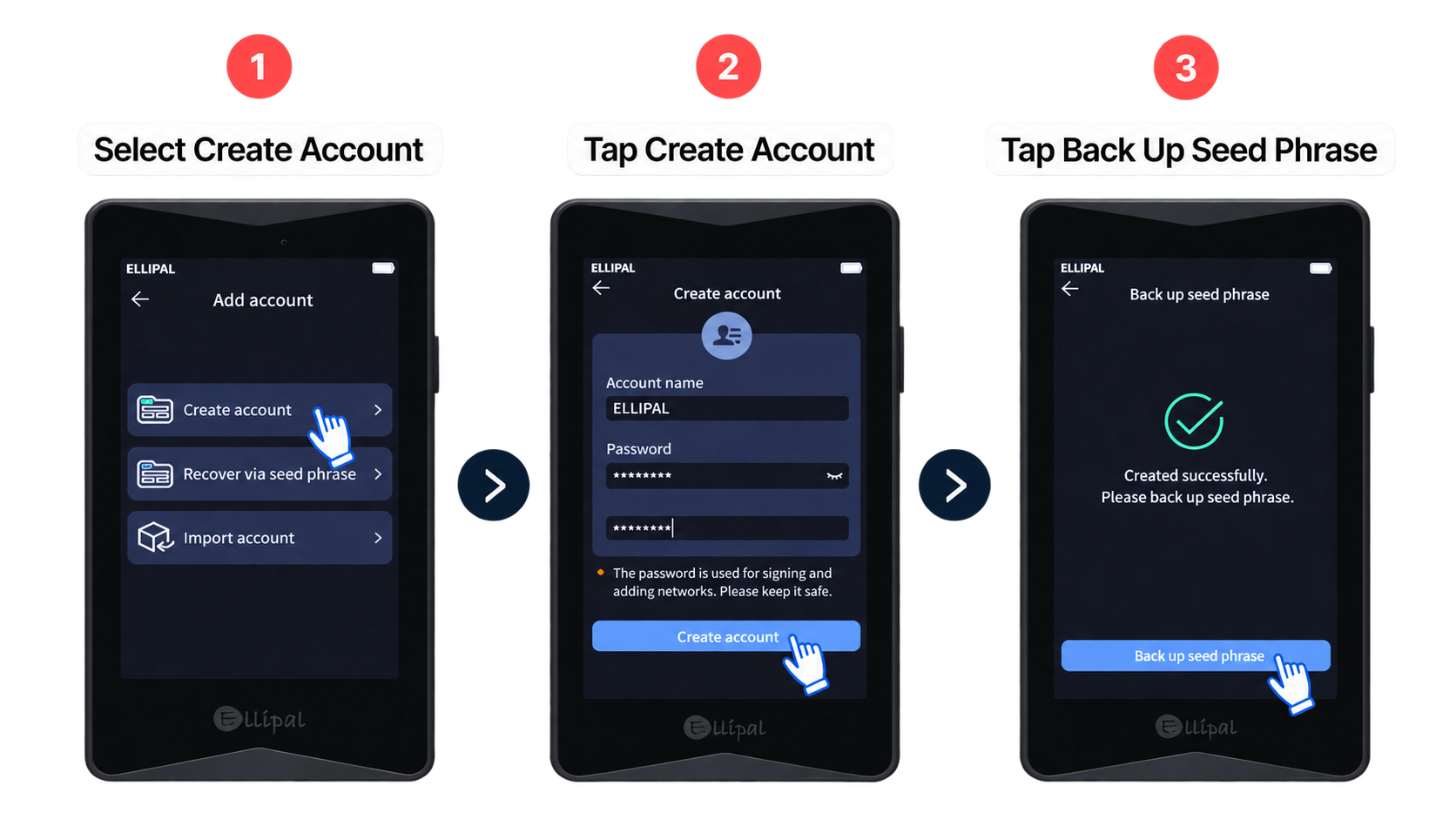
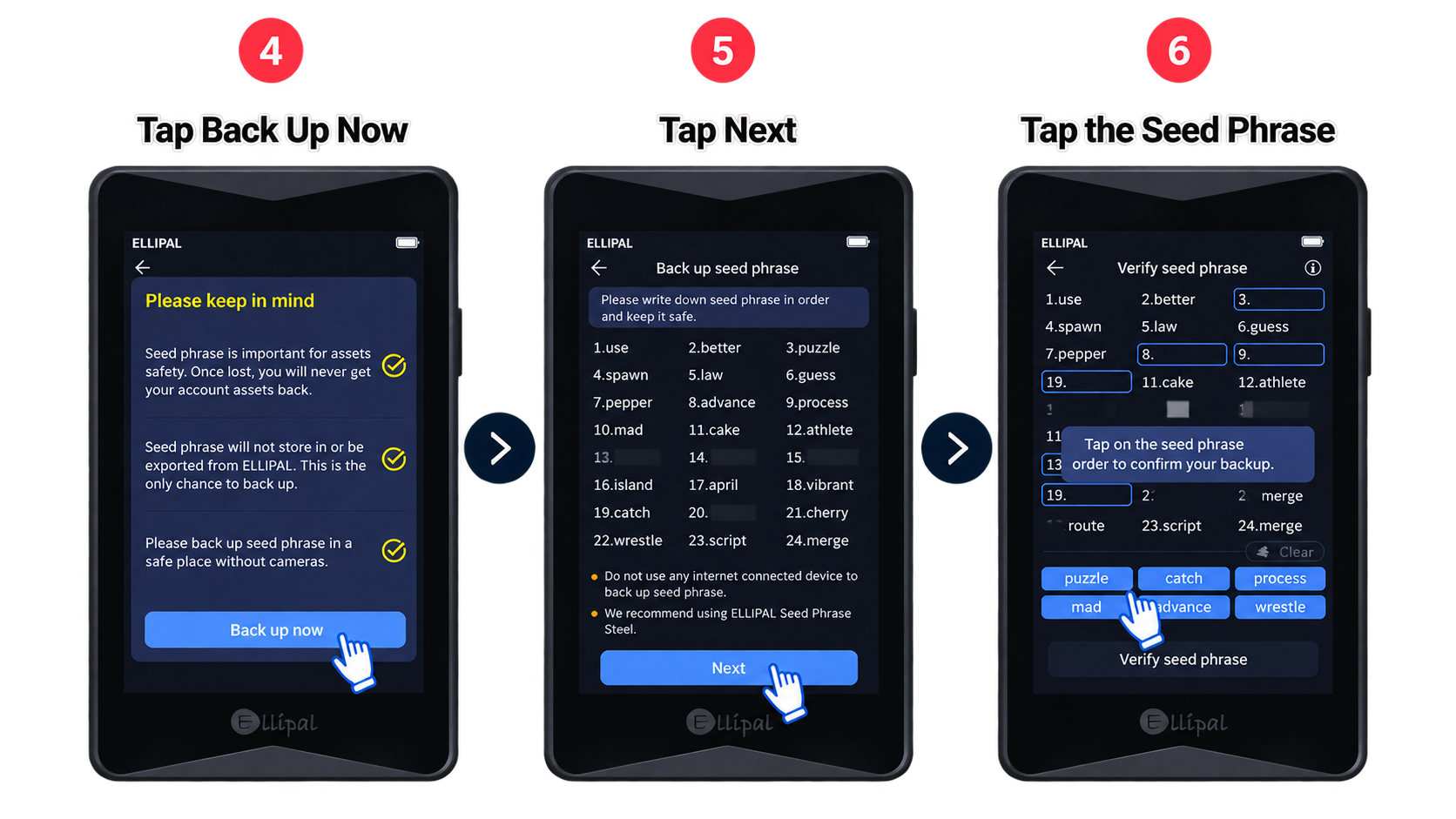
Setting up the ELLIPAL Titan 2.0 involves creating a wallet directly on the offline device, establishing a device password, and recording the recovery phrase before transferring cryptocurrency. New wallets generate a 24-word BIP39 seed phrase, while the recovery function accepts existing 12-, 15-, 18-, 21-, or 24-word phrases. This compatibility allows users to migrate from other BIP39 wallets, provided the original recovery material remains secure and the relevant derivation paths are supported.
The Titan 2.0 accommodates up to 10 wallet accounts, including five seed-phrase-based wallets and five imported through private keys or keystore files. This flexibility allows users to separate long-term holdings, trading funds, and personal accounts without requiring multiple hardware devices. A secondary-wallet feature also supports an alternative unlock pattern that displays selected accounts while keeping others hidden. However, this functionality provides account-level privacy rather than the independent signing requirements of a multisignature wallet.
Recovery depends on preserving the correct seed phrase, any associated passphrase, and the information needed to identify the original accounts. Although BIP39 compatibility makes restoration possible on other supported devices, different derivation paths or a missing passphrase can prevent the expected balances from appearing. A reliable crypto backup kit should therefore include securely stored recovery words alongside separate, non-sensitive records of wallet configurations and restoration instructions.
The device password, recovery phrase, and optional BIP39 passphrase serve different purposes. The device password restricts local access, the recovery phrase restores the underlying wallet, and the optional passphrase derives additional accounts that cannot be reconstructed from the recovery words alone. Users should verify their backup through a controlled recovery test before storing substantial funds, particularly when migrating from another wallet or configuring multiple accounts.
The Titan 2.0 offers considerable flexibility for organizing and restoring cryptocurrency holdings, although its recovery options require careful management. Users who understand their wallet configurations and maintain accurate offline backups can replace a lost or damaged device without depending on ELLIPAL to recover their private keys.
Setup Guide
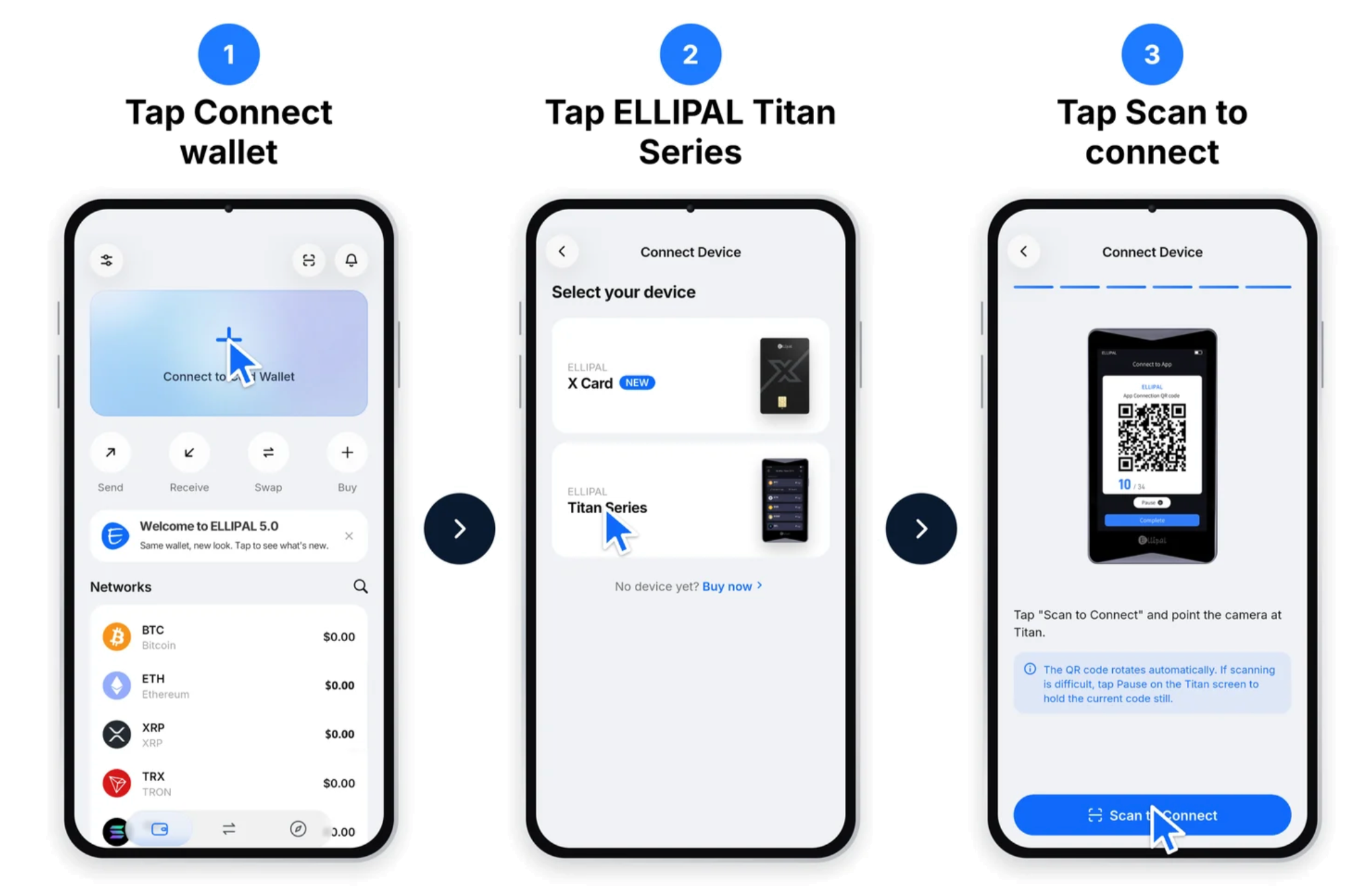
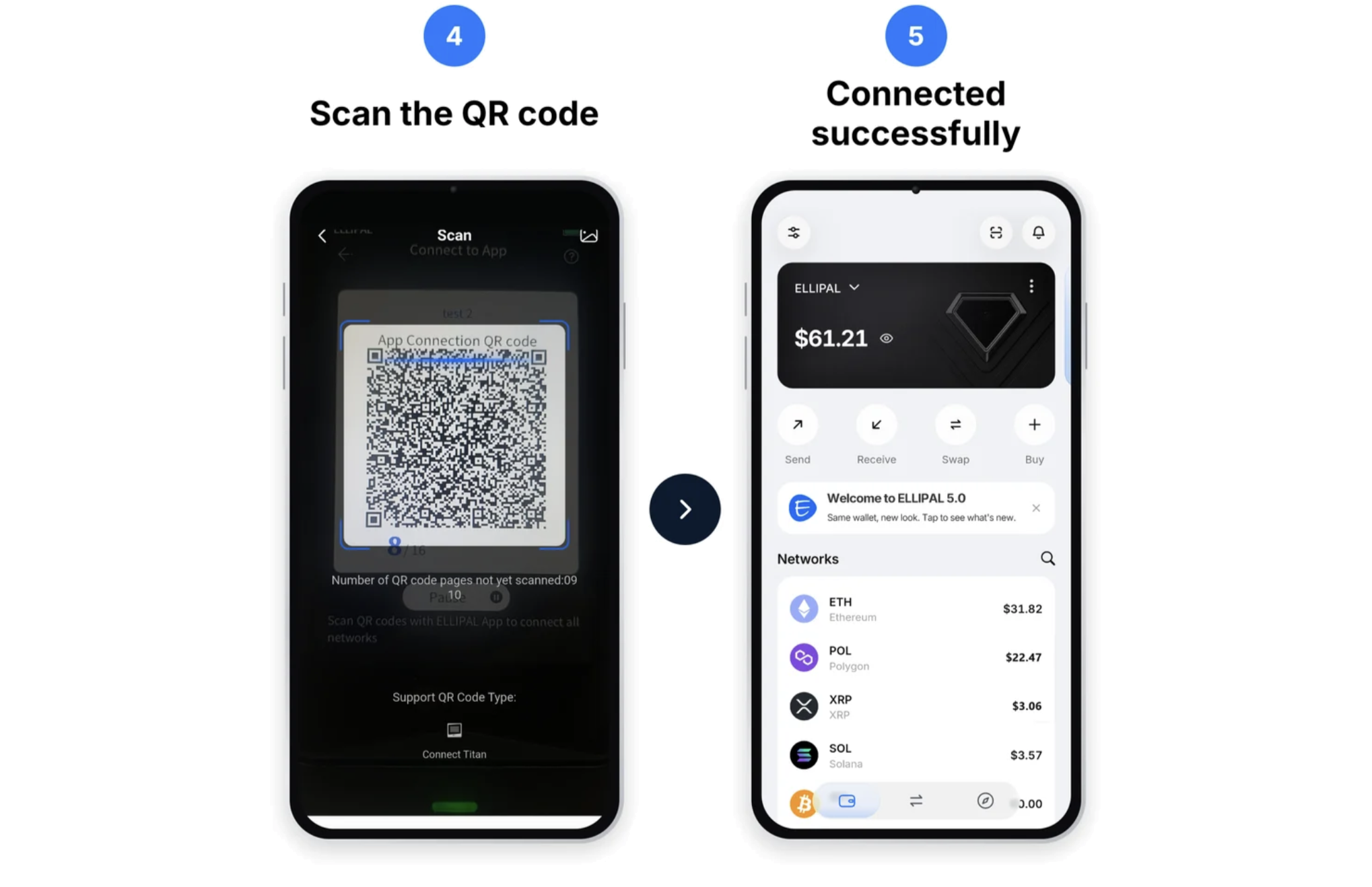
ELLIPAL App
ELLIPAL Titan 2.0 Swaps, Staking, and Portfolio Management
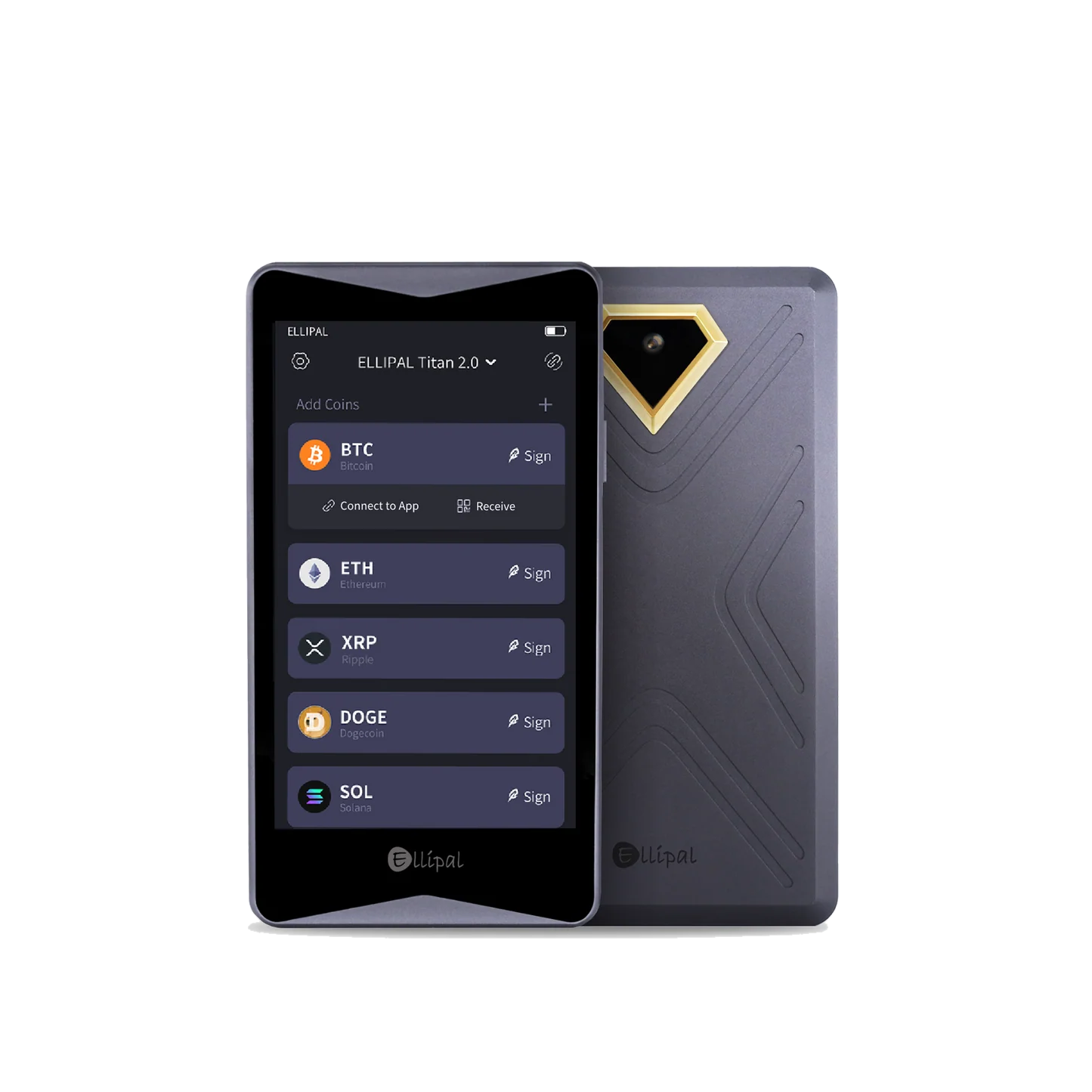
The ELLIPAL App provides the Titan 2.0’s cryptocurrency management interface on iOS and Android, combining portfolio tracking, transaction history, market prices, and integrated trading services. Users can monitor assets across more than 45 blockchains, manage multiple wallet accounts, and access supported decentralized applications through WalletConnect. Although ELLIPAL discontinued its standalone hot-wallet service in October 2025, the app continues to support Titan hardware wallets without affecting their cold-storage functionality.
Cryptocurrency swaps are available for more than 2,000 supported tokens through integrated providers, including Changelly, SWFT, and SwapKit. This allows users to rebalance portfolios without transferring every asset to a centralized exchange, although execution depends on the selected provider, available liquidity, and supported blockchain routes. Exchange rates can include spreads, service charges, and network fees, while cross-chain swaps introduce additional settlement considerations. The final amount received is therefore more useful than the quoted exchange rate alone when evaluating a conversion.
The app also integrates third-party fiat on-ramps for purchasing cryptocurrency through supported bank transfers, payment cards, and digital wallets. Services such as MoonPay, Simplex, and Onramper facilitate purchases, while available crypto-to-fiat off-ramps provide routes for converting digital assets back into traditional currencies. Fees, payment methods, identity verification, and withdrawal availability depend on the external provider and the user’s jurisdiction rather than the Titan 2.0 hardware itself.
Staking functionality extends the wallet’s capabilities to selected proof-of-stake cryptocurrencies, including Ethereum, Cardano, Cosmos, Tezos, Polkadot, and Kusama. Supported integrations allow users to participate in network staking or delegated arrangements while authorizing relevant transactions through the hardware wallet. However, crypto staking carries risks that hardware security cannot eliminate, including validator penalties, slashing where applicable, unbonding periods, variable rewards, and cryptocurrency price fluctuations. Available services and staking conditions also differ between networks.
For investors managing diversified portfolios, the combination of swaps, staking, market tracking, and fiat services makes the Titan 2.0 more versatile than a device limited to sending and receiving cryptocurrency. Its mobile-first ecosystem is convenient for routine asset management, although users seeking extensive desktop integrations, advanced trading tools, or compatibility with specialized third-party wallets may find the available software options restrictive.
Supported Assets
ELLIPAL Titan 2.0 Supported Cryptocurrencies and NFTs
The ELLIPAL Titan 2.0 supports more than 10,000 cryptocurrencies and tokens across over 45 blockchains, making it suitable for investors managing diversified digital asset portfolios. Compatible networks include Bitcoin, Ethereum, Solana, XRP Ledger, BNB Chain, and TRON, alongside numerous stablecoins and ERC-20 tokens. NFT support extends to Ethereum and Polygon, allowing users to manage supported digital collectibles through the ELLIPAL mobile app.
This broad compatibility reduces the need for separate hardware wallets when holding assets across multiple ecosystems, although support varies by blockchain, token standard, and transaction type. A cryptocurrency may be available for basic transfers without supporting every associated staking, swapping, or decentralized application feature. Investors holding less common tokens should confirm compatibility through ELLIPAL’s supported cryptocurrency directory before transferring funds.
Network selection also requires attention, particularly for stablecoins such as USDT and USDC that exist on multiple blockchains. The receiving address and network must correspond to the intended transfer, as sending tokens through an unsupported chain can make them inaccessible through the wallet interface. Different blockchains also introduce distinct transaction fees, address formats, and signing requirements, which means broad asset coverage does not guarantee identical functionality across every supported network.
DeFi Compatibility, WalletConnect, and Clear Signing
The ELLIPAL Titan 2.0 extends beyond cryptocurrency storage through decentralized application integrations, including WalletConnect and supported MetaMask workflows. Users can interact with DeFi protocols, decentralized exchanges, NFT marketplaces, and lending applications through the companion mobile app while authorizing transactions on the offline hardware wallet. Supported dApp ecosystems include Ethereum, BNB Chain, Avalanche, Polygon, and Solana, although compatibility depends on the specific application and network.
DeFi access introduces transaction risks that physical key isolation cannot eliminate. Malicious smart contracts can exploit token allowances, fraudulent permit signatures, or deceptive NFT approvals to transfer assets without obtaining the owner’s recovery phrase. These mechanisms are commonly used by crypto wallet drainers, making it sensible to maintain separate accounts for long-term holdings and frequent decentralized application activity.
Contract permissions can also remain active after a transaction is completed, allowing previously authorized applications to move assets within the limits granted. Periodically revoking unnecessary token approvals reduces exposure to compromised contracts and applications that no longer require access to the wallet. Revocation itself requires an onchain transaction and cannot reverse transfers already executed.
The Titan 2.0’s touchscreen supports transaction verification, but complex contract interactions may contain encoded data or permissions that cannot be displayed in fully readable form. Effective clear signing depends on the wallet accurately decoding the transaction’s intended action, recipient, and authorization scope. Users interacting with unfamiliar protocols should examine the available signing details and avoid approving requests whose permissions they cannot establish, particularly when authorizing unrestricted token spending.
Price
ELLIPAL Titan 2.0 Price and Value for Money
The ELLIPAL Titan 2.0 has a regular retail price of $169, with occasional discounts bringing it to approximately $149. At this price, the air-gapped hardware wallet offers a 4-inch touchscreen, CC EAL5+ secure element, tamper-resistant metal construction, and support for more than 10,000 cryptocurrencies and tokens. Its combination of physical security and broad asset compatibility makes it a competitively priced option for investors seeking long-term crypto storage without spending considerably more on a flagship device.
Its value is particularly strong for users managing diversified portfolios who prefer QR-based transaction signing and smartphone integration. The large display improves transaction verification, while the sealed construction provides additional physical protection rarely found in smaller entry-level wallets. Optional bundles and recovery accessories can increase the total purchase cost, although promotional offers sometimes include a metal seed backup.
The main compromises involve ELLIPAL’s closed-source firmware, limited third-party wallet compatibility, and the additional steps required for QR-based transactions. Investors prioritizing independently auditable firmware or frequent DeFi interactions may find competing hardware wallets more suitable. For long-term holders comfortable with mobile-based management, however, the Titan 2.0 offers an attractive balance of security features, cryptocurrency support, and affordability.
Pros & Cons
- QR-only signing: No routine USB data, Bluetooth, Wi-Fi, or NFC connection to the signing device.
- Large dedicated display: Four-inch touchscreen makes routine transfer verification more readable than on many compact signers.
- Broad asset support: More than 45 networks and 10,000 tokens through the companion ecosystem.
- Strong hardware package for the price: Metal-sealed body, secure element, passphrase support, and offline updates at a $169 list price.
- Closed firmware: Less publicly auditable implementation than competing open-source security platforms.
- Phone dependence: No comparably flexible desktop-first signing experience for complex workflows.
- QR friction: Repeated scanning can slow frequent DeFi operations and multi-step transactions.
- Vendor-dependent compatibility: Particular contract interactions, token variants, and service integrations depend on ELLIPAL's app and support roadmap.
Titan 2.0 vs Passport Prime
ELLIPAL Titan 2.0 vs Passport Prime
The ELLIPAL Titan 2.0 and Foundation Passport Prime offer two distinct approaches to hardware wallet security. ELLIPAL focuses on air-gapped cryptocurrency storage, using QR codes to sign transactions without USB data, Bluetooth, or NFC connections. Passport Prime extends beyond Bitcoin custody into digital identity protection, combining hardware wallet functionality with FIDO security keys, offline two-factor authentication, encrypted file storage, and applications running on its KeyOS operating system.
Their connectivity models reflect different security priorities. The Titan 2.0 relies exclusively on QR-based signing, keeping its private keys physically separated from connected devices throughout the transaction process. Passport Prime supports QR signing alongside encrypted Bluetooth communication through QuantumLink, with NFC and USB-C available for compatible security functions. ELLIPAL offers a stricter air-gapped workflow, while Passport Prime provides greater flexibility for users managing Bitcoin and other sensitive digital credentials.
Passport Prime has an advantage in security transparency through its open-source architecture and an independent hardware and firmware security audit that identified no outstanding critical or high-severity findings within the reviewed scope. Its security design incorporates tamper detection, protected key storage, secure boot, and isolated applications. The Titan 2.0 combines a CC EAL5+ secure element with a sealed metal enclosure and automatic key-wipe protection, although its closed-source firmware limits independent examination of the complete implementation.
Cryptocurrency compatibility favors ELLIPAL, which supports more than 45 blockchains and 10,000 tokens, including Bitcoin, Ethereum, Solana, XRP, and major stablecoins. Its companion app also integrates swaps, staking, and decentralized applications, making it more suitable for diversified portfolios. Passport Prime concentrates on Bitcoin self-custody and personal security, with an expandable application ecosystem that does not currently offer the same established multi-chain coverage.
Pricing further separates the two devices. At $169, the Titan 2.0 delivers broad cryptocurrency support, a large touchscreen, and dedicated offline signing at a substantially lower cost than Passport Prime’s $349 launch price. The additional expense of Passport Prime is easier to justify for users who want to consolidate Bitcoin custody, authentication, and encrypted data protection into one device rather than simply store more cryptocurrencies.
For investors building advanced multisignature wallet setups, compatibility with the intended coordinator and signing format should also influence the purchase. Passport Prime is the more compelling option for Bitcoin-focused users seeking broader personal security functionality, while the ELLIPAL Titan 2.0 offers better value for multi-chain investors who prioritize fully air-gapped transaction signing.
Bottom Line
Is the ELLIPAL Titan 2.0 Worth It in 2027?
The ELLIPAL Titan 2.0 earns 8.6/10 for delivering strong air-gapped security, broad cryptocurrency compatibility, and premium hardware features at a competitive $169 price. Its QR-based signing architecture, tamper-resistant construction, and large touchscreen make it particularly appealing to investors who want greater physical isolation without sacrificing the ability to manage diversified cryptocurrency portfolios.
Its main limitations are the closed-source firmware, reliance on ELLIPAL’s mobile ecosystem, and slower transaction workflow compared with USB or Bluetooth hardware wallets. These compromises are reasonable for long-term holders who prioritize offline security and make occasional transfers, but less attractive for active DeFi users who require frequent transaction approvals and extensive third-party integrations. For security-conscious investors comfortable with its mobile-first approach, the Titan 2.0 remains a compelling hardware wallet in 2027.
FAQs
Is ELLIPAL Titan 2.0 completely air-gapped?
The normal signing process uses QR codes without USB data, Wi-Fi, Bluetooth, or NFC communication. The device still exchanges information optically with a connected phone, and firmware enters through the separate offline-update adapter, so air-gapped does not mean incapable of receiving any external data.
Can an ELLIPAL Titan 2.0 be physically tampered with?
The sealed metal body and manufacturer-described tamper-response mechanism are designed to resist or react to intrusion, but no hardware wallet can be guaranteed immune to every supply-chain or physical modification. Buyers should therefore check their purchase source, enclosure condition, and setup prompts before entrusting it with funds.
Which cryptocurrencies does ELLIPAL Titan 2.0 support?
The ELLIPAL ecosystem currently lists more than 45 blockchains and 10,000 tokens, including BTC, ETH, SOL, XRP, and a wide selection of stablecoins. Individual token standards and contract interactions should be checked before funding the wallet.
Does Titan 2.0 need a phone to send crypto?
The ELLIPAL mobile app prepares and broadcasts normal transactions, while the Titan signs them offline, so routine outgoing payments require a compatible phone. The device cannot independently connect to the blockchain to submit a payment.
Can I recover funds if the Titan 2.0 is lost or damaged?
A correctly preserved BIP39 recovery phrase can generally restore the underlying keys on another compatible wallet. If a passphrase was used, that exact passphrase is also needed, and chain-specific derivation settings may require attention.
Is ELLIPAL Titan 2.0 better than Passport Prime?
Titan 2.0 is the better fit for broad built-in multi-chain support, a lower price, and a mandatory QR-only signing workflow. Passport Prime suits Bitcoin-focused buyers who value an independently audited, expandable personal-security platform with additional authentication and encrypted storage features.