







 X
 Facebook
 LinkedIn
 Google News
 Telegram
 Instagram
 RSS Feed


Introduction
Passport Prime Review 2027
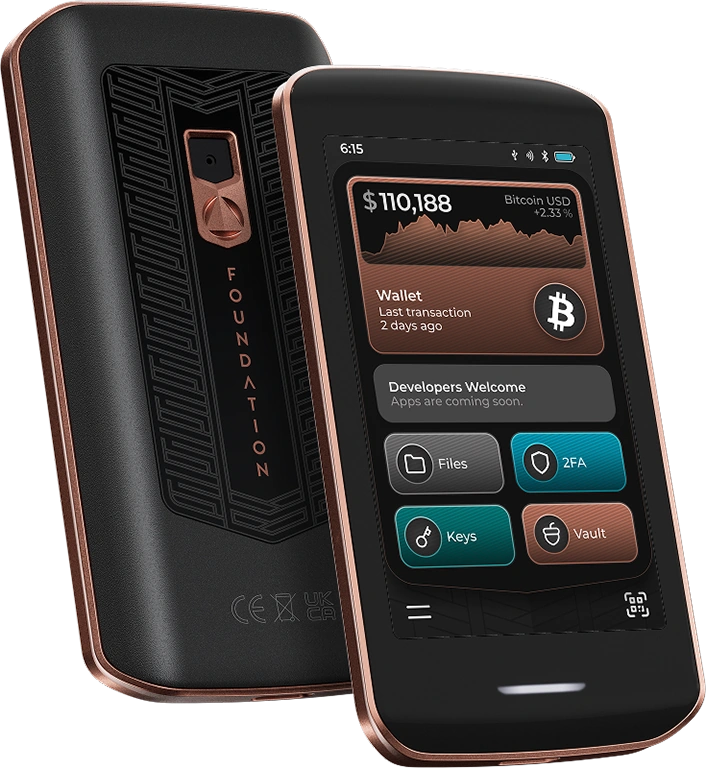
Foundation’s Passport Prime takes self-custody beyond traditional hardware wallet functionality, combining secure cryptocurrency storage with tools for protecting digital identities, authentication credentials, and sensitive information. Built around the open-source KeyOS operating system, the device integrates Bitcoin transaction signing, two-factor authentication, security keys, and encrypted personal data storage within a dedicated security platform.
Its architecture incorporates a secure element, hardware-backed key protection, tamper-detection mechanisms, and isolated wireless communications designed to protect sensitive information against physical and digital attacks. An independent security audit has also examined its hardware and firmware defenses, adding transparency to its security credentials.
Unlike conventional hardware wallets focused almost exclusively on safeguarding private keys, Passport Prime offers a broader approach to personal security without sacrificing its emphasis on self-custody. Its premium positioning, advanced security architecture, and expanded functionality make it particularly appealing to Bitcoin holders who also want greater control over their digital privacy.
Foundation began shipping preorders in March 2026 and opened general sales in May. The U.S. launch price was $349, positioning Passport Prime above many established Bitcoin signers and the multicurrency Trezor Safe 7. The score in this review reflects the shipping product and its published security architecture, not a claim of independent hands-on testing.
How Does It Work?
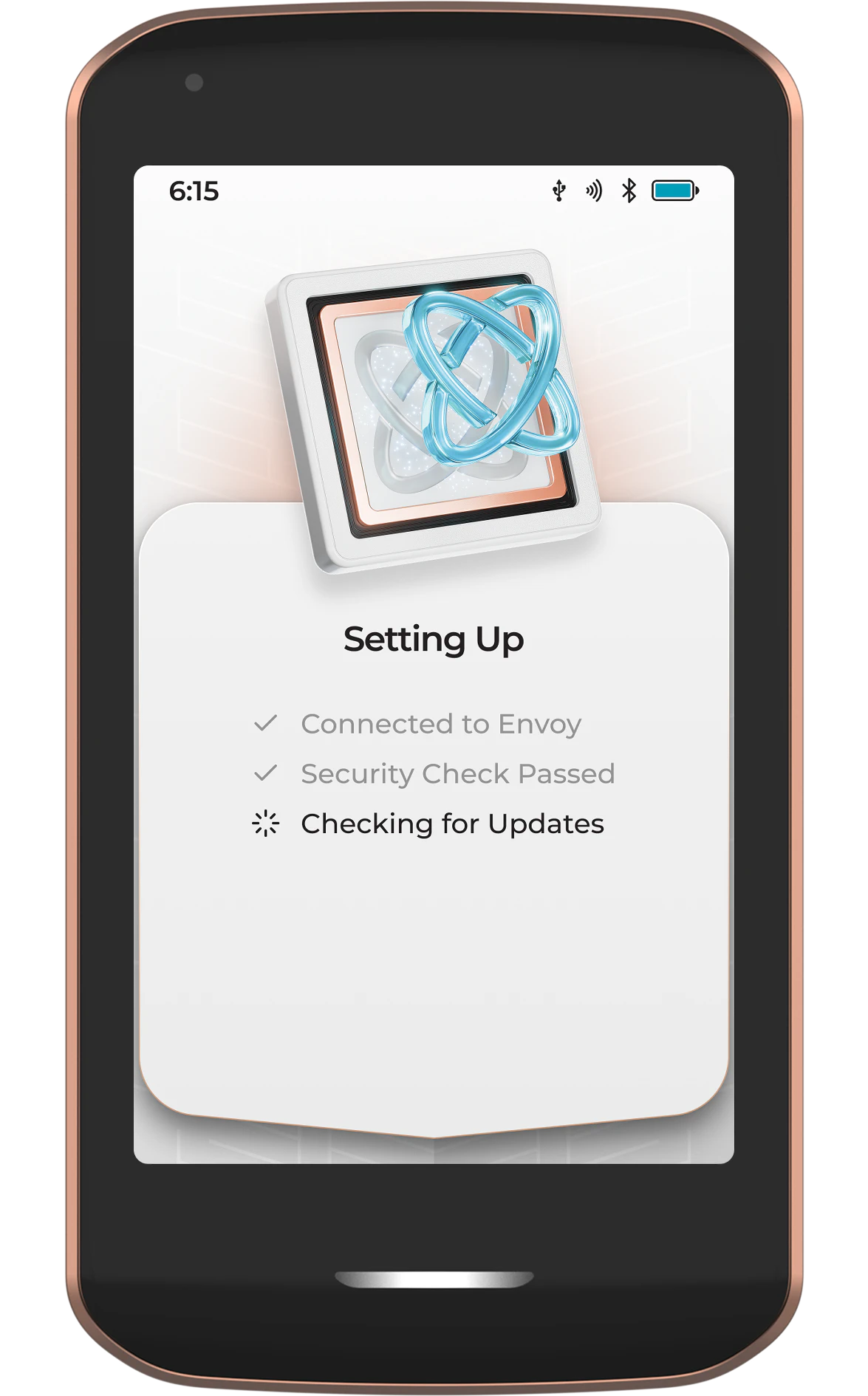
Passport Prime keeps Bitcoin signing authority on a separate physical device rather than inside an everyday computer or phone. Its mobile companion, Envoy, can manage account information and prepare transactions, while Passport is used to authorize sensitive actions. This preserves the central idea behind crypto self-custody: the user controls the relevant keys, but also carries responsibility for the device, backups, and recovery process.
What separates Prime from earlier Passport hardware is the ambition to protect more than wallet keys. Under Foundation’s Human Authority Hardware concept, the same trusted screen and protected device can be used to hold login codes, authenticate to services, secure files, and approve applications that run inside KeyOS. It is a broader security tool rather than merely a more expensive version of Passport Core.
That breadth does not mean every third-party application or blockchain is ready for routine use. Foundation is still expanding its app ecosystem, and individual apps need to be evaluated for maturity, permissions, audit coverage, and recovery behavior. The safest purchase decision treats Bitcoin, authentication, and vault functions as the main current proposition rather than assigning value to every possible future integration.
User Experience
Design, Touchscreen, and Everyday Interface
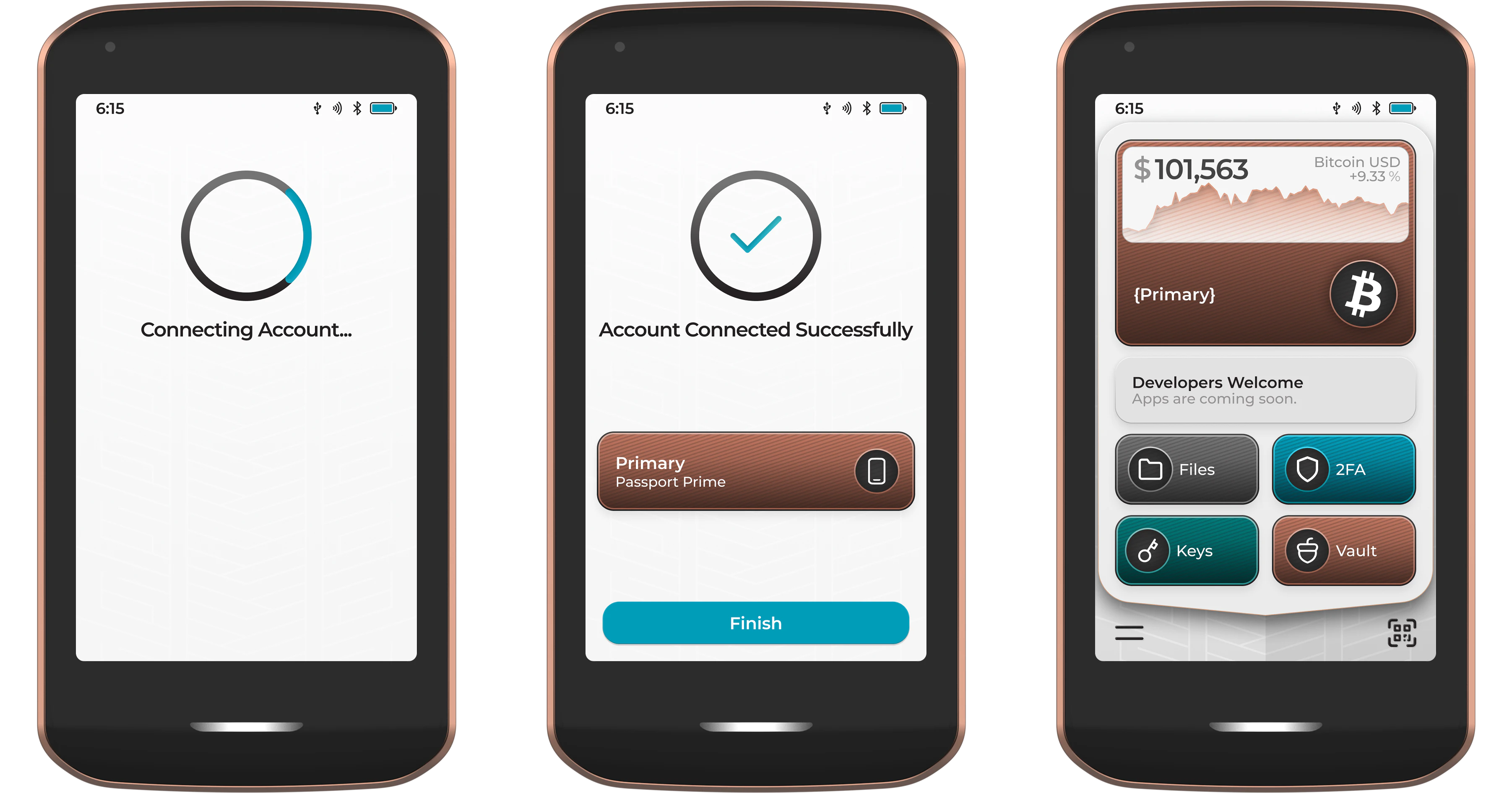
The 3.5-inch IPS display is one of Prime’s most compelling features. It gives the user enough space to inspect destination addresses, amounts, account choices, and security prompts without relying entirely on a smaller host-device interface. Gorilla Glass, a metal chassis, a tactile home button, status lighting, and haptic feedback make the product feel closer to a dedicated security terminal than a typical two-button hardware wallet.
Its 93-gram body measures approximately 55.5 × 104.8 × 11 mm and contains a 1,100 mAh rechargeable battery. Unlike hardware wallets designed only for occasional wired signing, Prime is built to be carried and used regularly. The integrated camera supports QR workflows, while USB-C, NFC, and Bluetooth allow different interaction styles. A relatively large battery-powered device may be convenient for frequent authentication, although charging and long-term battery condition become additional ownership considerations.
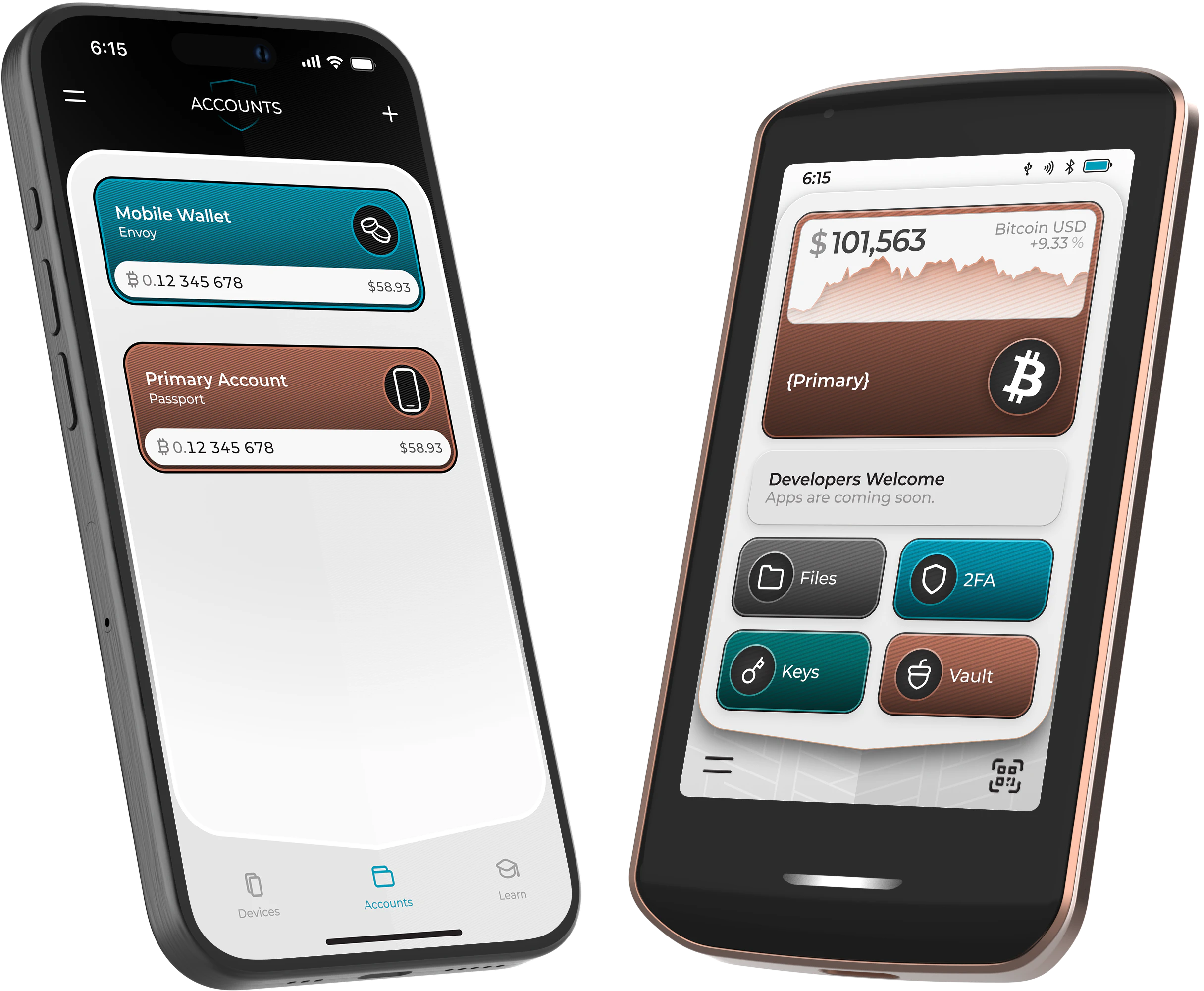
The Envoy companion application can show Bitcoin balances and history, prepare transfers, and coordinate device setup. Its watch-only and hot-wallet functions are distinct from Passport’s cold-storage role, so the user should check which wallet is actually signing a transaction before approval. The touchscreen improves the final review step, but no screen can prevent a loss if the owner deliberately approves an incorrect recipient or misunderstands the underlying request.
Bitcoin Wallet
Bitcoin Wallet Features and Transaction Signing
Passport Prime focuses on Bitcoin accounts, with support for passphrases, address review, Taproot, and multisignature coordination. It is suitable for users who want to move funds out of an exchange, hold long-term savings, or maintain a separate signer for high-value transfers. An owner can keep watch-only account information in a companion wallet and reserve the device for signing rather than exposing private keys to the phone.
More advanced owners can use Partially Signed Bitcoin Transactions to coordinate an unsigned spend, review it on the device, and return a signature for broadcast. That workflow underpins offline PSBT signing and allows a Bitcoin wallet to separate transaction construction from authorization. The large screen is especially helpful when confirming the real recipient and change outputs, although wallet software and firmware must correctly interpret the transaction for the review to be reliable.
Prime also supports Bitcoin multisig arrangements, including exports intended for collaborative custody services and other coordinators. A multisignature wallet can distribute signing authority across different devices and locations so a stolen signer alone cannot move funds. The price of that protection is more demanding recovery, including careful preservation of cosigner and wallet-configuration data alongside backups.
Setup Guide
Security
KeyOS, FIDO Security Keys, 2FA, and the Encrypted Vault
KeyOS is an open-source operating system built around a Rust microkernel, process isolation, and sandboxed applications. Its purpose is to make security-sensitive tools share one hardware platform without allowing an ordinary app to access everything stored on the device. Rather than trusting a phone to handle login codes and transaction approvals, a user can move those decisions to dedicated hardware.
The built-in TOTP authenticator stores time-based one-time codes for compatible accounts, while security-key functions provide another authentication option. Prime also contains a vault for secrets and up to 50 GB of encrypted files. A user who frequently switches between computers can keep particularly sensitive material outside those computers, rather than creating another unencrypted folder or browser dependency.
Combining these functions creates a genuine value proposition but also a concentration of security responsibilities. Losing access to a device holding Bitcoin credentials, login keys, recovery data, and important files can be far more disruptive than misplacing an ordinary hardware signer. Each function needs its own recovery plan, and purchasers should confirm how a particular credential or file can be restored before storing the only copy on the device.
Foundation has opened KeyOS to outside developers, with application concepts extending into password management, Nostr signing, and other authorization workflows. That growing platform deserves attention, but a published concept, prototype, or beta app should not be presented as a fully supported shipping capability. Installing extra applications also expands the set of code and permissions that the owner must trust, even when the OS attempts to isolate them.
Security Architecture, Tamper Detection, and the Keylabs Audit
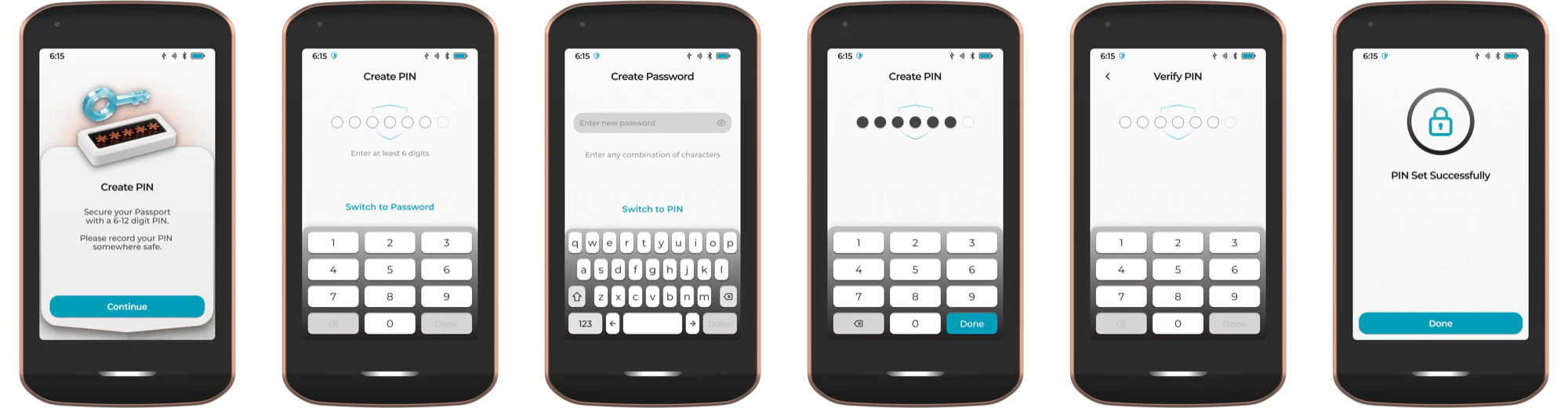
Prime uses a Microchip SAMA5D2 processor alongside an ATECC608C secure element and protected SECURAM. Seed protection is distributed between security domains rather than placed in one ordinary memory area, and its secure-boot process is designed to reject unauthorized firmware. A PIN policy includes automatic erasure after repeated unsuccessful attempts, while protections against rollback and debug access aim to make software and physical compromise more difficult.
The active enclosure-tamper system is particularly relevant to an attacker who can open the device and replace, probe, or interfere with internal components. Tamper events can clear sensitive SECURAM state, preventing an adversary from simply removing a circuit-board component and finding an intact signing secret in normal memory. This is a practical defense against some invasive attacks, although a sophisticated implant inserted earlier in the manufacturing or distribution process remains a different problem.
A 2025 independent Keylabs assessment examined the hardware, firmware, key protection, supply-chain threats, and physical attack scenarios. Its review identified several low-impact findings, with Foundation publishing a response and subsequent remediation. Independent testing provides meaningful evidence about the analyzed design; it does not certify that every later firmware release, app, hardware revision, or delivered unit is immune to compromise.
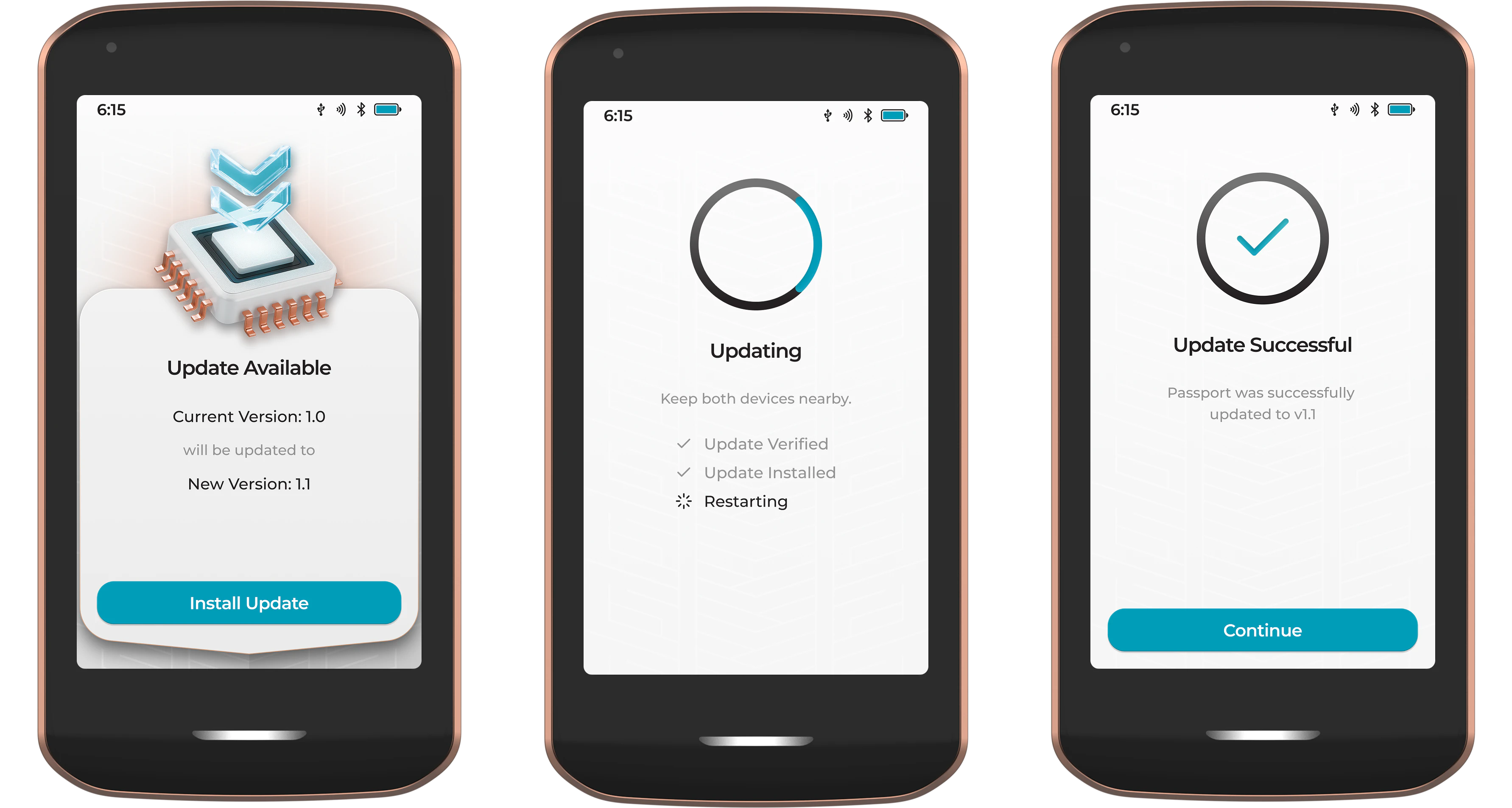
Security maintenance has continued after the launch, including changes to Bitcoin transaction validation, multisig handling, seed-entropy generation, credential management, and application isolation. That is a positive sign of active development, while also showing why users should keep KeyOS updated through verified releases instead of assuming an audited 2025 design settles every future security question. For long-term custody, the quality of the wallet’s overall security practices remains inseparable from hardware defenses.
Can Passport Prime Resist Supply-Chain Attacks?
Passport Prime has a stronger physical threat model than many devices marketed mainly around a secure-element label. Foundation documents assembly under supervision in the United States, hardware-integrity checks, device authentication, a secure boot chain, and active tamper response. These controls can make unauthorized firmware, counterfeiting, or an opened enclosure easier to detect or less useful to an attacker.
They do not prove that a circuit board could never be altered. A supply-chain adversary might substitute a component, implant a recorder on a sensitive interface, tamper with packaging, or replace the entire device before delivery. Genuine firmware and chip authentication do not automatically prove that no extra hardware was added elsewhere on the board. Buyers should therefore use official sales channels, inspect packaging and the device, complete the expected integrity checks, generate recovery information on the device, and stop setup if anything behaves unexpectedly.
The security model must also cover later physical access. A person who borrows or steals a device may try to alter it before returning it, which differs from an attack that begins before the first owner opens the box. Passport’s tamper response raises the difficulty of invasive access, but careful owners should treat unexpected integrity warnings or evidence of device opening as grounds for replacement and key migration rather than as cosmetic defects.
Connectivity
Is Passport Prime Truly Air-Gapped?
Passport Prime supports QR workflows, but it is not a permanently disconnected, QR-only signer. It has a USB-C data interface, NFC, and QuantumLink Bluetooth. QuantumLink uses a separate wireless processor and encrypted pairing to keep the communication channel separated from sensitive signing logic, and Foundation incorporates post-quantum cryptography into its wireless design.
This is different from strict air-gapped wallets that avoid direct USB or wireless data connections during signing. Prime offers more convenience, especially for mobile use and frequent authentication, but the owner should not confuse an isolated Bluetooth processor with an absolute absence of communication pathways. Anyone whose threat model demands physical disconnection should check the availability and behavior of the precise modes offered by the installed firmware instead of relying on generic air-gap descriptions.
Backup
Backups, Keycards, and Recovery Planning
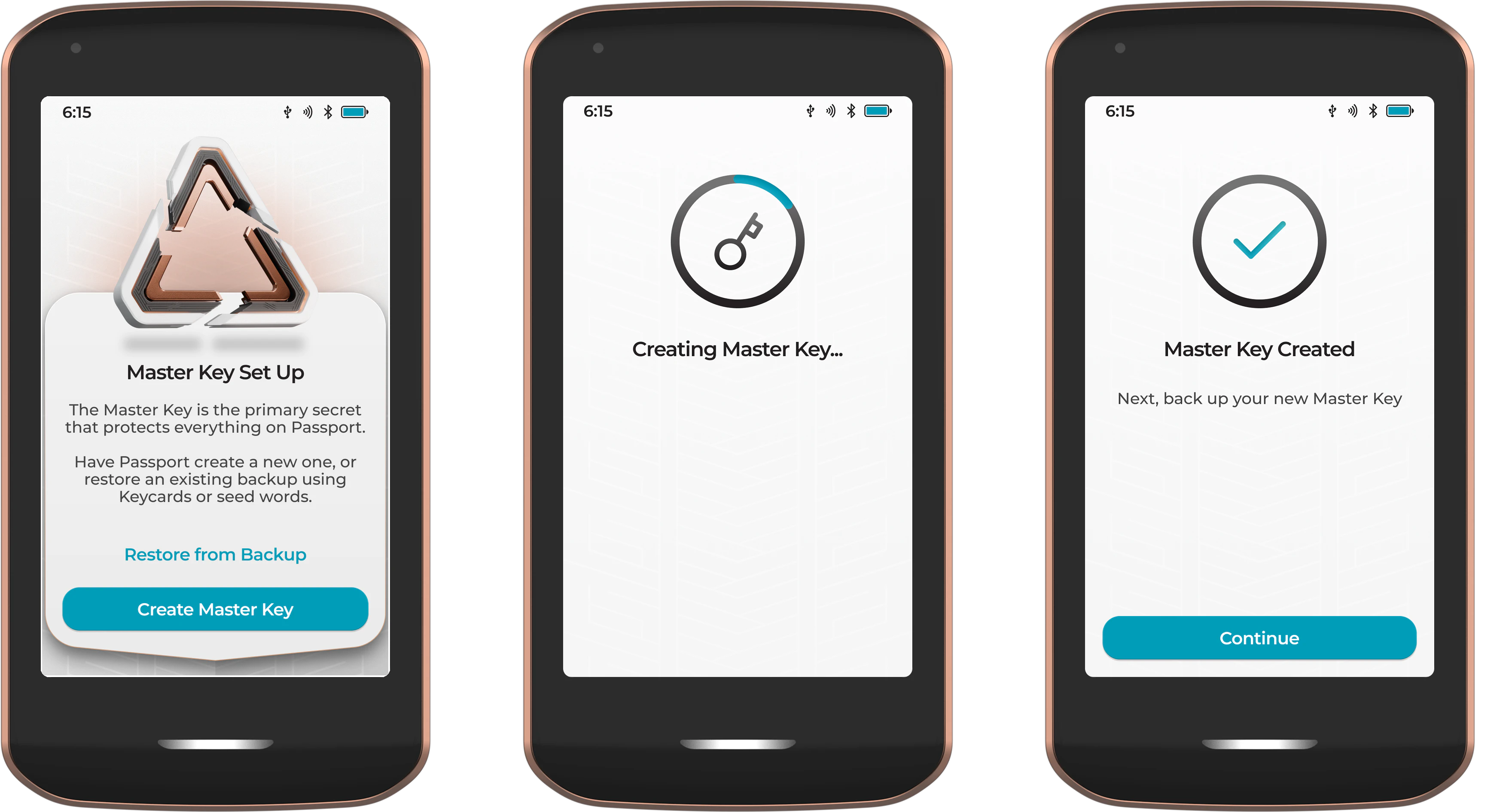
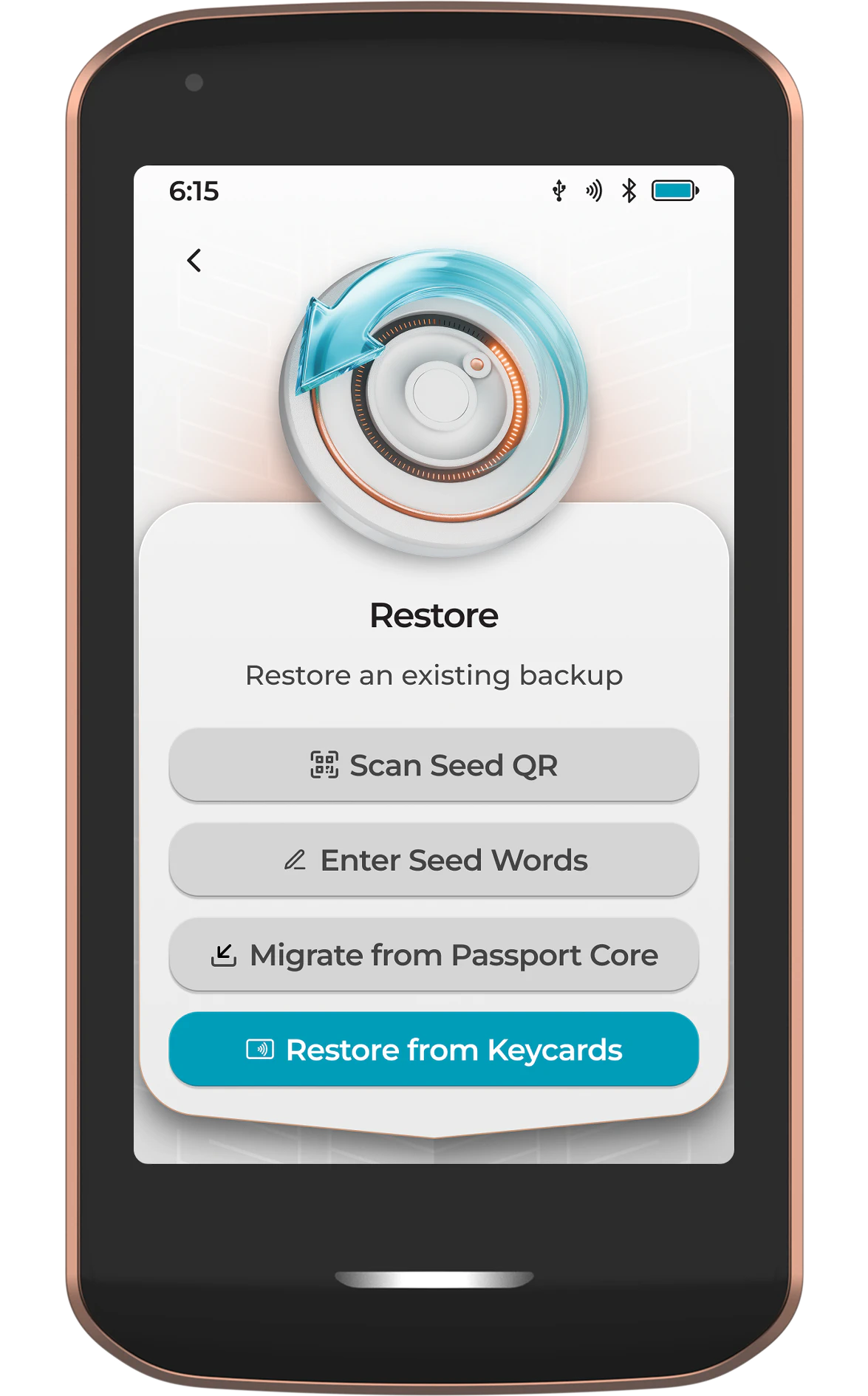
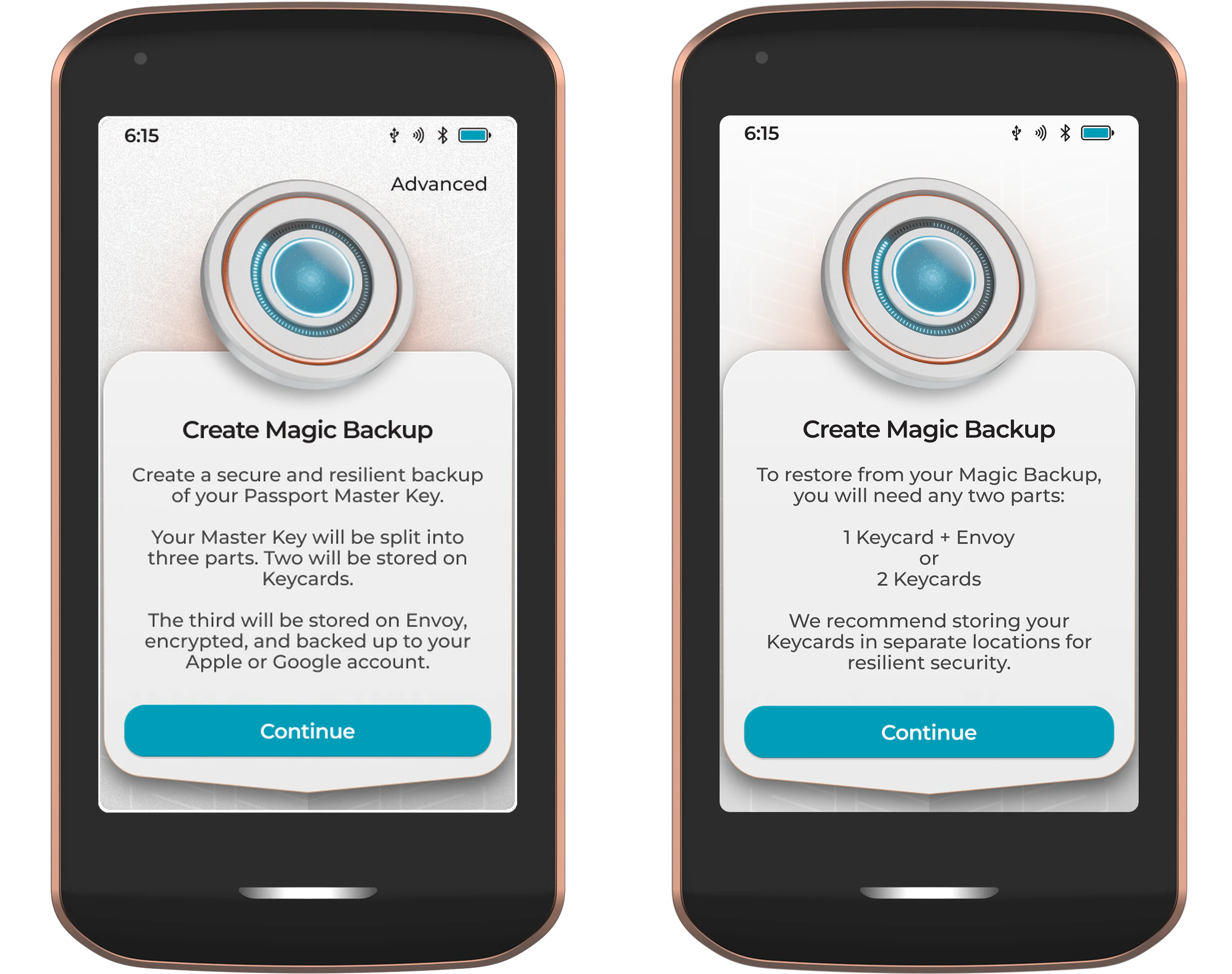
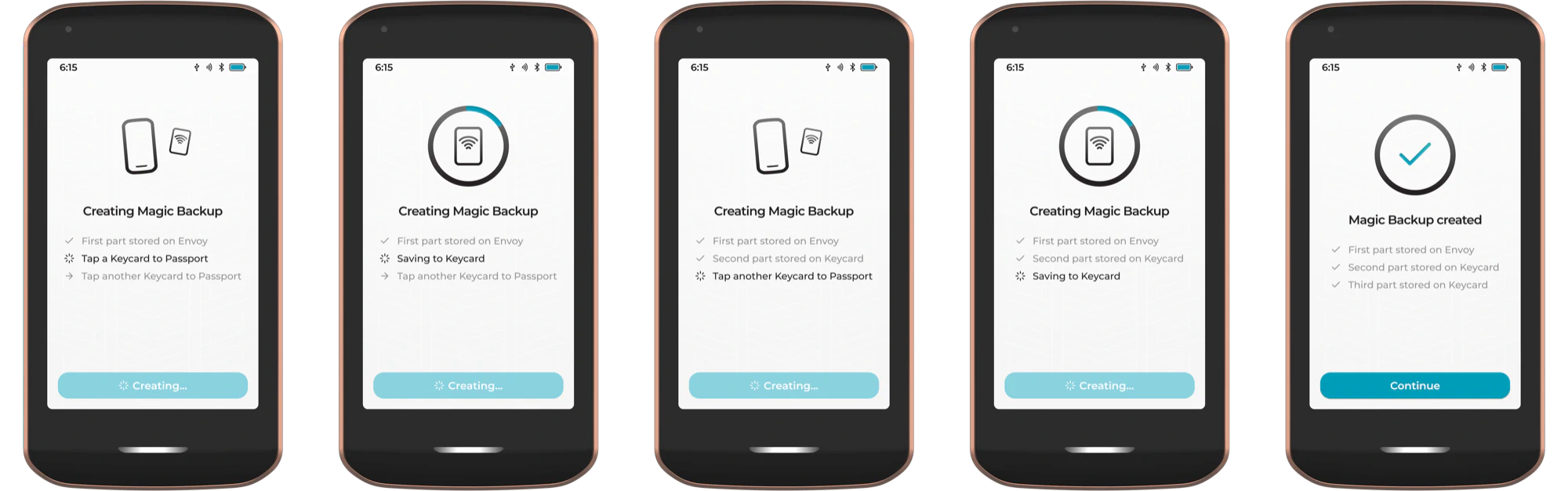
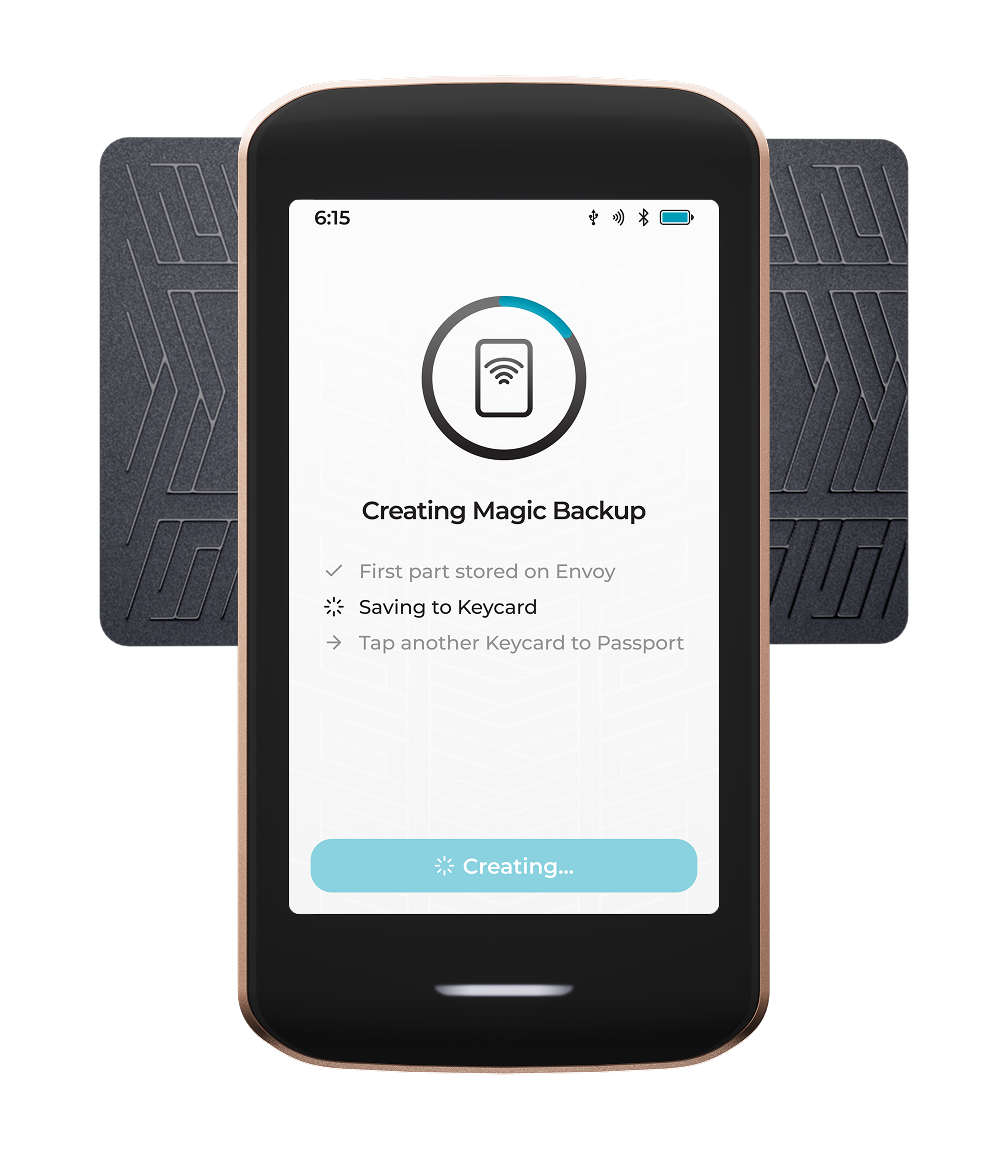
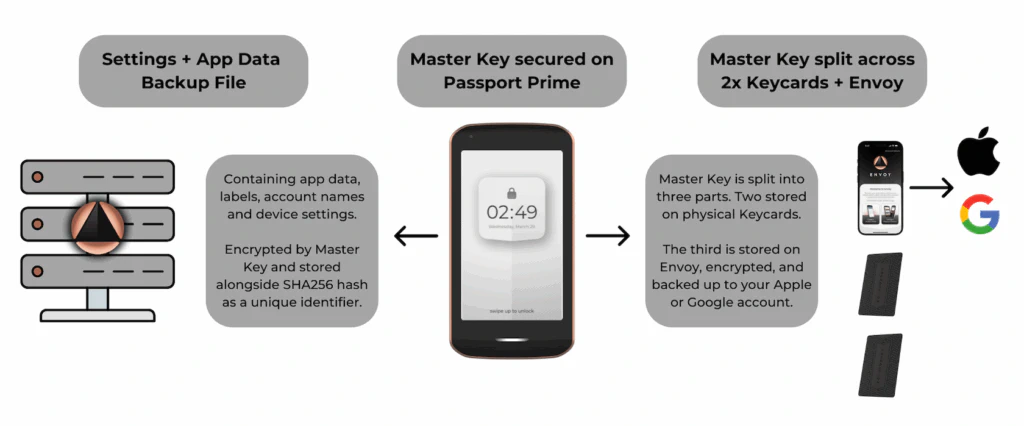
Foundation supplies NFC Keycards for encrypted backup and recovery. Passport Prime’s Magic Backup approach uses a threshold-based arrangement so recovery can be possible without depending on one unprotected paper phrase. Depending on the setup, shares can be held on the Keycards and coordinated with encrypted data through Envoy, while more manual approaches can avoid reliance on a phone-backed recovery share.
Users should learn which specific combination of cards, account access, and recovery material can restore the device before funding a new wallet. Two recovery objects stored together may create an avoidable theft risk, while a forgotten phone account or lost passphrase can make recovery more complicated than expected. BIP39 recovery-word export offers a more familiar escape route, but those words are extremely sensitive and should never be photographed, uploaded, or entered into a suspicious application.
For long-term holdings, seed phrase storage still requires a physical plan that survives fire, theft, travel, device loss, and the passage of time. A small recovery test before transferring a meaningful balance is more valuable than trusting an unfamiliar backup mechanism simply because it is encrypted.
Supported Assets
Supported Assets and Value for Money
Passport Prime’s native hardware-wallet proposition is centered on Bitcoin. It is not a straightforward alternative for someone who needs Ethereum, Solana, XRP, stablecoins on several networks, NFTs, and everyday EVM DeFi approvals in one broadly supported wallet. Developers are exploring more uses for KeyOS, but experimental integrations and app previews are not equivalent to established asset support.
The $349 U.S. launch price buys more than the ability to sign a Bitcoin transaction. The value case strengthens when a buyer will regularly use the large touchscreen, dedicated authentication, encrypted file storage, and Keycards. A Bitcoin holder who only signs a few transfers per year may get a better cost-to-security balance from a simpler model in the broader hardware wallet market.
Who Is Passport Prime Best Suited For?
Passport Prime is best suited for Bitcoin holders who also want a dedicated security device for sensitive logins, encrypted files, and recovery material. It is particularly appealing to users who value physical intrusion resistance, appreciate an independent hardware assessment, and are prepared to maintain backups for several types of credentials rather than Bitcoin alone.
It is less suitable for someone seeking a low-cost first hardware wallet, a permanent QR-only signing device, or wide native support for altcoins and DeFi networks. A multi-asset user will generally find the Trezor Safe 7 more practical, while a narrowly focused Bitcoin holder may prefer a simpler signer without the additional app and authentication platform.
Passport Prime vs Trezor Safe 7
Passport Prime vs Trezor Safe 7
Trezor Safe 7 takes a more conventional route by supporting a broad range of crypto assets. It is a premium hardware wallet with a 2.5-inch touchscreen, two secure elements alongside a security MCU, encrypted Bluetooth, USB-C, wireless charging, and multi-share recovery. Its architecture uses post-quantum signatures for firmware and device authentication. It supports Bitcoin alongside Ethereum, Solana, and a large range of other coins and tokens, giving it a clear advantage for portfolios extending beyond BTC.
Prime answers a different need by offering a larger screen, active enclosure-tamper response, FIDO and TOTP authentication, NFC Keycard backups, and a sizeable encrypted file vault on one device. Trezor’s security model instead emphasizes dual secure elements, an independently auditable TROPIC01 chip, integrated Trezor Suite, and a more established multi-asset signing ecosystem. Both have meaningful physical protections, and neither should be called tamper-proof. A buyer choosing between them should decide whether the priority is a Bitcoin-centered personal security terminal or a broadly compatible crypto wallet.
Pros & Cons
- Layered physical security: Active tamper response, protected secrets, secure boot, and a published independent audit.
- Excellent interface: Large touchscreen with clear device-side review and multiple connection options.
- Unusually broad security features: Bitcoin signing, security keys, TOTP, Keycards, and encrypted file storage.
- Open and expandable platform: KeyOS, public source code, and growing developer integrations support long-term flexibility.
- Bitcoin-first asset support: Weak fit for users who need native support for many chains or tokens.
- High upfront cost: The $349 U.S. launch price is difficult to justify for occasional Bitcoin transfers alone.
- More operational complexity: Multiple credential types, backups, and applications require careful recovery planning.
- Young software ecosystem: New apps and ongoing KeyOS hardening add maintenance and maturity considerations.
Bottom Line
Is Passport Prime Worth Buying in 2027?
With an overall rating of 8.3/10, Passport Prime makes a credible case for dedicated hardware that protects more than one Bitcoin wallet. Its strong physical-security architecture, large display, KeyOS isolation, and combined authentication functions justify the premium for a demanding user who will put those capabilities to work. For buyers who only want to sign Bitcoin transactions occasionally, the price and complexity offer less compelling value, and its narrow native coin support keeps it from being a universal hardware-wallet recommendation.
FAQs
When Was Passport Prime Released?
Passport Prime began shipping to preorder customers in March 2026, with general availability announced in May 2026. It should therefore be assessed as a released product, not an announced prototype, although its third-party app platform is still developing.
How Much Does Passport Prime Cost?
The U.S. general-release list price was $349. Local prices may vary with currency, taxes, shipping, and import charges, so buyers should check the total displayed by the official store before ordering.
Does Passport Prime Support Ethereum, Solana, or Stablecoins?
Passport Prime’s native wallet functionality remains focused on Bitcoin rather than broad multi-chain holdings. KeyOS can support independently developed apps, including experimental work involving other assets, but that should not be confused with verified production support for Ethereum, Solana, or stablecoins in the built-in Bitcoin wallet.
Is Passport Prime Completely Air-Gapped?
Passport Prime is not completely air-gapped because it supports QR interaction alongside USB-C data, NFC, and QuantumLink Bluetooth. A security-focused communications architecture is not the same as having no wired or wireless data pathway at all.
What Happens If Someone Opens or Tampers With Passport Prime?
The device includes active tamper-detection hardware and protected memory intended to erase sensitive security state when the enclosure is breached. These defenses complicate physical attacks but cannot promise detection of every possible supply-chain implant, counterfeit device, or sophisticated modification.
Can Passport Prime Replace a Hardware Security Key and a Password Vault?
For supported services, Passport Prime provides FIDO security-key and TOTP authentication as well as an encrypted secrets and file vault. Compatibility and recovery differ by service, so users should verify the exact login workflow and keep recovery options available before retiring existing authenticators or password-storage tools.